






Free written scope consultation - allowances, timeline, and change-order rules on paper before a single trade is scheduled
Styles & brands we work with
- Kitchen remodeling
- Bathroom remodeling
- Home additions & ADU
- Roofing
- Windows & doors
- Driveway & pavers
- Fence
See the difference
 Before
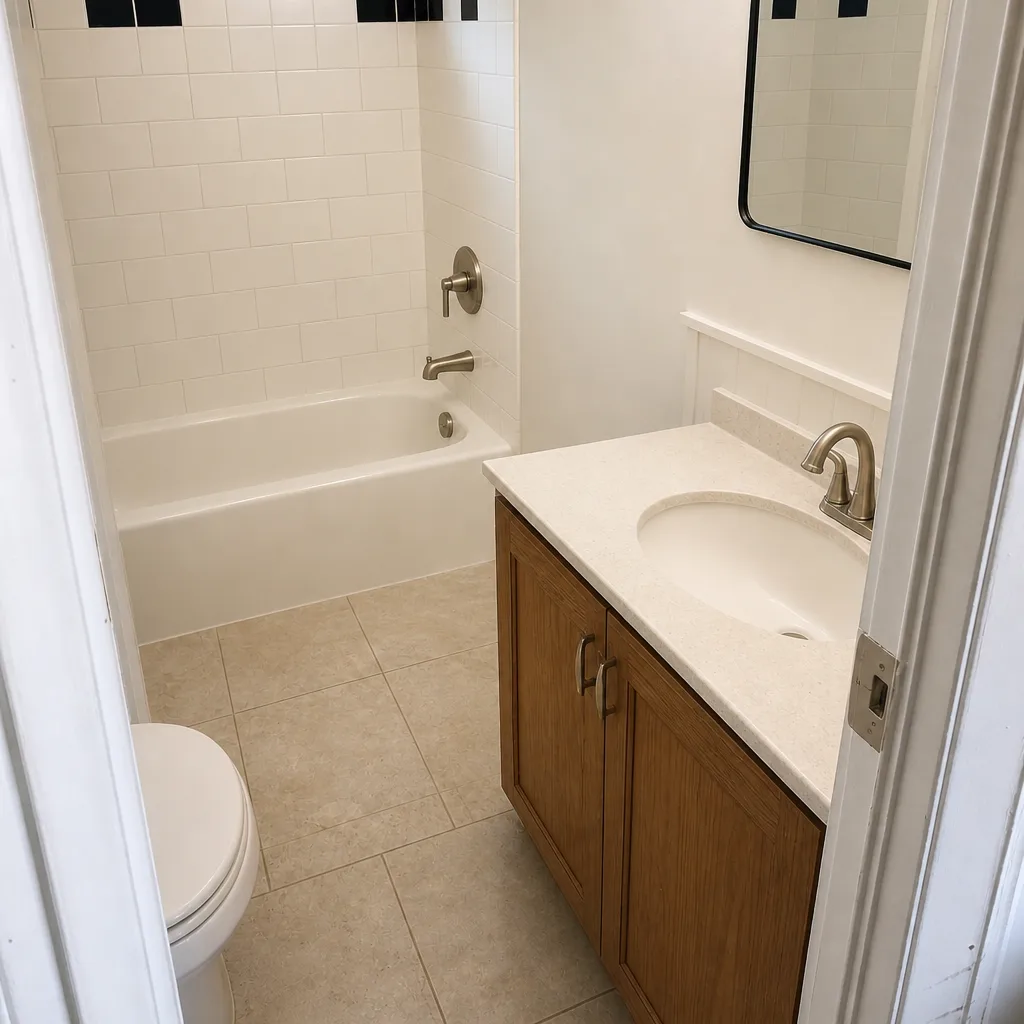 After
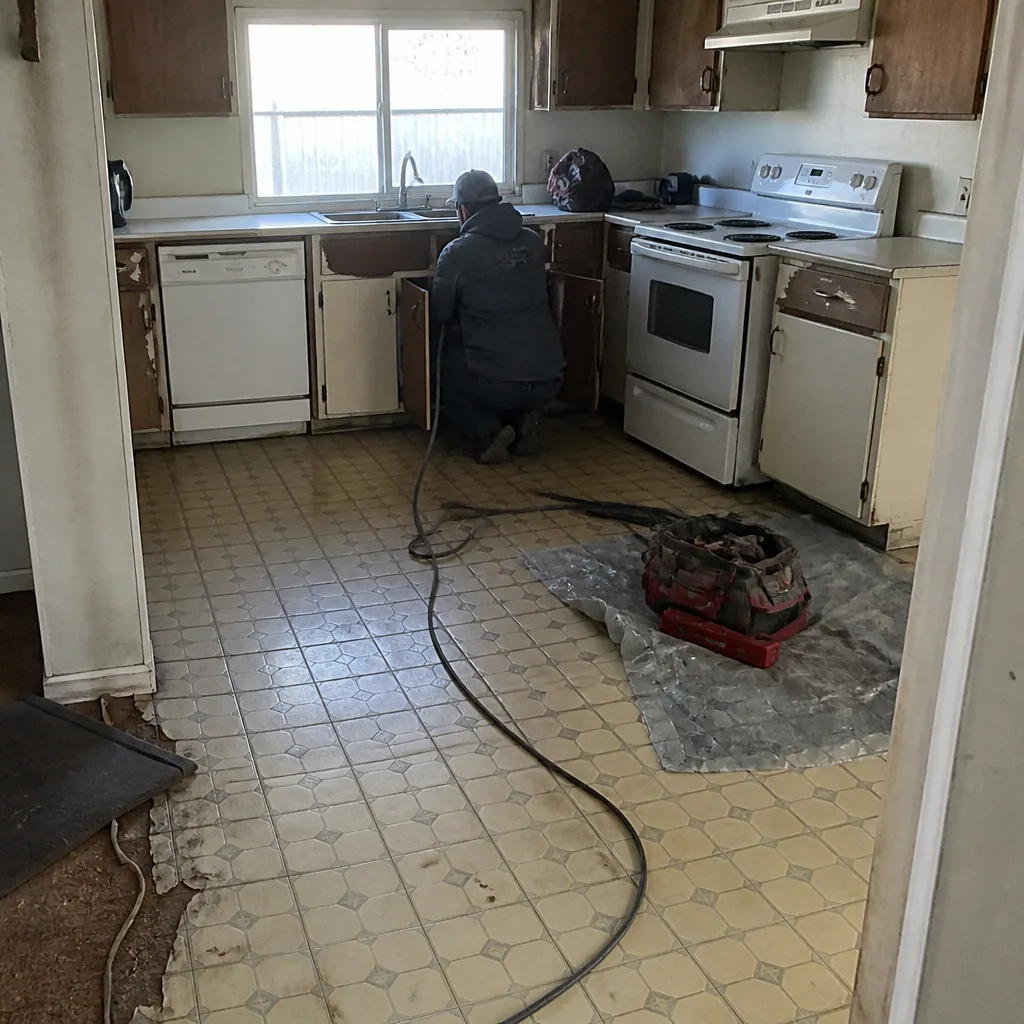 Before
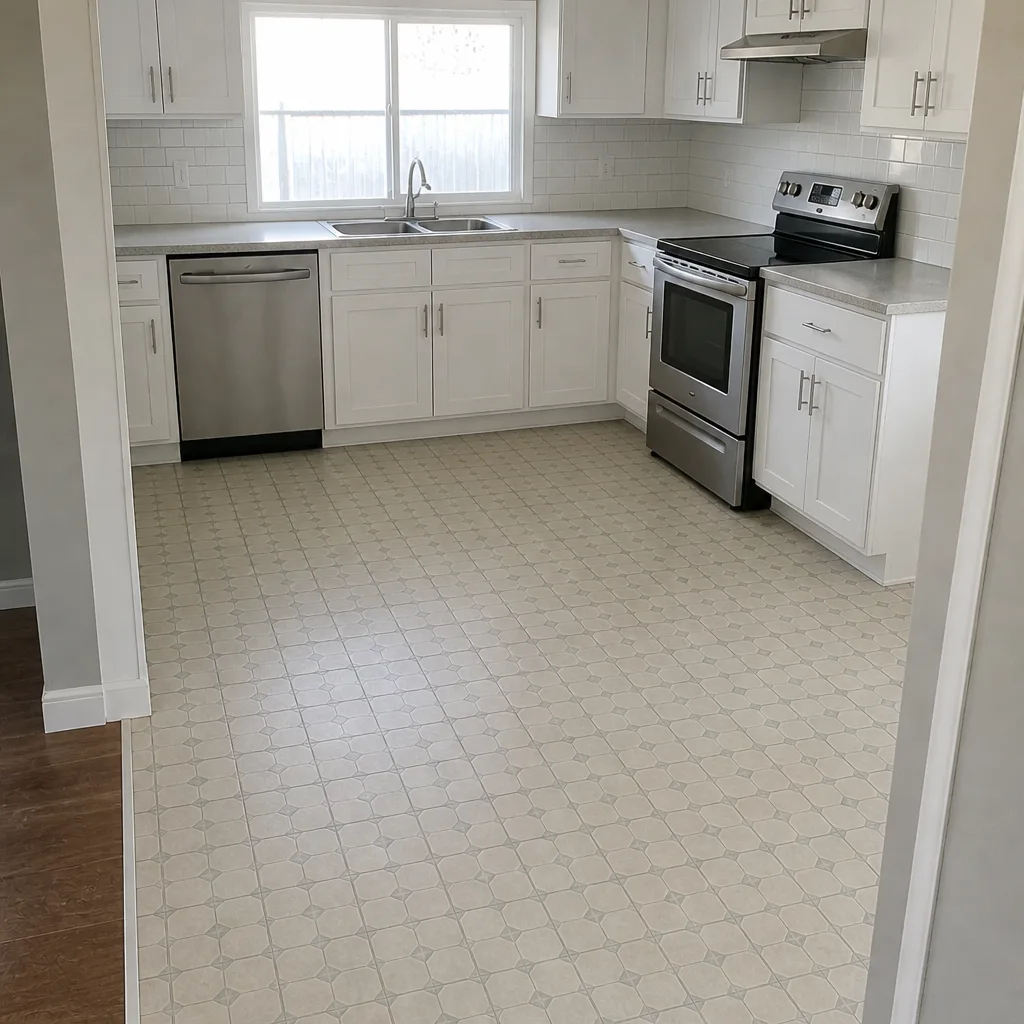 After
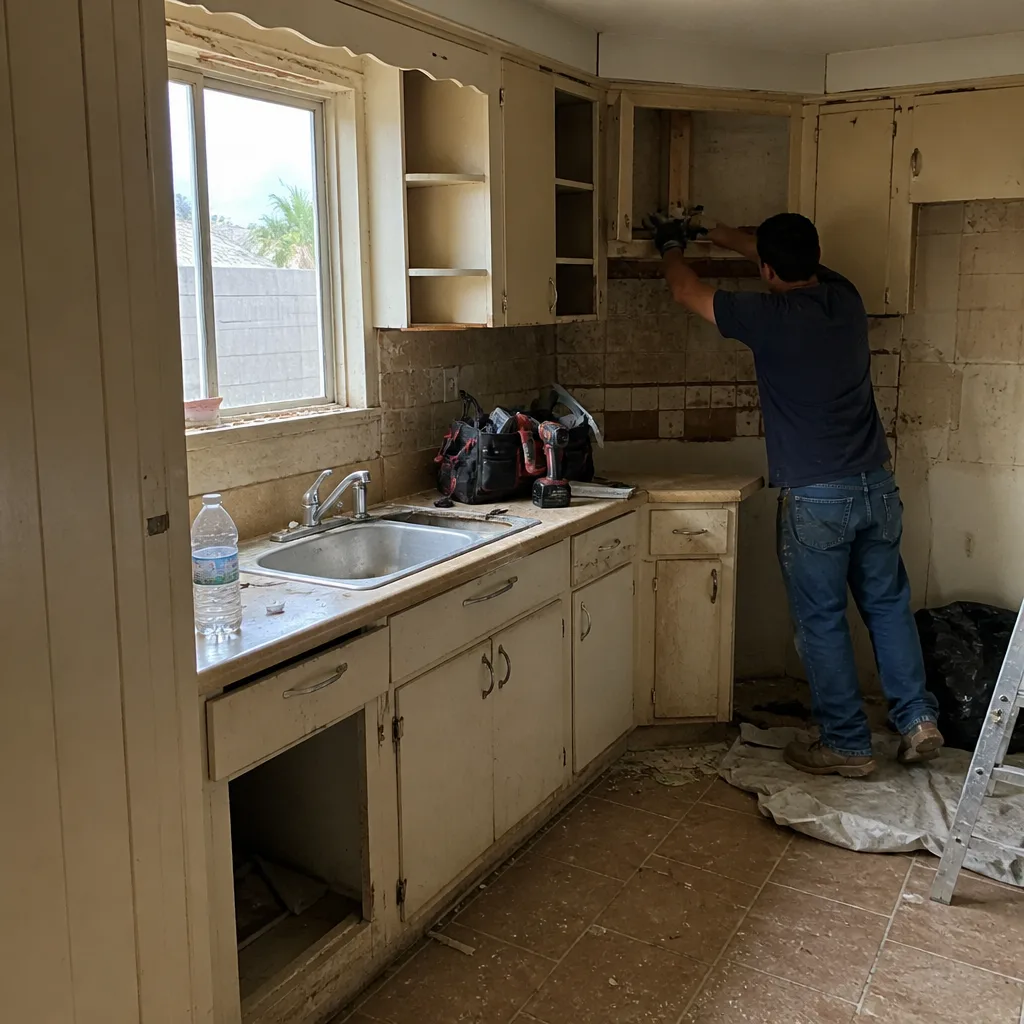 Before
 After
Finding a Roof Leak in Mesquite, NV: Why the Stain Is Rarely Under the Hole
To find a roof leak, work from the stain in your ceiling up to the roof slope, then inspect flashing and underlayment 4 to 8 feet uphill and laterally from that point, not just directly above it. On a tile roof, water slips under the tile field, runs along the smooth underlayment, and can drift sideways for several feet before it finds a gap to drip through. That’s the short answer, and it’s why the spot on your ceiling and the actual breach are usually two different places. If the trace gets complicated or you’d rather not be in the attic during a monsoon, our line is answered by a live person 24/7 at (888) 413-6358.
Mesquite makes this harder than most towns. The housing stock here splits between 1980s-2000s stucco-on-frame homes in golf-course communities like Sun City and Highland Hills, and a wave of 2010s-2020s slab-on-grade custom builds and townhomes, and nearly all of them wear tile. Summer highs run past 105°F with relentless UV, and monsoon-season wind-driven rain funnels through the Virgin River gorge at hard angles. That combo of tile roofing, stucco walls, and sideways rain is what turns a simple leak into a puzzle.

What to look for first: the tile-roof lateral migration diagnostic
Shingle roofs let you trace upward from a stain. Tile roofs don’t cooperate. The tile field is a rain screen, not the waterproof layer; the real barrier is the underlayment beneath it. Water that gets past a broken tile, a lifted ridge cap, or a gap at a flashing run slides on that underlayment like a sheet of glass and finds the nearest penetration or seam to drain through. On the smooth surface, 4-8 feet of lateral travel is routine.
So here’s the sequence we run, and the one you can follow before you call anyone:
- Mark the stain on a sketch. Note the room, the distance from the nearest exterior wall, and which direction the ceiling slope runs.
- Map the stain up to the roof. Measure the same distance in from the same wall on the roof deck. That gives you a starting zone, not a target.
- Look uphill 4-8 feet from that zone toward the ridge, because water follows the slope down before it ever moves sideways.
- Then sweep laterally along the nearest flashing run: sidewall, chimney, valley, or a vent penetration. Flashing gaps are the most common entry on tile roofs, and they leak sideways before they leak down.
- Check the underlayment seams. A failed seam anywhere along that lateral path is a suspect, even if the tile above looks perfect.
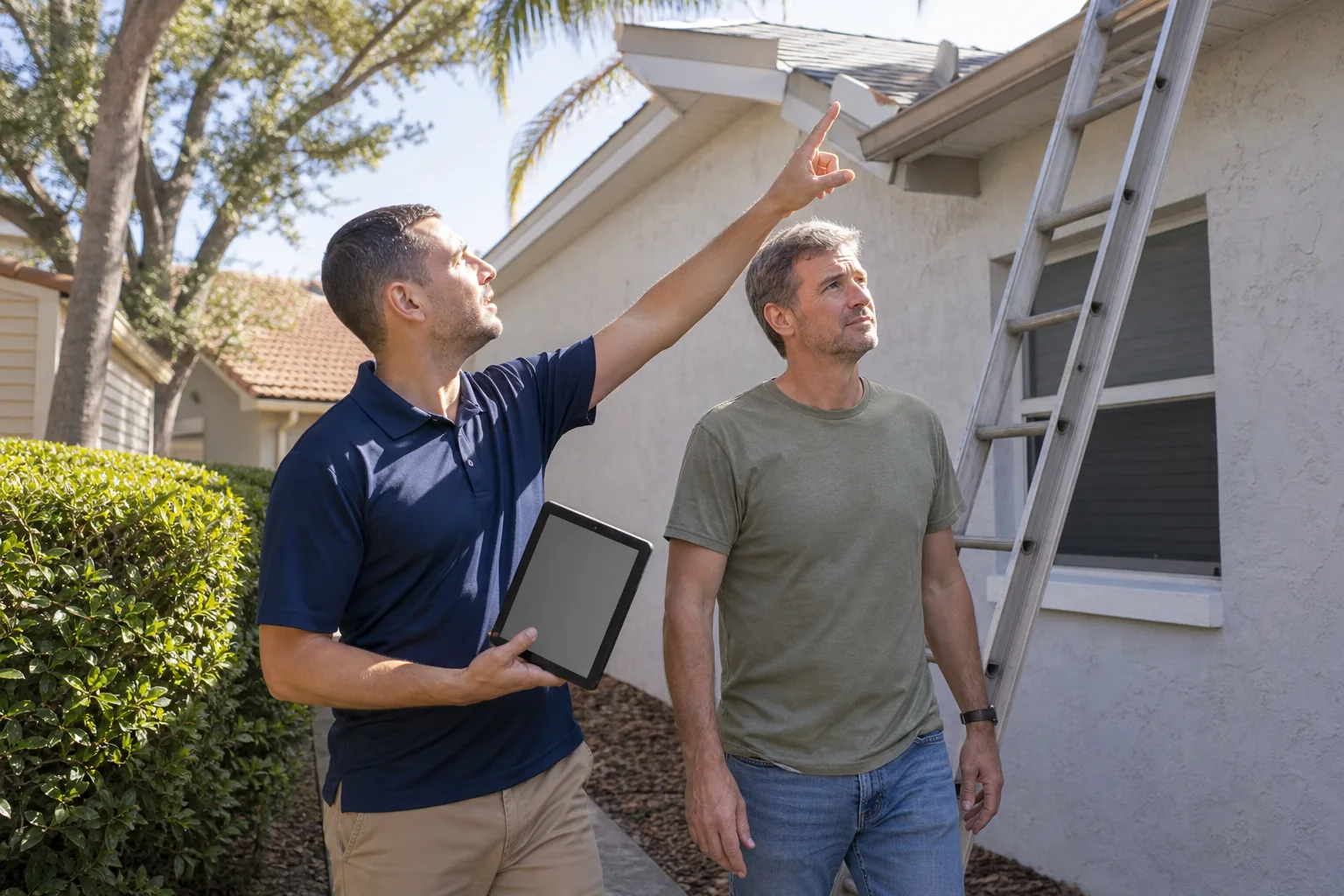
The mistake we see most often is a homeowner (or a hurried contractor) standing on a ladder and staring directly above the stain. On a Mesquite tile roof that’s usually the one place the leak isn’t.
The stucco intrusion path most leak-chasers miss
Not every ceiling leak in a Mesquite home comes from the roof. Stucco walls need a weep screed properly terminated above the roof deck to shed water. When that termination is missing or failing, wind-driven monsoon rain gets behind the stucco face, travels down the wall cavity, and surfaces as a stain on your ceiling that has nothing to do with the roof field itself. We’ve traced ceiling leaks that looked exactly like roof failures but were stucco intrusions the whole time.
How do you tell them apart? Watch the timing and the weather. A leak that only shows up after a hard, angled, wind-driven rain points to a flashing or ridge-cap gap, or to a stucco-to-deck termination problem. A leak that appears after ordinary vertical rain, or that keeps growing during dry spells, is more likely an underlayment or plumbing issue. A hose test on a dry day can separate the two zones. Run water low and slow against the suspect flashing run or stucco termination with a second person in the attic watching, then work uphill in stages. Stop the moment you see moisture. Never soak the whole roof and hope; a targeted, staged test tells you which zone is guilty.
We flag one caution clearly: inspecting an attic during summer heat, navigating a wet tile roof after a storm, and tracing near electrical runs are genuine hazards. The hose test is the safe DIY step. The roof and attic walk should be handled by a trained professional.
Why the person in your attic matters
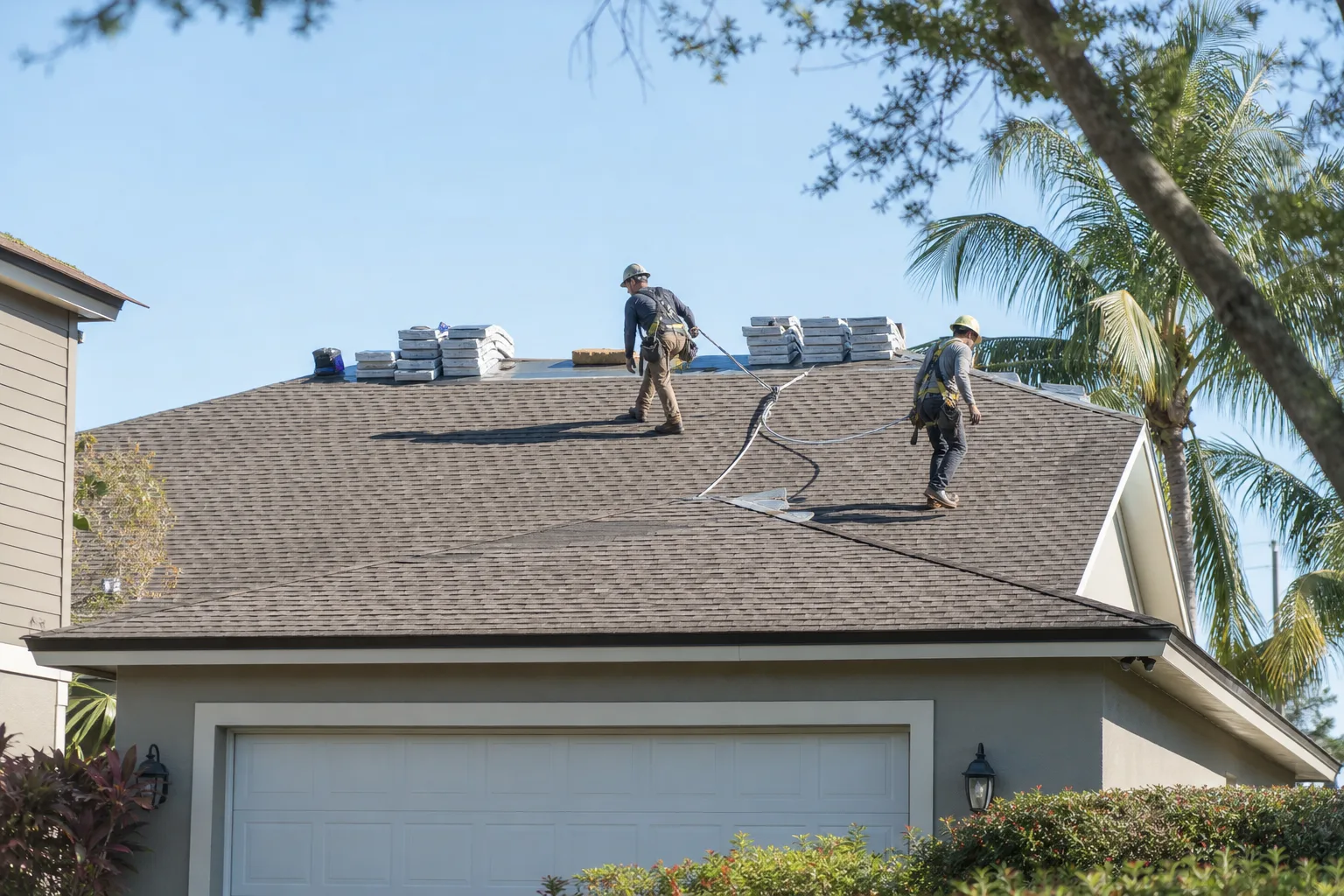
When you do call a pro, most leak inspections are a quick ladder glance and a guess. That misses the point. A real leak trace happens inside, with access to the attic, the underlayment, and the stucco termination, and it takes patience. That’s why every Groundwork Construction Co. of Mesquite technician is background-checked and arrives in uniform. You’re letting them into your home and your attic, and that should be a verified professional. Our technicians bring up to 12 years of experience to the diagnostic, and when a repair is warranted, we install underlayment and flashing backed by brands like GAF, Owens Corning, and CertainTeed.
Water shows up in the attic before you find it on a ceiling, so an experienced eye saves you a second leak. These are the built-in realities of Mesquite roofs: UV that cooks underlayment until it turns brittle, thermal cycling that opens flashing laps, and monsoon rain that finds every gap. It’s the same reason tight, rocky new builds here need drainage and erosion control done right the first time. You can read more about our scope and approach on the Roofing page, or see how we cover homes across the Mesquite service area.
What leak diagnosis and repair actually cost in Mesquite
An inspection and leak trace is a modest cost compared with the interior damage a slow leak causes, and most roof repairs land in a predictable range. Here’s what a fair, upfront price looks like in this market:
| Service | Typical Mesquite range |
|---|---|
| Roof repair (trace and fix) | $400-$1,800 |
| Tile roof repair | $600-$2,500 |
| Full roof replacement | $8,000-$20,000 |
| Metal roof installation | $15,000-$40,000 |
Upfront pricing is the rule here: the number you see is the number you pay. Every job is covered by the 730-Day Done Right Promise, one of the longest workmanship guarantees in residential construction. And if the trace turns up a full replacement instead of a small repair, projects over $10,000 get $1,000 off, plus 0% financing for 18 months. Call (888) 413-6358 for a free estimate.
FAQs
Check the weather that triggers it. A stain that only appears after hard, wind-driven rain points to a flashing gap or a failing stucco termination above the roof deck, while a leak that shows up in ordinary rain or keeps growing in dry weather is more likely an underlayment or plumbing problem. A staged hose test with someone watching in the attic narrows it quickly, and a professional trace confirms it before you spend on the wrong fix.
Many do, and that’s a diagnostic clue. Leaks that appear only during gorge wind events with hard-angle rain almost always trace to a flashing or ridge-cap gap rather than a field tile failure, because wind drives water sideways into gaps that vertical rain misses. If your leak comes and goes with the storms, tell the inspector exactly that; it shrinks the search zone from the start.
Four to eight feet laterally is normal on the smooth underlayment surface of a tile roof. That’s why a stain directly below a break is the exception, not the rule, and why the inspection has to sweep uphill and along the nearest flashing run instead of guessing straight up. Call (888) 413-6358 for an exact quote on a trace and repair; estimates are free.
Repair is almost always cheaper when the leak is isolated to a flashing gap, a seam, or a small run of underlayment, with tile repairs running $600-$2,500 in Mesquite. Full replacement, at $8,000-$20,000, makes sense when UV has aged the whole underlayment past its life or leaks keep returning in different spots. An honest trace tells you which one you’re facing.
If you’d rather have it looked at, Groundwork Construction Co. of Mesquite offers a no-pressure assessment in Mesquite, with background-checked, uniformed technicians and upfront pricing backed by the 730-Day Done Right Promise. Call (888) 413-6358 for a free estimate and a straight answer on where the water is actually coming in.
Written by the team at Groundwork Construction Co. of Mesquite, serving Mesquite, NV.