Free written scope consultation - allowances, timeline, and change-order rules on paper before a single trade is scheduled
Styles & brands we work with
- Kitchen remodeling
- Bathroom remodeling
- Home additions & ADU
- Roofing
- Windows & doors
- Driveway & pavers
- Fence
See the difference
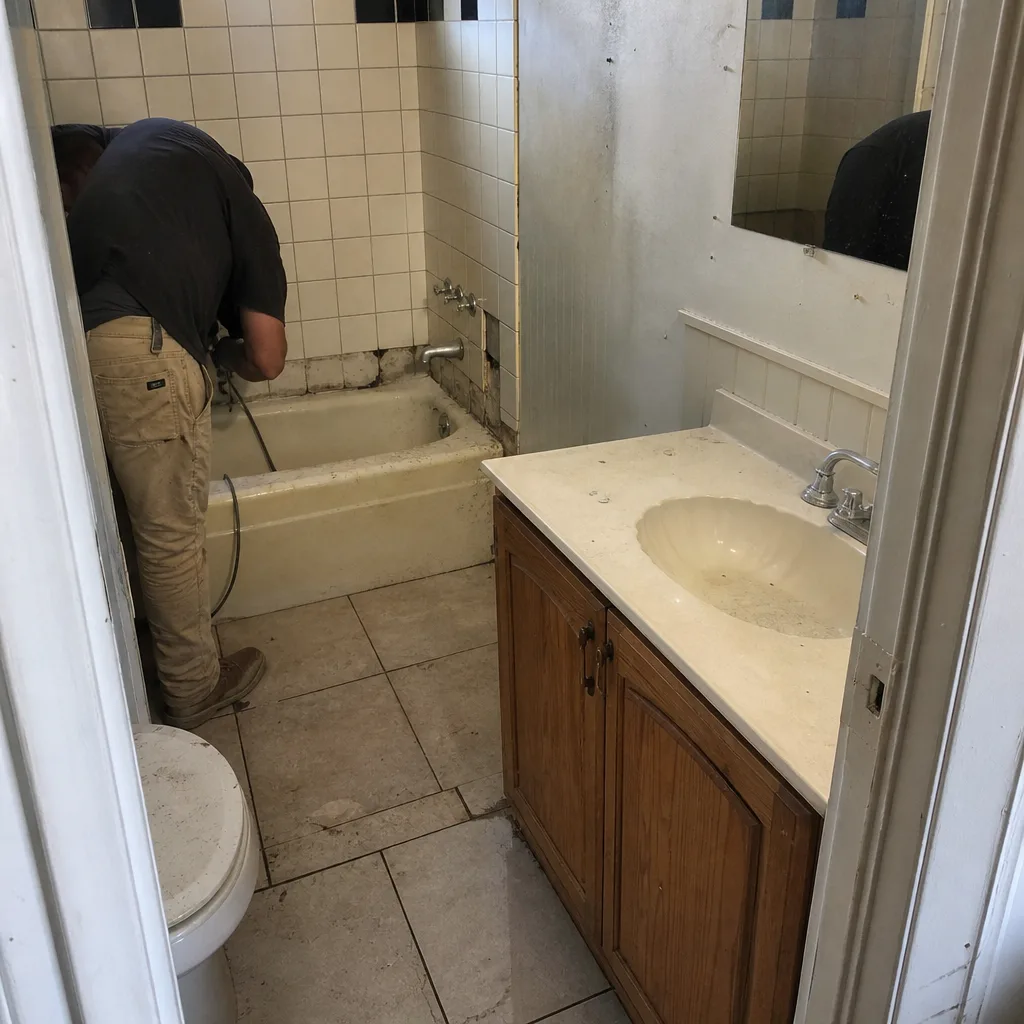 Before
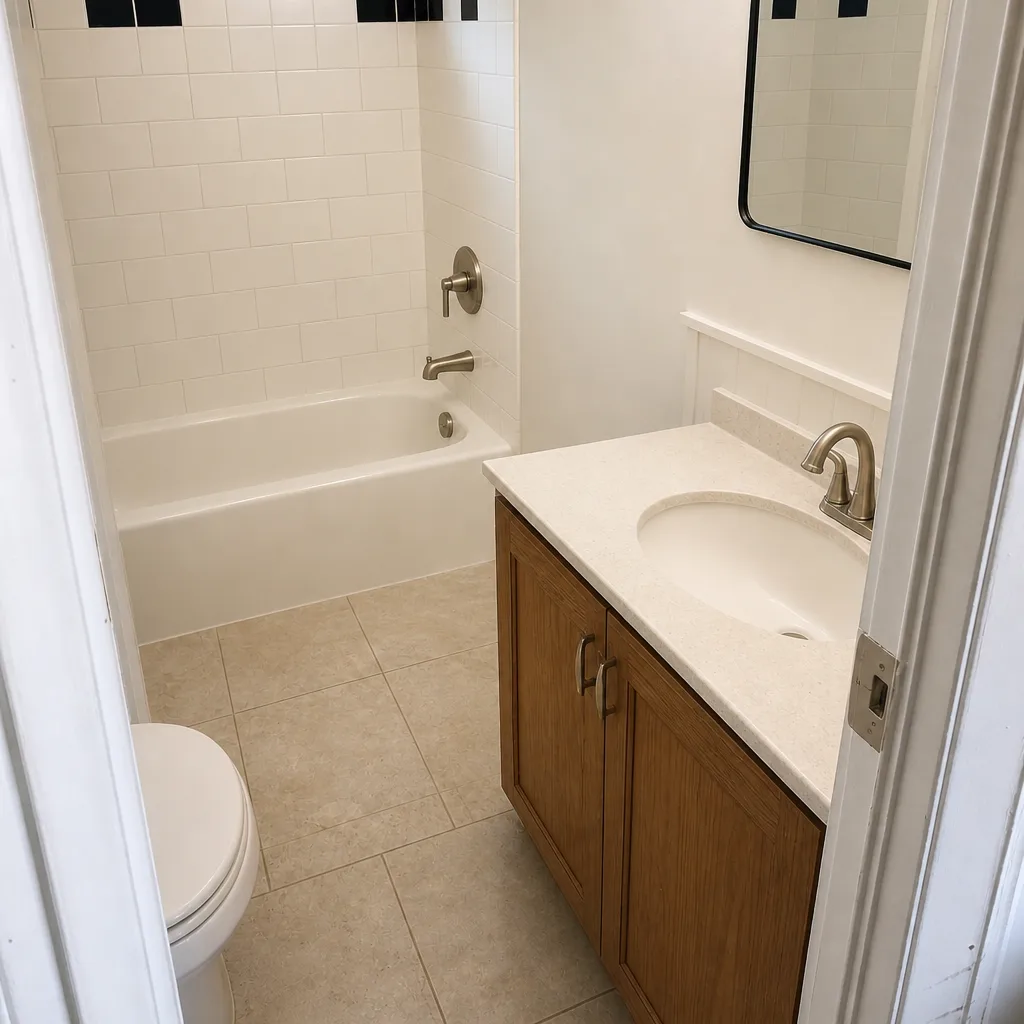 After
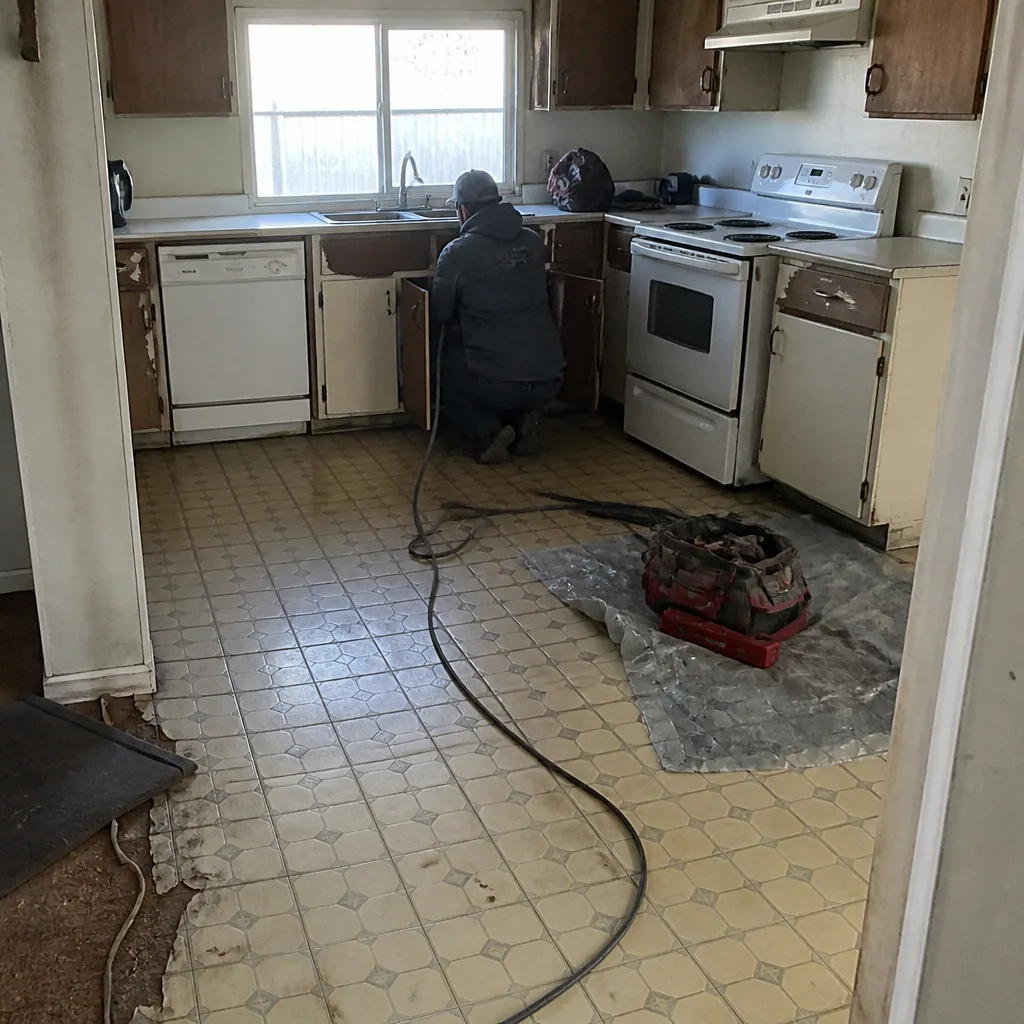 Before
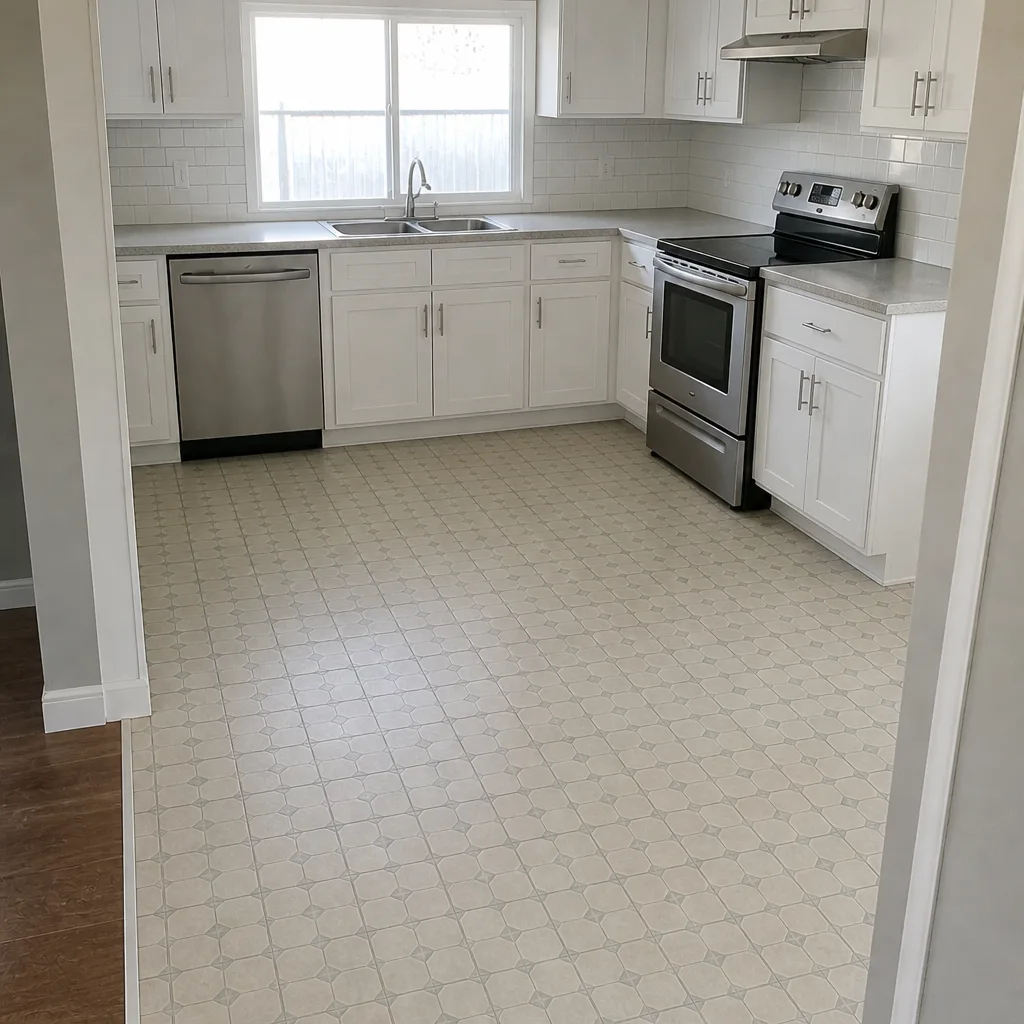 After
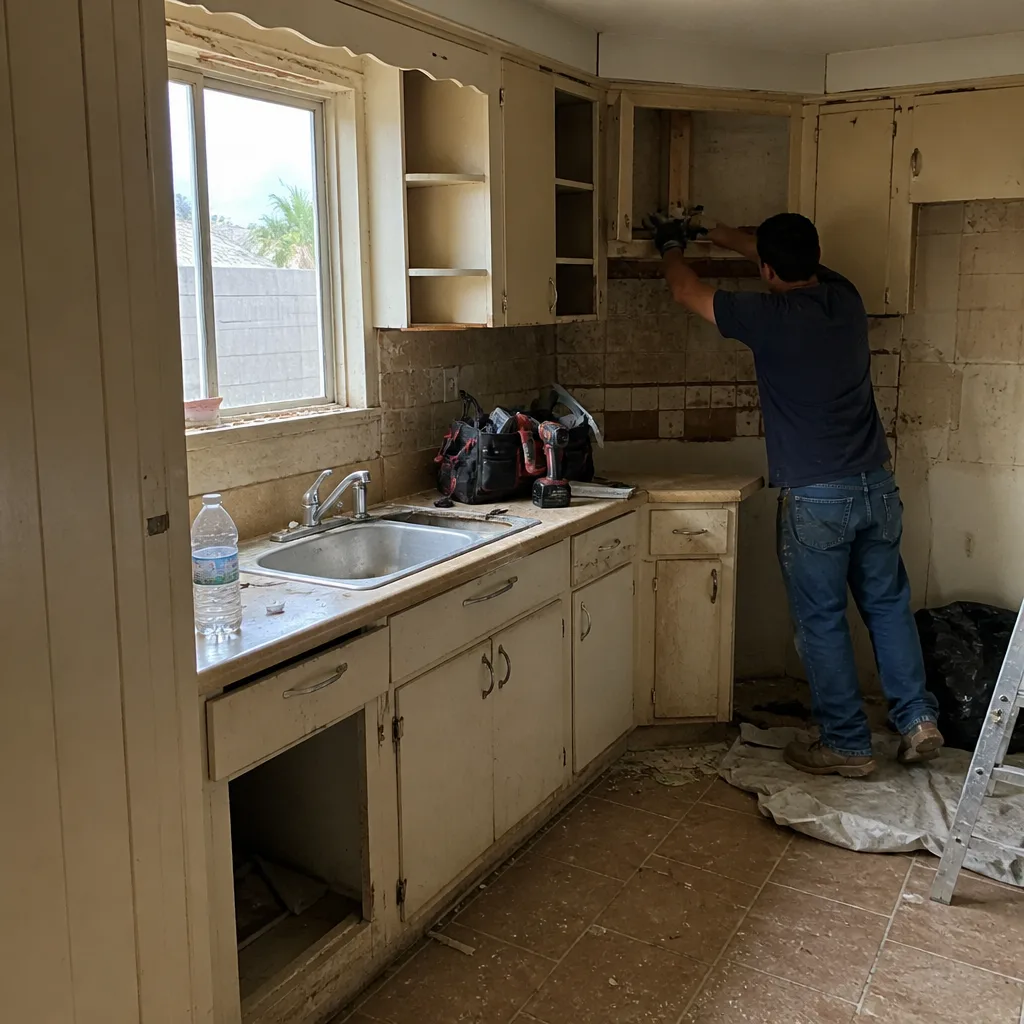 Before
 After
How Custom Windows Are Made for Mesquite, NV Homes
Custom windows are made by extruding a frame compound, fusing the corners under heat and pressure, and building a sealed insulated glass unit (IGU) with a low-e coating, an argon fill, and a dual-seal spacer system - all measured to your actual rough opening rather than pulled from a stock SKU. In Mesquite, where summer highs top 105°F and winter nights dip near freezing, those three manufacturing choices are what separate a window that lasts 25 years from one that fogs or warps inside ten. If you want the spec read against your own walls, call (888) 413-6358 and we’ll talk through it.
Key Takeaways
- Frame material, corner weld method, and glass spacer material drive desert performance more than the window’s price tag.
- Stock windows are built for temperate rough openings; older Mesquite stucco homes rarely match those dimensions.
- Andersen and Marvin pressure-test and thermal-cycle their units before shipping - that testing matters here more than almost anywhere.
- We chose those two brands for Mesquite specifically, not because they were easy to source.
The Frame Comes First: Fiberglass Pultrusion vs. Standard PVC
Most builder-grade windows use PVC extrusion. It’s cheaper, it goes into a die and comes out as a hollow frame, and it does fine in a mild climate. The problem in Mesquite is UV. Pounded daily by sun through a gorge that funnels heat, PVC expands and contracts hard, and the frame compound itself degrades over time - you get chalky surfaces, hairline cracks at the corners, and sashes that stop sealing tight.
Marvin builds their fiberglass frames through pultrusion: glass fibers are pulled through a resin bath and cured into a single dense profile. That profile moves far less with temperature swings than PVC does. Where a stock vinyl unit in Sun City or Highland Hills might show corner stress cracks after a decade of 100°F-plus afternoons, a pultruded fiberglass frame holds its dimensions. It also takes paint and finish better, which matters on the south-facing walls that catch the worst of the afternoon sun.
The lesson for a Mesquite homeowner: ask what the frame is made of before you ask the price. A window that’s “just made to size” out of standard PVC is still a standard PVC window.
Corner Fusion: Why the Weld Method Decides How Long the Frame Lasts
A window frame is four pieces joined at the corners, and how they’re joined is a manufacturing decision most buyers never hear about. There are two common approaches:
- V-weld (thermal fusion): the corner is cut at a V, the two ends are melted together under heat and pressure, and the seam is essentially one piece of material. Stronger, seals better, resists water and air infiltration.
- Mechanically fastened corners: the frame pieces are screwed or crimped together, often with a corner key. Faster and cheaper to produce. Under repeated heat cycling, the joint works loose.
In a place where a single window can face thermal cycling from 110°F in July to the low 30s in January, a mechanically fastened corner is the first thing to fail. The weld joint doesn’t. Our technicians have up to 12 years of experience fitting windows in this climate, and the failure pattern is consistent: loose corners, drafty seams, and water finding its way into the wall cavity during monsoon-season wind-driven rain.
Inside the Glass Unit: Coatings, Argon, and the Dual Seal
The glass in a custom window is its own assembly, not a single pane. Here’s the order of operations that matter:
- Low-e coating deposition. A microscopically thin metallic oxide layer is applied to one glass surface in a vacuum chamber. It reflects infrared heat back out in summer and holds interior warmth in winter. Placement (surface 2 or 3 of the IGU) changes performance, and it’s chosen for the climate.
- Spacer and seal. The two panes are held apart by a spacer bar. A warm-edge spacer - usually a low-conductivity material rather than plain aluminum - reduces thermal bridging at the edge of the glass, which is where condensation and seal stress start.
- Argon fill. The cavity is filled with argon, a heavier, slower-moving gas than air that improves insulation. Where the gas goes in and how the unit is sealed after matters: a poor fill or a sloppy seal and the argon leaks out over a few years, and the unit loses its rated performance.
- The dual-seal system. Primary seal (usually polyisobutylene) keeps moisture out of the cavity. Secondary seal (silicone or polysulfide) holds the unit together structurally. Both have to survive the expansion and contraction of desert heat cycling.
That dual seal is the difference between a fog-free unit and one that clouds up in year eight. When a window fogs, the seal has failed - the argon is gone and moisture has gotten in. In Mesquite’s heat cycling, a cheap single-seal unit is on a short clock.
Why Stock Windows Don’t Fit Mesquite’s Housing Stock
Stock windows are sized for the rough openings that dominate temperate-zone production building. Mesquite’s housing is split between 1980s-2000s stucco-on-frame homes in golf-course communities and a wave of 2010s-2020s custom builds and townhomes. The older homes were often built to dimensions that don’t match today’s stock catalog, and stucco-on-frame walls mean the rough opening isn’t where a stock chart says it should be.
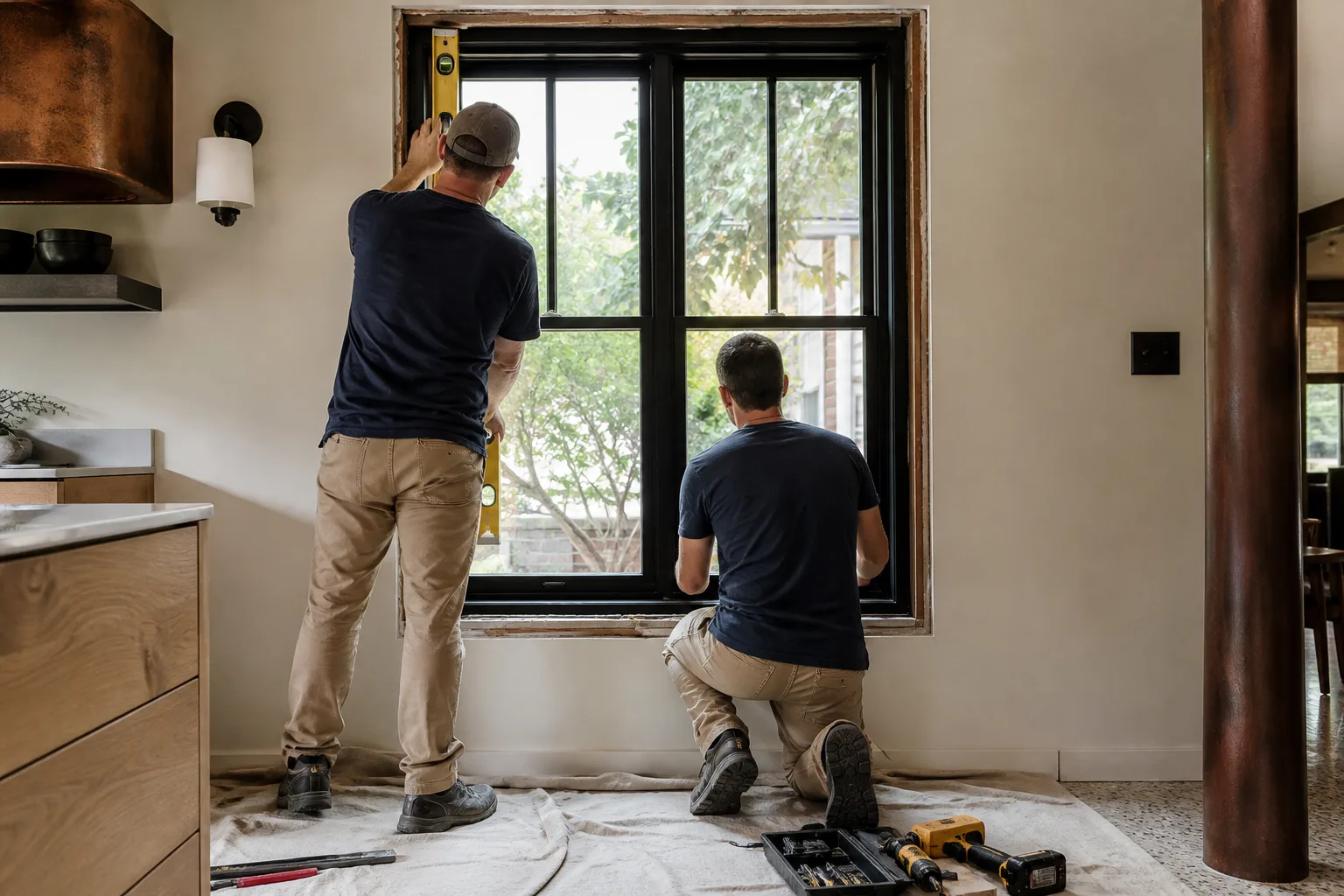
Shimming a stock window into a non-standard opening is how you get air leaks and water intrusion. True custom sizing means the window is built to your opening, measured on site, not to the nearest SKU. On tight, rocky lots where new custom builds are going up, the same logic applies in reverse: the window has to match what the framer actually built, not what the plan said.
For a deeper look at the full window and door scope we cover, see our Windows & Doors page. If you’re mapping out a larger project, our Mesquite service area page lays out what we handle locally, and the home page covers the rest of the trades.
Factory Quality Control: Why the Testing Matters Here
Andersen and Marvin put finished units through pressure testing (air, water, and structural) and thermal cycling simulation before they ship. That testing is not marketing theatre. It’s the step that catches a bad weld, a weak seal, or a spacer that fails under repeated expansion and contraction. In a climate that runs 115°F days and near-freezing winter nights in the same year, a window that hasn’t been cycled in a lab is a gamble.
We selected Andersen and Marvin for Mesquite because their manufacturing specs line up with what the desert demands - not because they were the easiest brands to source in a small market. When we walk a homeowner through a window spec, we’re pointing to the frame compound, the weld, and the seal, because those are the parts that decide whether the window is still doing its job in 2046. Custom window projects in Mesquite typically run $4,500-$15,000, and impact-rated units can reach $25,000, so the spec deserves the scrutiny.
Common Scenarios We See in Mesquite
- Golf-course stucco homes (Sun City, Highland Hills): original builder-grade vinyl windows showing corner cracks and fogged glass after two decades of UV.
- New custom builds on tight, rocky lots: rough openings that don’t match the plan dimension, needing true custom sizing rather than shimmed stock.
- South- and west-facing walls: the worst UV exposure, where frame degradation and seal failure show up first.
- Monsoon-season leak calls: wind-driven rain finding failed corners and poor seals.
Every job is covered by our 730-Day Done Right Promise, and we answer the phone with a live person 24/7. Estimates are free, pricing is upfront, and 0% financing for 18 months plus $1,000 off projects over $10,000 keeps a full window package within reach.
FAQs
Custom windows are built to your measured rough opening with a chosen frame compound, a fused corner weld, and a climate-matched glass unit, while stock windows are mass-produced to standard dimensions with cheaper materials and mechanically fastened corners. In Mesquite, that difference shows up as fogged glass and loose corners in stock units after a decade of extreme heat cycling.
Fogging means the dual-seal system on the insulated glass unit has failed and moisture has entered the cavity. In Mesquite’s heat cycling - 105°F-plus summers and near-freezing winter nights - a cheap single-seal unit fails faster. A custom unit with a warm-edge spacer and proper primary and secondary seals holds up far longer. Call (888) 413-6358 if you’re seeing fog between the panes.
Older stucco-on-frame homes in Mesquite often have rough openings that don’t match stock dimensions, and shimming a stock window into a non-standard opening leads to air leaks and water intrusion. True custom sizing means the window is built to your actual opening. A free estimate will tell you which path you’re on.
Window replacement in Mesquite typically runs $4,500-$15,000, and impact-rated units can reach $25,000 depending on size, frame material, and glass spec. Call (888) 413-6358 for an exact quote - estimates are free and pricing is upfront with no surprises.
If you’d rather have it looked at, Groundwork Construction Co. of Mesquite offers a no-pressure assessment in Mesquite - call (888) 413-6358. We’ll read your existing windows, explain what failed and why, and quote a custom spec that’s built for this climate, backed in writing by our 730-Day Done Right Promise.
Written by the team at Groundwork Construction Co. of Mesquite, serving Mesquite, NV.