



Free written scope consultation - allowances, timeline, and change-order rules on paper before a single trade is scheduled
Styles & brands we work with
- Kitchen remodeling
- Bathroom remodeling
- Home additions & ADU
- Roofing
- Windows & doors
- Driveway & pavers
- Fence
See the difference
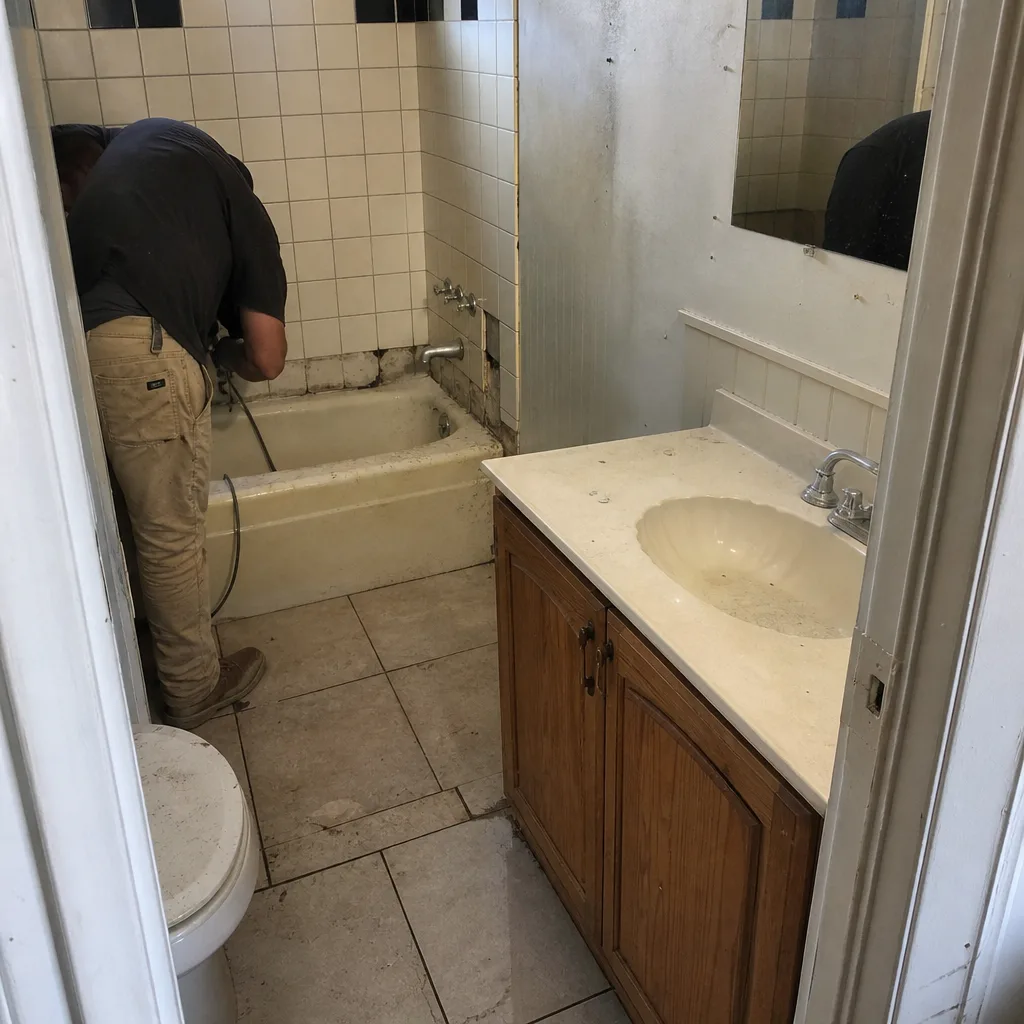 Before
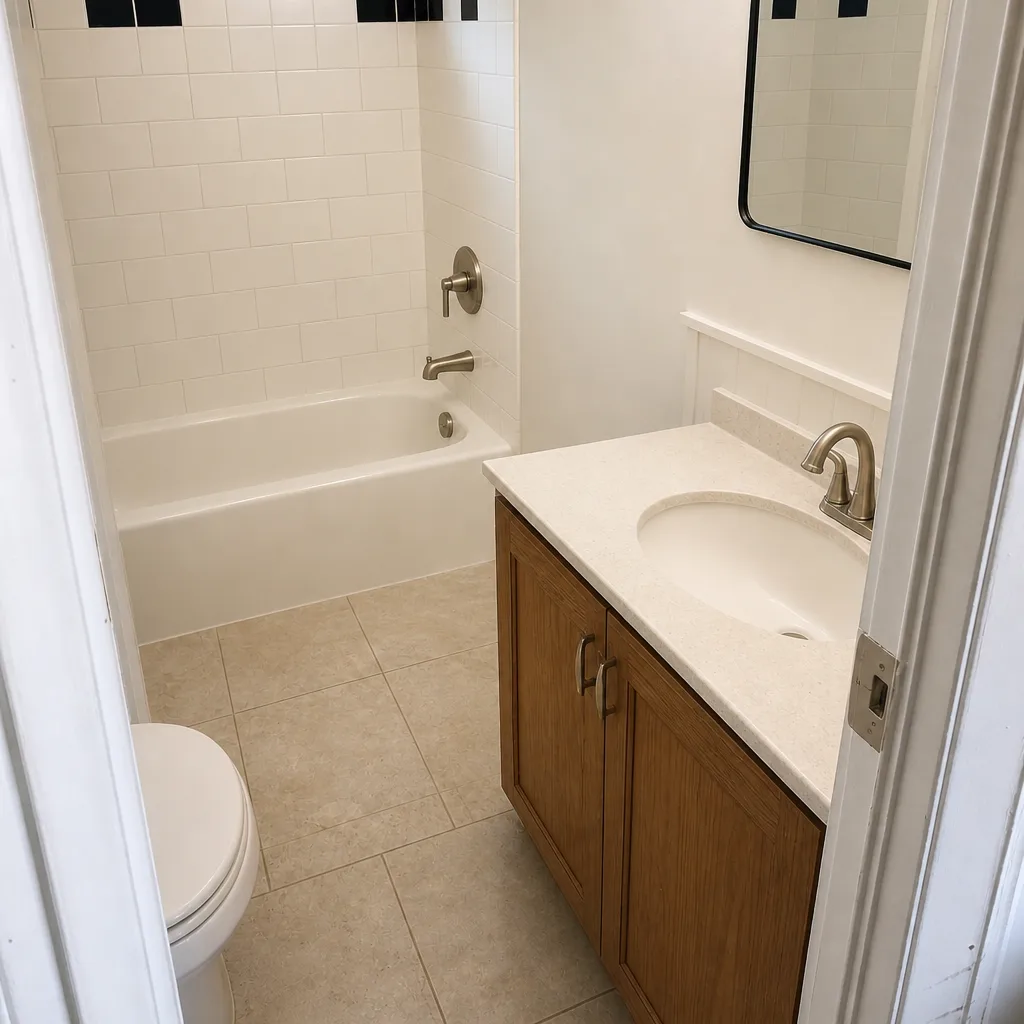 After
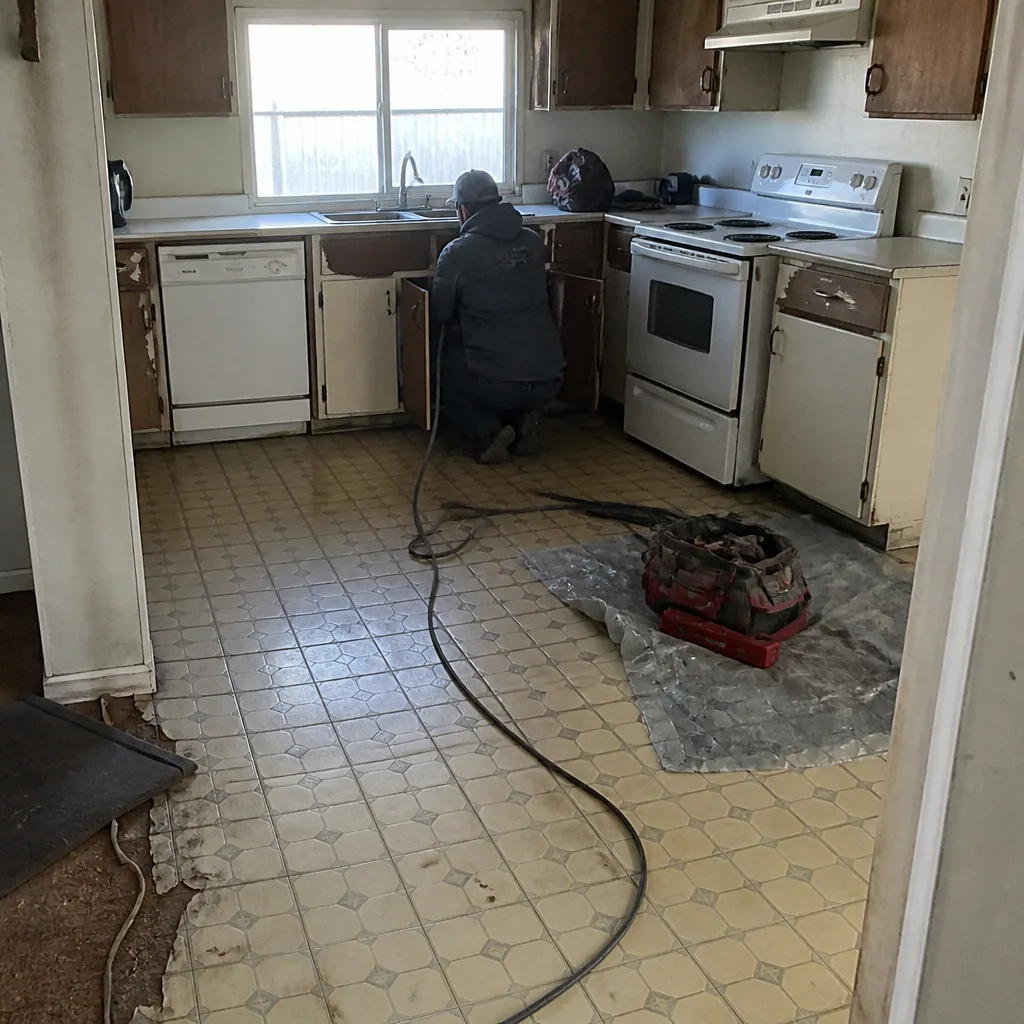 Before
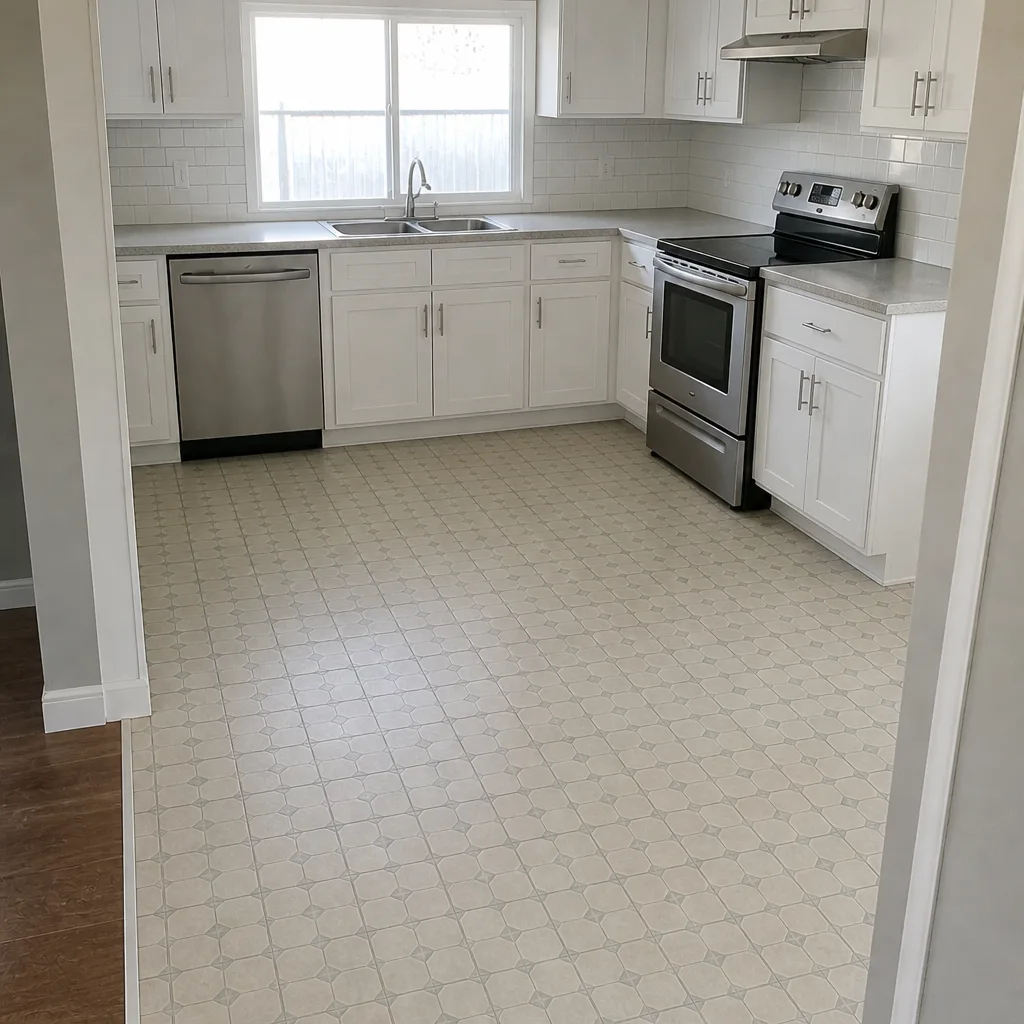 After
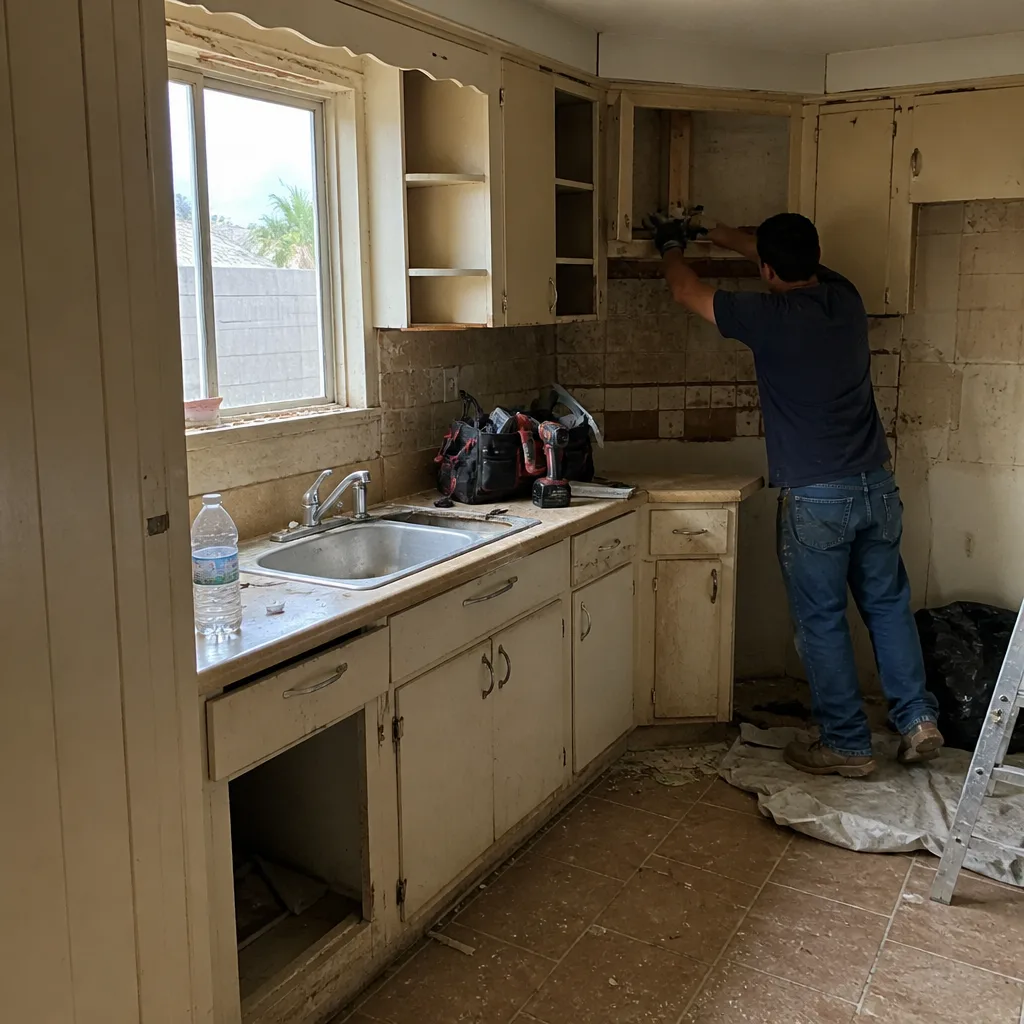 Before
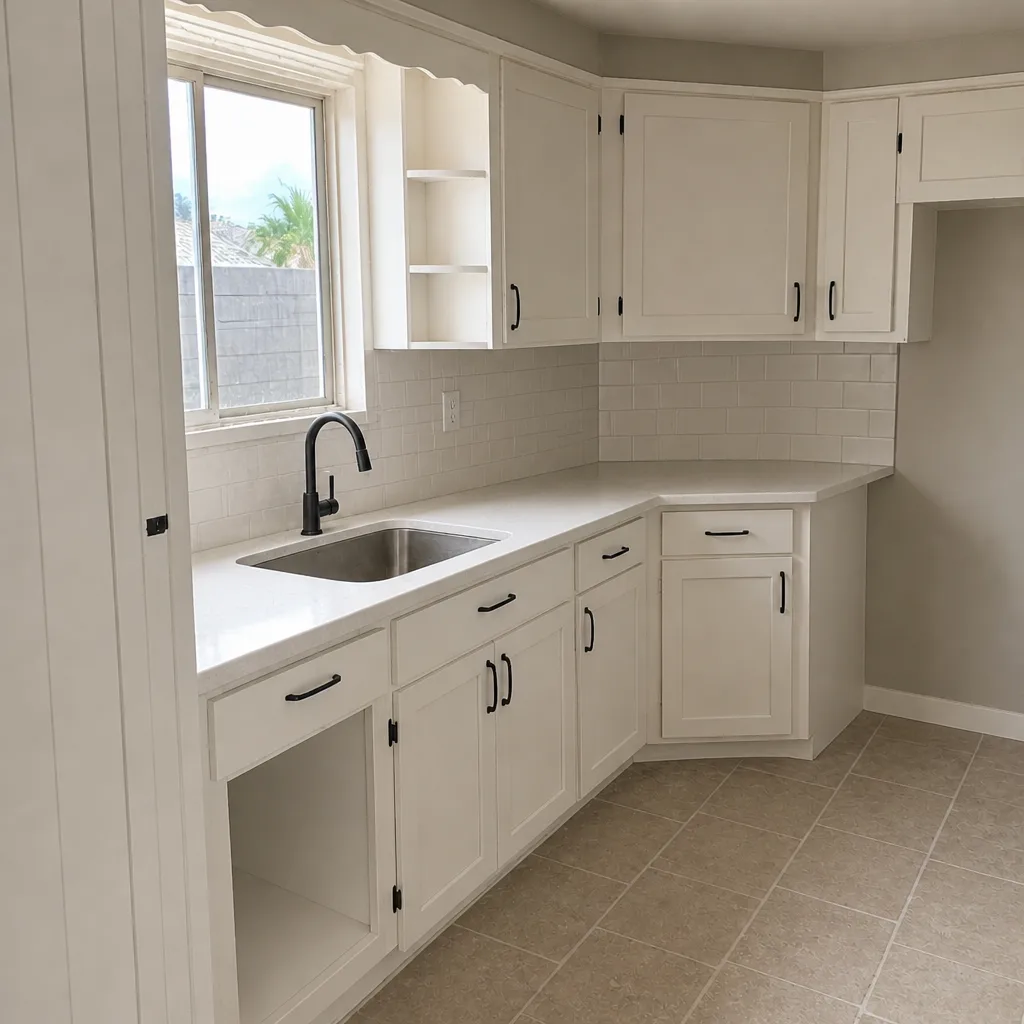 After
How to Repair a Chain Link Fence in Mesquite, NV: Fix the Heat Damage, Not Just the Hole
Repairing a chain link fence in Mesquite starts with the right diagnosis: the fabric isn’t rusting, it’s baking. The PVC coating on galvanized mesh turns brittle under sustained UV and begins flaking within 8-10 years, and the bare wire underneath then corrodes at the wire twists during monsoon moisture cycles. Repair that recognizes this sequence (coating failure first, tension-band loosening second, corrosion at the twists third) holds. Repair that only patches the visible hole won’t. If a wind event just racked your fence and you’re deciding between a weekend patch and a professional look, call (888) 413-6358 and a live person answers, any hour.
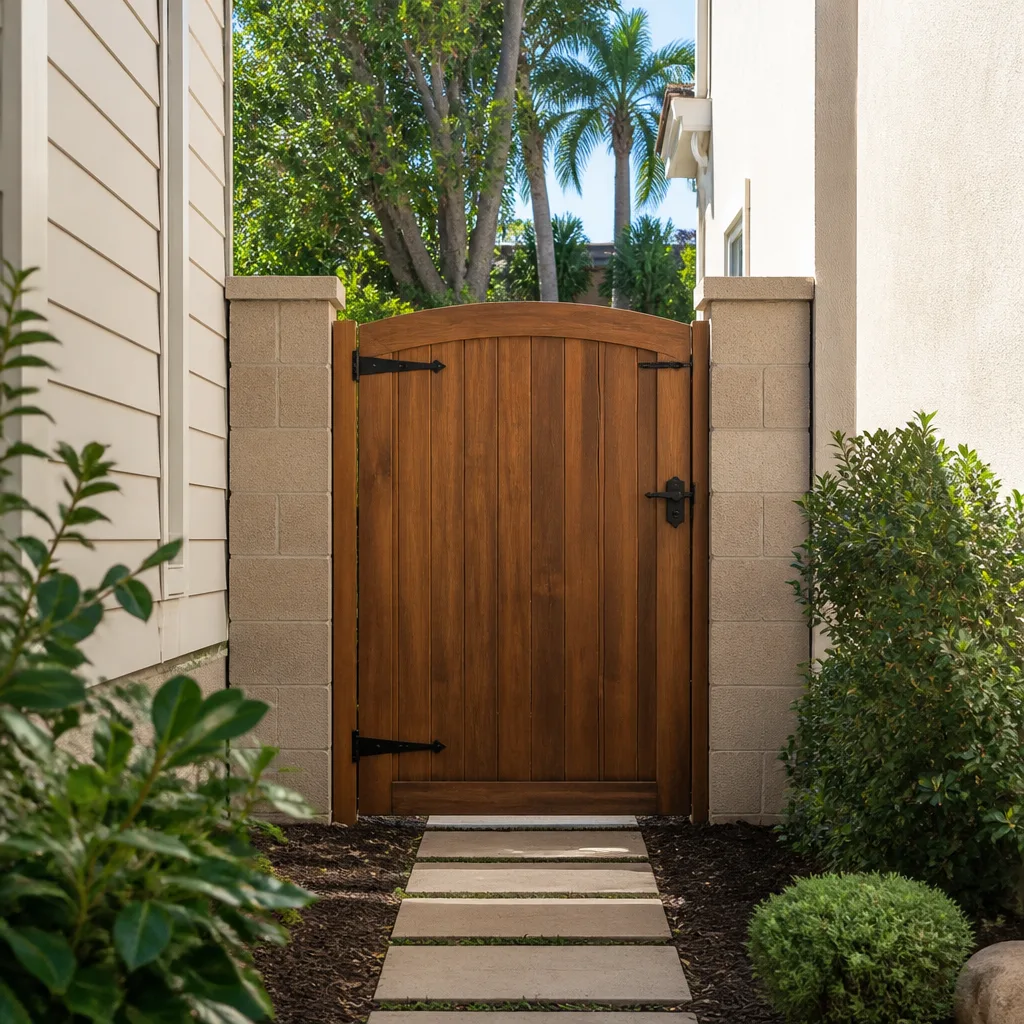
Why chain link in Mesquite fails differently than it does anywhere else
Low humidity is the reason. Rust needs sustained moisture to take hold on the flat faces of the mesh, and Mesquite doesn’t give it enough. What the desert does give is relentless summer UV, with highs that routinely push past 105°F. That’s what breaks the coating down.
The failure sequence we see on Sun City and Highland Hills fences runs like this:
- UV degrades the vinyl coating on the galvanized wire until it chalks, cracks, and flakes off, usually starting on the south- and west-facing runs that catch the worst sun.
- Bare wire is exposed to the handful of moisture cycles the year does bring, most of them arriving during monsoon season.
- Corrosion starts at the wire twists, not the flat sections. Those are the spots where coating thins during manufacturing and where water sits longest.
- The mesh weakens from the inside out. From three feet away the fence looks intact while individual wires are quietly losing section at every knuckle.
That last point matters for repair decisions. Surface rust wipes off and tells you little. Pitting at the twists tells you how much wire is actually left holding the fence together. When we’re on a Mesquite property, checking the twists is the first thing we do, because that’s where the honest condition of the mesh shows up.
Tension bands and the wind problem most repair guides skip
The Virgin River gorge funnels wind, and chain link fabric behaves like a sail when it does. Every high-wind event puts lateral rack force on the fabric, and that force transfers straight into the tension bands that hold the mesh to the corner and end posts. Bands that were snug five seasons ago work loose. Once they’re loose, the fabric sags, the bottom rail lifts, and the whole run starts slapping itself apart in the next gust.
Re-tensioning is mechanical work with a specific order to it:
- Walk the whole perimeter and mark every corner and end post where the band has shifted, rotated, or loosened on the pipe.
- Check post plumb before touching the bands. A post that’s been racked out of plumb will just loosen the new tension again.
- Re-set the bands and re-tension the fabric with a fence puller, working from the corner outward so the load stays even across the run.
- Confirm the bottom of the fabric clears the ground by a consistent gap so monsoon runoff doesn’t push debris against it and accelerate the sag.
Most online guides stop at “tighten the tension bands” and never mention plumb or load order. If you’re doing the repair yourself, those two steps are the difference between a fix that lasts a season and one that lasts years.
Splicing a wind-damaged section: matching gauge is the whole game
When a wind event tears out a section of fabric, the right repair is a splice panel joined with hog rings, and the panel has to match the original gauge. Standard residential chain link in Mesquite is 11.5 gauge. Buying 12.5 gauge repair mesh because it’s what the shelf had is how you end up with a patch that flops in the wind and pulls away from the surrounding fabric within a year.
Matching gauge locally takes ten minutes if you know what to measure. Bring a short cut from the damaged section to the supplier, or use a wire gauge tool on the wire itself, and confirm the mesh size (2-inch is the residential standard) along with the gauge. If you’re using a splice section rather than a full fabric replacement, join it with hog rings spaced about every 6 inches down both edges. Zip ties and baling wire will hold through the first wind and fail by the second. That’s a repair to skip.
If you’d rather hand the whole thing off, our Fence Installation team handles repairs and replacements across the Mesquite area, and the work is covered by our 730-Day Done Right Promise.
Repair or replace? The honest threshold for UV-degraded mesh
Patching stops making sense once the vinyl coating is flaking on more than about 30% of the fabric surface. Past that line, the patched sections will outlast the surrounding mesh by years, which means you’re on a treadmill of repairs while the rest of the fence keeps weakening underneath the patches.
The threshold applies to the fabric, not the frame. Posts, rails, and top rail usually have plenty of life left even when the mesh is done, and replacing only the fabric is far cheaper than a full rebuild. Here’s roughly where Mesquite homeowners land on the two paths:
| Scope | Typical range |
|---|---|
| Targeted repair (bands, splicing, re-tension) | $350-$1,200 |
| Fabric replacement on existing frame | $1,500-$3,500 |
| Full fence replacement (vinyl or aluminum) | $3,500-$9,000 |
Full vinyl runs typically land in the $3,500-$9,000 range; aluminum sits a little higher. If you’re replacing and want something that won’t repeat the coating failure, brands like Bufftech and ActiveYards make vinyl systems built for high-UV markets, and we spec those for Mesquite properties often. When a wind event takes out a fence run on a Saturday evening, the practical question is whether to patch now or replace. Being able to reach a real person at that moment (rather than leaving a voicemail until Monday) changes what you decide. We answer live around the clock, and the home page lays out how we handle assessments and estimates.
Key takeaways
- Chain link in Mesquite fails from UV-degraded coating first, then corrosion at the wire twists, not from surface rust.
- Loose tension bands at corner and end posts are a wind-load problem, and re-tensioning means checking post plumb first.
- Wind-damaged splices need 11.5 gauge mesh joined with hog rings, not zip ties.
- If coating is flaking on over 30% of the fabric, fabric replacement beats patching.
FAQs
A targeted repair (re-tensioning bands, splicing a wind-damaged section) typically runs $350-$1,200 in Mesquite, while fabric replacement on an existing frame lands around $1,500-$3,500. A full replacement with vinyl or aluminum runs $3,500-$9,000. Call (888) 413-6358 for an exact quote.
Same-day repair is often possible for tension band and splice work if the material is on hand, and Mesquite’s smaller supplier footprint sometimes means a next-day start when a specific gauge has to be ordered. Call (888) 413-6358 and we’ll give you a realistic window rather than a guess.
Repair is cheaper until the vinyl coating is flaking on roughly 30% or more of the fabric; past that point, replacement is the better spend because patches will fail unevenly against weakening mesh. Estimate the fabric condition first, then decide. Call (888) 413-6358 for a free assessment.
The flakes are UV-degraded PVC coating, not rust; Mesquite’s low humidity slows corrosion on the flat faces while intense sun breaks the coating down within 8-10 years. Once the coating is gone, corrosion begins at the wire twists. Call (888) 413-6358 if you want an honest read on how much life the mesh has left.
Get a straight answer on your fence
If you’d rather have it looked at than guess from the driveway, Groundwork Construction Co. of Mesquite offers a no-pressure assessment in Mesquite. Our technicians bring up to 12 years of experience to every job, and the work is backed in writing by our 730-Day Done Right Promise. Call (888) 413-6358 for a free estimate.
Written by the team at Groundwork Construction Co. of Mesquite, serving Mesquite, NV.