Last updated November 18, 2026
Free written scope consultation - allowances, timeline, and change-order rules on paper before a single trade is scheduled
Construction Cost Breakdown: The Mesquite Homeowner’s Reference for 2026
When a Mesquite homeowner compares a local contractor’s bid to a national cost-per-square-foot average, they’re comparing two different things. That national figure doesn’t account for the material markup from the nearest major supply hub being 80 miles away, or the soil amendment costs that caliche-heavy lots in Mesquite routinely require. The number on the screen and the number on the bid can differ by 20% or more, and the gap isn’t anyone’s fault. It’s geography.
This guide breaks down what construction actually costs in Mesquite in 2026, line by line. You’ll see where the freight premium lands, what local labor rates look like by trade, how site prep destroys otherwise sound budgets, and how to read a bid so you can tell honest cost from padded margin.
Quick Answer
Construction costs in Mesquite in 2026 run roughly 5% to 15% above rural Nevada benchmarks and 3% to 8% below Las Vegas metro pricing, driven mainly by material freight premiums and a smaller local labor pool. A typical mid-grade kitchen remodel in Mesquite lands between $28,000 and $65,000, a roof replacement between $11,000 and $24,000 depending on pitch and material, and an ADU addition between $145,000 and $310,000 including site work. Site prep on caliche-heavy lots can add $4,000 to $18,000 that generic budgets never show.
Styles & brands we work with
- Kitchen remodeling
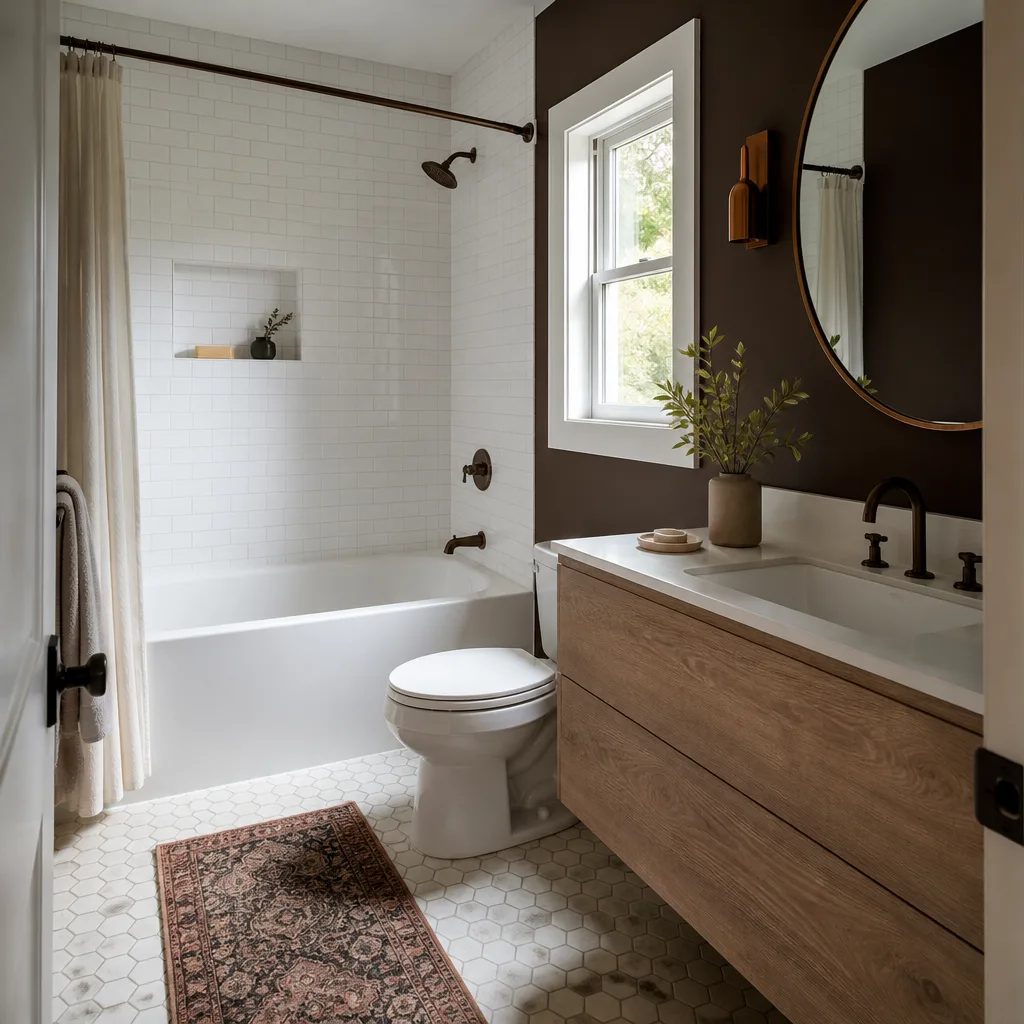
- Bathroom remodeling
- Home additions & ADU
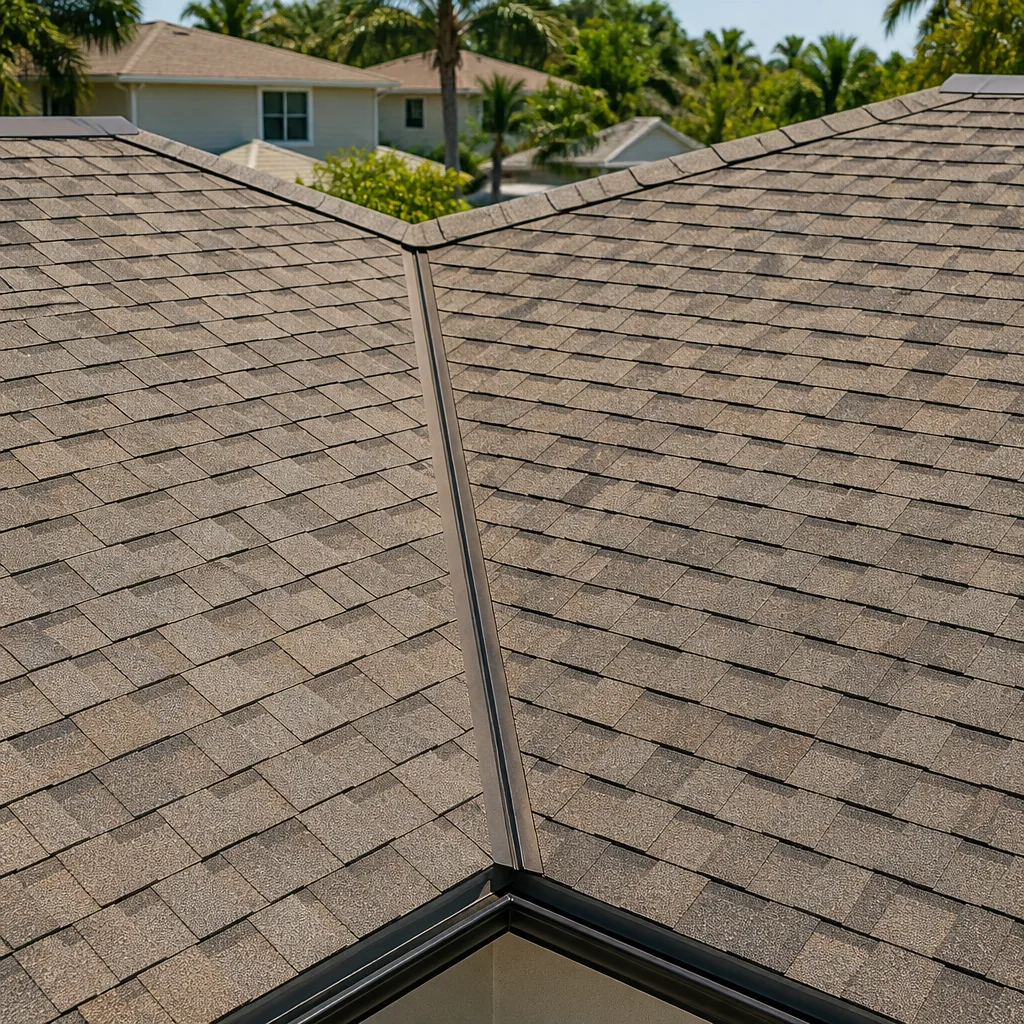
- Roofing
- Windows & doors
- Driveway & pavers
- Fence
Table of Contents
- Why Mesquite Costs More Than Rural Nevada (The Freight Premium)
- 2026 Labor Rates by Trade in Mesquite
- Site Prep and Soil Work: The Line Nobody Budgets For
- 2026 Line-Item Cost Ranges for Mesquite Projects
- How to Read a Contractor’s Bid Line by Line
- Contingency Budgeting: What Percentage Is Realistic in Mesquite?
- ADU and Addition Costs in Mesquite
- Common Mistakes to Avoid
Why Mesquite Costs More Than Rural Nevada (The Freight Premium)
Almost every material that lands on a Mesquite job site rode in from somewhere else. Las Vegas is the nearest major supply hub, roughly 80 miles southwest on I-15. St. George, Utah is a comparable drive north. That distance isn’t free, and the cost of moving it rides on your bid.
The freight premium isn’t uniform across materials. Some items absorb it gracefully. Others carry a markup you’ll notice.
- Lumber and framing material: modest premium, typically 3% to 6% over Las Vegas pricing, because most yards run regular deliveries on this corridor and the loads are dense.
- Concrete and aggregates: local batch plants serve Mesquite, so ready-mix pricing here is competitive with Las Vegas. The premium shows up in small-load deliveries and after-hours pours, not the material itself.
- Roofing (GAF, Owens Corning, CertainTeed systems): 4% to 9% premium. Shingles are heavy, and a single missed delivery means a wait that the crew bills for.
- Windows and doors (Andersen, Marvin, Pella): the largest freight premium in the market, often 8% to 14% above Las Vegas. Oversized units and specialty glazing arrive on dedicated trucks, not shared loads, and damage in transit means a full replacement cycle measured in weeks.
- Cabinetry (KraftMaid, semi-custom lines): 5% to 10% premium. Cabinets are bulky, fragile, and shipped from regional distribution centers, not local stock.
- Pavers and hardscape (Belgard systems): 6% to 12% premium. Paver pallets are extremely heavy, and freight is charged by weight. This is one of the reasons driveway and paver work in Mesquite prices higher than homeowners expect from a Las Vegas quote.
- Fencing materials: 3% to 7% premium. Posts, panels, and hardware generate a modest freight charge that a bid should itemize, not bury.
Why this matters for you: when a contractor quotes a window package or a cabinet set using a Las Vegas number, that bid is either going to change later or it’s underpriced because someone missed the freight line. Either way, you’re the one exposed. A bid that shows freight and delivery separately is a bid written by someone who has done this in Mesquite before.
In our experience, the single biggest source of bid disputes in this market is a homeowner who signed a quote built on national averages and then saw freight added after the contract was signed. Ask the question upfront. If you want a sense of how we handle full-scope projects from foundation to finish line, start at the Groundwork Construction Co. of Mesquite home page.
2026 Labor Rates by Trade in Mesquite
Labor is the other half of the story. Mesquite’s subcontractor pool is smaller than what you’ll find in Las Vegas or St. George, which is a good and a bad thing. It’s good because the trades working here are established and repeat-business dependent. It’s bad because a smaller pool means less price competition, and scheduling flexibility is thinner.
Here are realistic 2026 labor rate ranges for trades you’ll encounter on a Mesquite project. These are billed rates, not wages. They include overhead, supervision, insurance, and margin.
- Concrete flatwork: $9 to $16 per square foot installed. Driveways, patios, and slabs sit in this range. Exposed aggregate and stamped finishes push toward the top or beyond.
- Framing carpentry: $18 to $32 per square foot of floor area for additions, or $75 to $125 per hour for smaller scopes.
- Masonry and block work: $14 to $26 per square foot of wall face, with block walls and pilasters priced individually.
- Roofing labor: $3.50 to $7 per square foot for tear-off and install, higher for steep-pitch or multi-level roofs.
- Finish carpentry and trim: $55 to $110 per hour depending on the detail level.
- Electrical: $90 to $150 per hour for licensed residential work.
- Plumbing: $95 to $160 per hour, higher for rough-in work requiring permit inspections.
- Tile and finish flooring: $9 to $22 per square foot installed depending on tile size and pattern complexity.
- Painting: $3 to $6 per square foot of wall surface, materials included.
- HVAC: $105 to $175 per hour for service work, with system replacements quoted as packages.
Two context points. First, these are billed rates that account for travel, since many trades drive in from Las Vegas or St. George. If you see a number meaningfully below these ranges, ask how the crew is getting paid, because someone is cutting something. Second, the good trades in this market book weeks out. A contractor who can start next Tuesday on a project that isn’t a genuine emergency isn’t necessarily more efficient. They may just be less busy, and there’s usually a reason.
Site Prep and Soil Work: The Line Nobody Budgets For
This is where Mesquite projects part ways with generic budgets, and it’s the line most homeowners have never been told about. The Virgin River valley sits on soils that include significant caliche deposits, a natural cemented layer that forms when calcium carbonate binds soil and gravel into a hard layer. Sometimes it’s a few inches deep. Sometimes it’s a foot or more, and it’s unforgiving.
Caliche breaks excavator teeth. It slows trenching. It has to be removed and replaced with compactable material before any slab, paver base, or foundation can be built correctly. When a bid doesn’t mention it, the contractor is either assuming your lot is clear or is planning to hit you with a change order three days into the dig.
Here’s what site prep realistically costs in Mesquite in 2026:
- Standard excavation and grading: $2,500 to $6,500 for a standard residential lot.
- Caliche removal: $45 to $120 per cubic yard removed, typically $4,000 to $15,000 on affected lots. Severe deposits push higher.
- Import fill and compaction: $32 to $65 per cubic yard, delivered and compacted.
- Compaction testing: $400 to $1,100 per test, required for footings, slabs, and paver sub-bases.
- Drainage correction (grading away from foundation, swales, retention): $1,500 to $7,000 depending on lot slope and existing drainage.
- Utility trenching through rock: $18 to $45 per linear foot, versus roughly half that in clean soil.
If your lot is in a newer subdivision on the flat valley floor, you may get through this section with modest costs. If you’re on a lot with a slope, an older parcel, or a partially cut hillside, budget the high end until a site visit says otherwise.
One more Mesquite-specific note: the desert climate means grading and drainage aren’t cosmetic. When monsoon-season rain lands on a lot that wasn’t graded to move water away from the structure, it finds the low spot at your foundation. Correcting that after the fact costs more than doing it during site prep. This is one place where a free estimate with a walk of the actual lot tells you more than any online calculator ever will.
2026 Line-Item Cost Ranges for Mesquite Projects
Below are installed cost ranges for common Mesquite scopes in 2026. These include labor, standard materials, and normal site conditions. They do not include caliche removal, structural repair surprises, or premium upgrades.
- Kitchen remodel, mid-grade: $28,000 to $65,000. Layout changes and semi-custom cabinetry push toward the top. KraftMaid and comparable lines sit comfortably here.
- Kitchen remodel, high-end: $65,000 to $135,000. Cambria or similar quartz counters, full custom cabinetry, and appliance packages in this tier.
- Bathroom remodel, mid-grade: $11,000 to $28,000. Tile shower, new vanity, Kohler fixtures at the top end.
- Bathroom remodel, high-end: $28,000 to $60,000. Curbless wet rooms, heated floors, dual vanities.
- Roof replacement, asphalt shingle: $11,000 to $19,000 for a typical 1,800 to 2,400 square foot roof. GAF and Owens Corning systems in this range with proper underlayment and flashing.
- Roof replacement, tile or metal: $22,000 to $45,000 depending on material and roof complexity.
- Window replacement, whole home: $8,500 to $28,000. Andersen and Marvin lines at the upper end. Number of units, sizing, and glazing options drive the spread more than anything else.
- Fence installation, 6-foot block wall: $38 to $72 per linear foot. Standard conditions, no rock issues.
- Fence installation, composite or wood: $32 to $68 per linear foot. Details in our Mesquite fence installation guide.
- Driveway, concrete: $9 to $16 per square foot installed.
- Driveway, pavers: $14 to $26 per square foot installed, including base and edge restraint.
- Room addition (per square foot): $195 to $340 per square foot of new conditioned space.
Compare these to a national average and you’ll see why the national average is a bad decision tool here. A $14 per square foot paver driveway nationally sounds close to the Mesquite low end. That’s not the same number once freight, base preparation for caliche-affected subgrade, and edge restraint are accounted for. When we quote a project, the number you see is the number you pay. No change orders for line items that should have been in the original bid.
How to Read a Contractor’s Bid Line by Line
Most homeowners read a bid like a receipt. They look at the bottom number and move on. That’s exactly the wrong way to read one, because two bids for the same project can look nearly identical at the bottom and be radically different contracts. Here’s a process for reading yours.
- Check for a defined scope on every line. “Kitchen remodel, lump sum $48,000” is a red flag. A real bid lists demo, framing, electrical rough-in, plumbing rough-in, drywall, cabinetry, countertops, tile, paint, and fixtures as separate line items with quantities. If a line lumps three trades together, you can’t audit it.
- Find the allowances. Allowances are placeholders, and they’re where margin hides. A $4,000 lighting allowance sounds fine until you realize the fixtures you actually want cost $9,000 and the difference is a change order with markup on it. Compare allowances to real product pricing before you sign. Ask for the specific brand and model in writing.
- Look for freight and delivery. On projects involving windows, cabinets, pavers, or roofing, freight should be visible. If it isn’t, it’s buried in labor lines, which makes the labor look more expensive than it actually is, and you lose the ability to compare bids accurately.
- Confirm permits and inspections are included. The permit should be on the bid as a line item, and the bid should say the contractor pulls it. If permits are excluded, ask who pulls them and who’s on the hook if an inspection fails.
- Check the site prep line for specificity. “Site prep and demo” is not enough. Caliche removal, compaction testing, and import fill should appear as separate lines or be excluded explicitly. A bid that skips this is either assuming your lot is clean or planning to change-order you.
- Read the warranty section. Look specifically for how long the workmanship warranty runs and what voids it. A one-year warranty versus a multi-year warranty is a massive difference in contractor confidence. Every project we complete is covered by the 730-Day Done Right Promise. If a bid doesn’t state the warranty length in writing, ask before you sign.
- Check the payment schedule. Front-loaded schedules (40% down before materials are ordered) are a risk. A reasonable schedule ties payments to completed milestones, with a meaningful final holdback released after the walkthrough.
Do this analysis and you’ll find that roughly a third of the bids you receive have a structural problem you can’t solve by negotiating. That’s a good sign. It’s better to know before signing than after.
Contingency Budgeting: What Percentage Is Realistic in Mesquite?
The standard advice is 10% to 15%. In Mesquite, on the scopes most affected by local conditions, that number is too low.
Here’s our realistic framework for 2026, based on which scope of work you’re doing:
- Roofing on a standard pitch: 8% to 12% contingency. Roof condition surprises come from deteriorated decking and rotted sheathing, and this is one of the more predictable scopes.
- Roofing on steep, multi-level, or older construction: 15% to 20%. Added layering, fragile pitch transitions, and flashing detail issues appear here.
- Kitchen and bathroom remodels: 12% to 18%. Behind-wall surprises (out-of-code wiring, wet framing, undersized plumbing) show up on nearly every mid-century and older home in the Mesquite area.
- Windows and doors: 8% to 12%. The primary surprise is discovering the rough opening is out of square or undersized, requiring reframing per opening.
- Driveways, pavers, and hardscape: 15% to 22%. Caliche removal and unexpected sub-base depth are the acute risks here. This is the scope where a homeowner is most exposed.
- Fence installation: 12% to 20%. Post-hole excavation through rock is the surprise; the total number of required holes is another.
- Additions and ADUs: 18% to 25%. Multi-trade, multi-inspection, longer timeline. Fewer surprises are affordable on this scope, so the contingency should be larger.
Why these are higher than the 10% rule of thumb: Mesquite’s climate, soil, and material availability all interact. A rotted sheathing discovery on a roof becomes a multi-day delay not just because of labor but because sheathing sheet stock has to come from the supply hub. A caliche discovery on a paver job delays the base prep and pushes the whole schedule, which pushes crew availability, which pushes cost.
If a contractor’s bid doesn’t include a contingency line, ask them what they’re assuming. A bid that assumes ideal conditions and adds contingency honestly is safer than one that promises a fixed number and then backfills every surprise through change orders.
ADU and Addition Costs in Mesquite
Accessory dwelling units are some of the highest-interest projects we see in Mesquite, and for good reason: they add livable space, they can be rented, and they raise property value in a way a cosmetic remodel rarely does. They’re also the scope where construction cost guides mislead homeowners most often, because every national number assumes clean site conditions and easy truck access.
Realistic 2026 costs for Mesquite:
- Detached ADU, 500 to 700 square feet: $145,000 to $260,000 including site work, utilities, and finish.
- Detached ADU, 700 to 1,000 square feet: $195,000 to $360,000.
- Attached addition, primary suite: $95,000 to $185,000 depending on existing structure and plumbing relocation.
- Garage conversion to living space: $55,000 to $110,000. This is often the highest return per dollar because the structure and slab already exist.
Modular and prefabricated construction is a meaningful alternative worth pricing. Network brands like Boxabl and Cover have made inroads into ADU pricing, and in the right lot conditions a modular unit can land fully installed for roughly 15% to 25% below a comparable site-built unit. This isn’t always true. The site prep, foundation, utility connections, and permit process are still fully local costs, so the savings sometimes evaporate when the ground turns out to be hard and the lot requires grading. It’s still worth pricing as a comparison, particularly on flat lots with easy access. Our Mesquite home additions and ADU page walks through the tradeoffs in more detail.
Two things every Mesquite ADU project needs to plan for: the Nevada permit and inspection process runs on a review cycle measured in weeks, not days, and inspection scheduling can add weeks to the total timeline. And the local electrical and plumbing capacity for the addition has to be verified against your existing service panel and utility connections before anyone starts digging.
Common Mistakes to Avoid
- Comparing a local bid to a national cost-per-square-foot average. The national average doesn’t account for the 80-mile freight premium or caliche removal. You’ll either conclude that every honest Mesquite contractor is overcharging or sign a bid that’s going to change. Use local ranges whenever you can find them, and ask what’s assumed in the bid you’re reviewing.
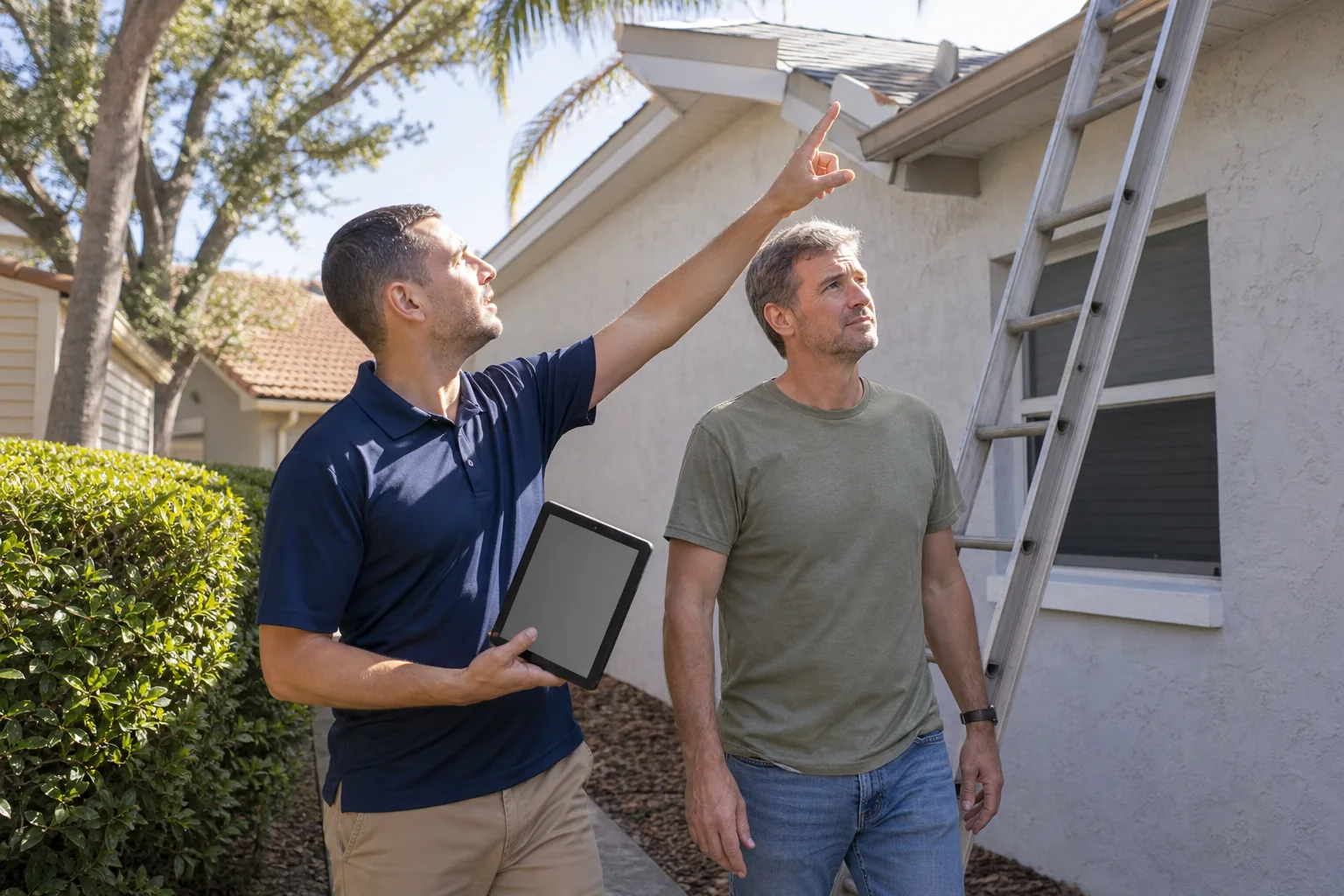
- Skipping a site visit before getting a quote. A contractor can’t price caliche removal over the phone. A quote without a walk of your actual lot is a placeholder, not a price. Insist on a walkthrough. If a contractor won’t come out before quoting, that’s the whole answer.
- Accepting allowances as if they’re fixed costs. Allowances are the most common place for margin to hide in a bid. Get specific product lines and model numbers written into your contract, or ask the contractor to price the actual products you plan to buy. KraftMaid vs. an unspecified “semi-custom” brand is a several-thousand-dollar difference on a kitchen.
- Budgeting zero contingency because the bid looks complete. Every Mesquite project has something behind a wall or under a slab. Plan 12% to 20% based on scope. A contractor who suggests skipping the contingency to hit your target number is telling you something about how change orders work in their business.
- Signing a front-loaded payment schedule. A 40% deposit before materials are ordered means you’re funding the contractor’s cash flow, not buying materials. A reasonable schedule ties payments to milestones and holds back a meaningful final payment for the walkthrough punch list.
- Ignoring drainage because the lot looks flat. Mesquite’s monsoon-season rain can find low points along the foundation that no one noticed in dry season. Grading corrections after the fact cost more than including them in site prep.
- Assuming freight is included when it isn’t stated. Window packages, cabinetry, and paver freight are the most common “surprise” charges after contract signing in this market. The word to look for on the bid is “delivery included,” and you should see it in writing or see the freight line itemized.
See the difference
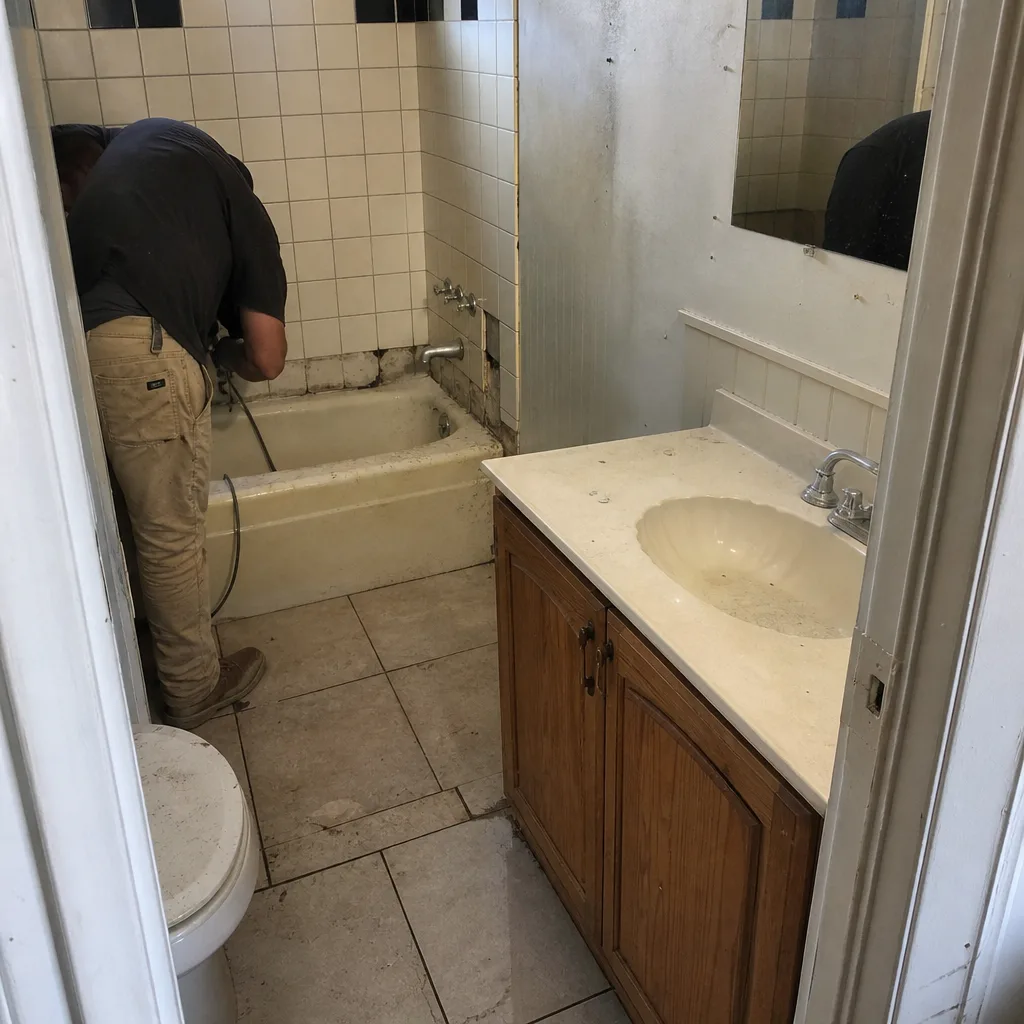 Before
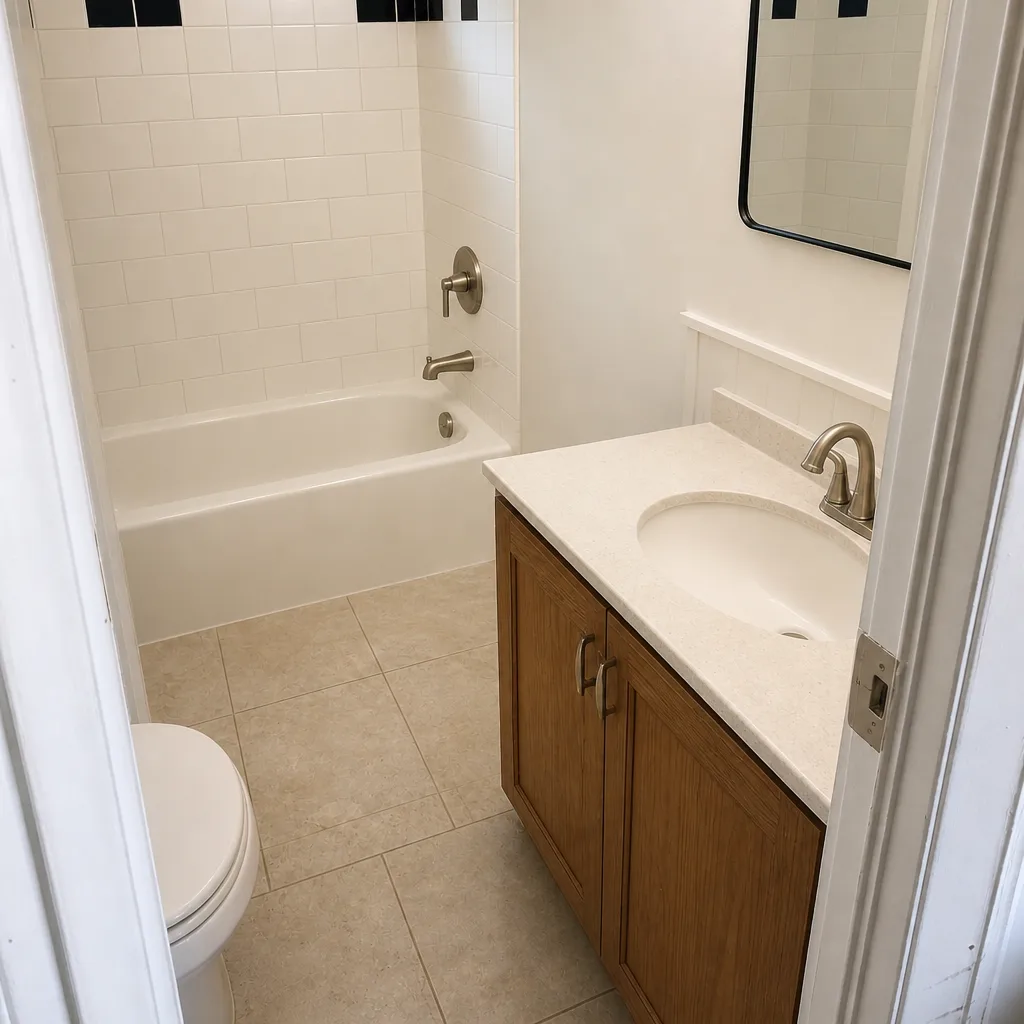 After
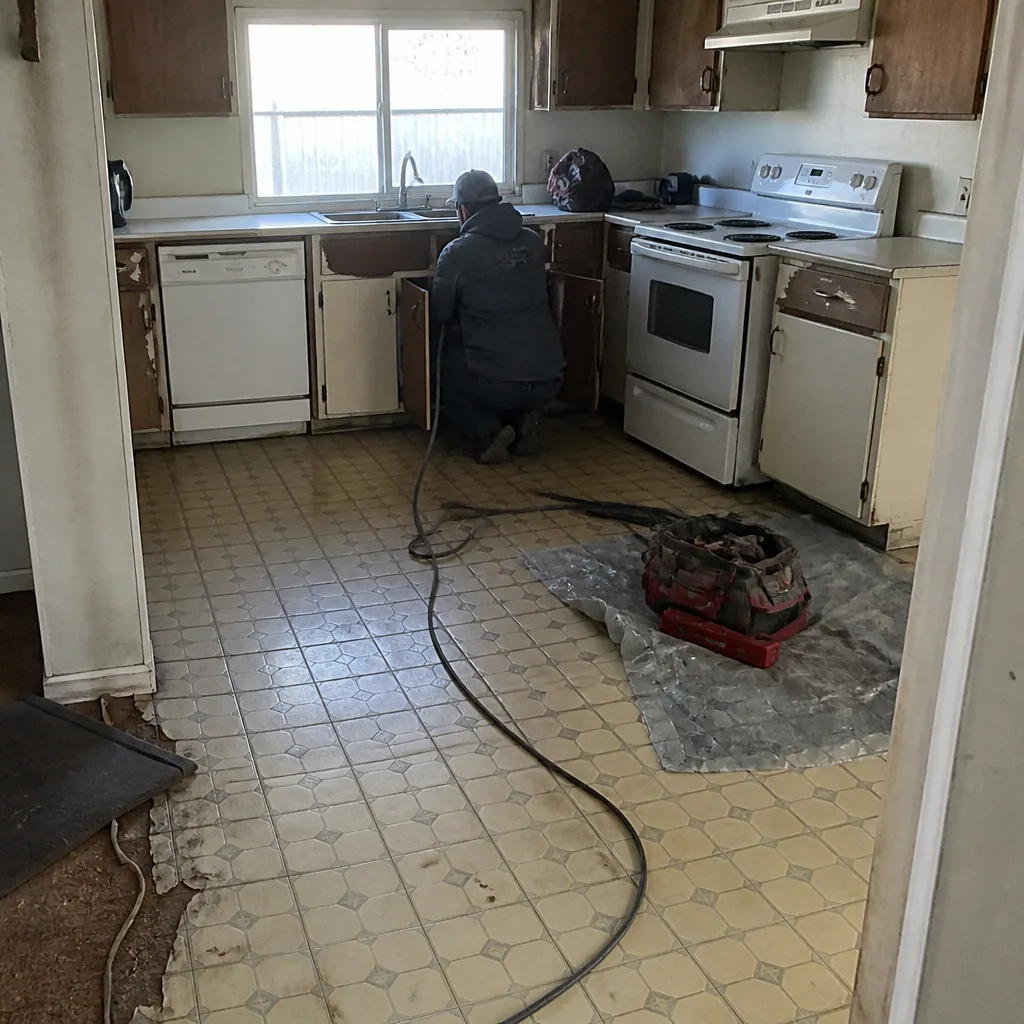 Before
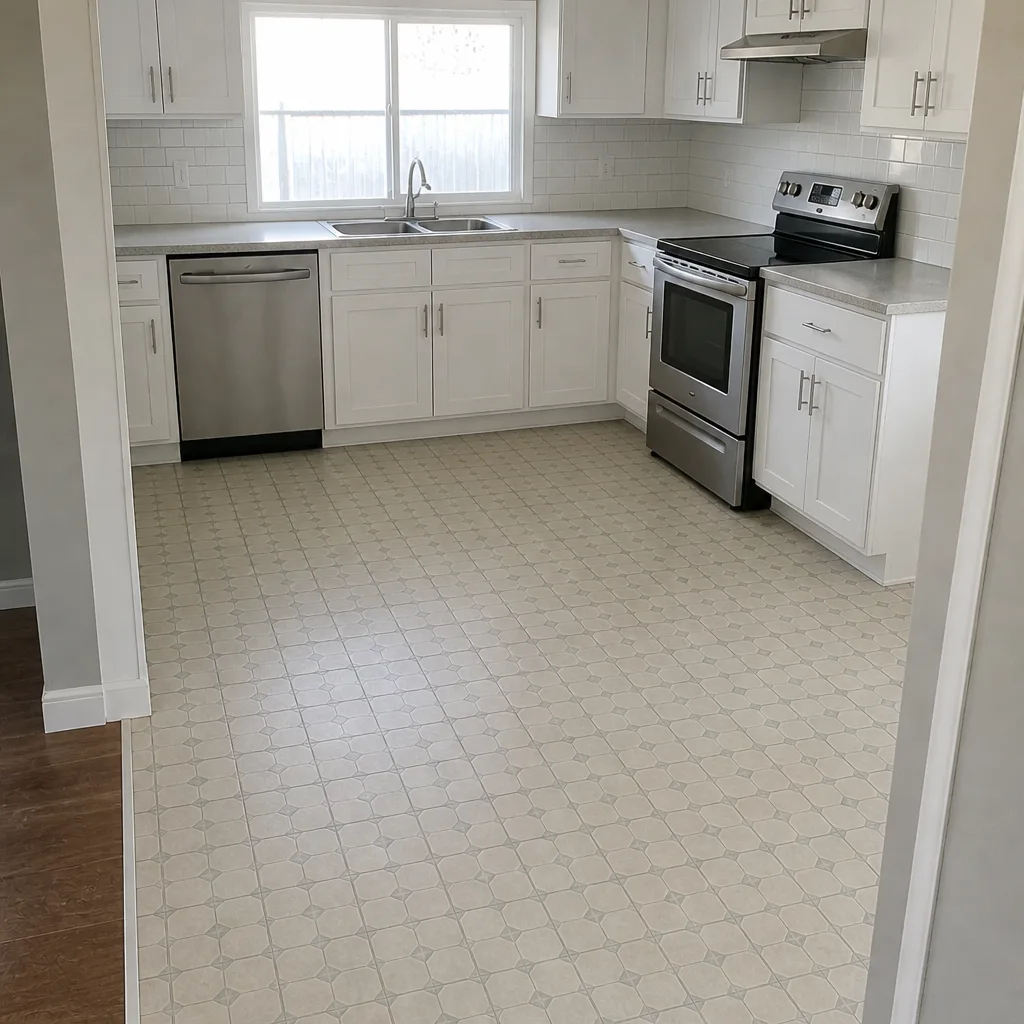 After
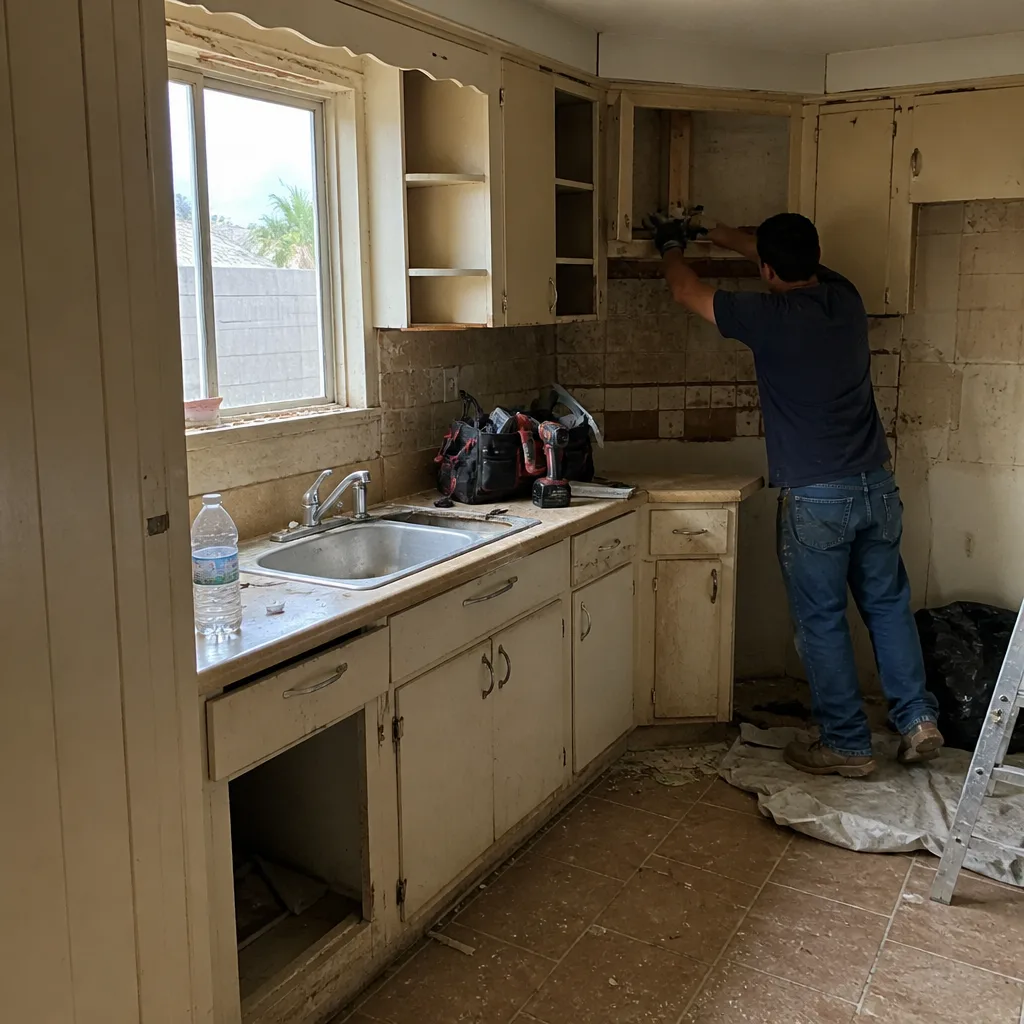 Before
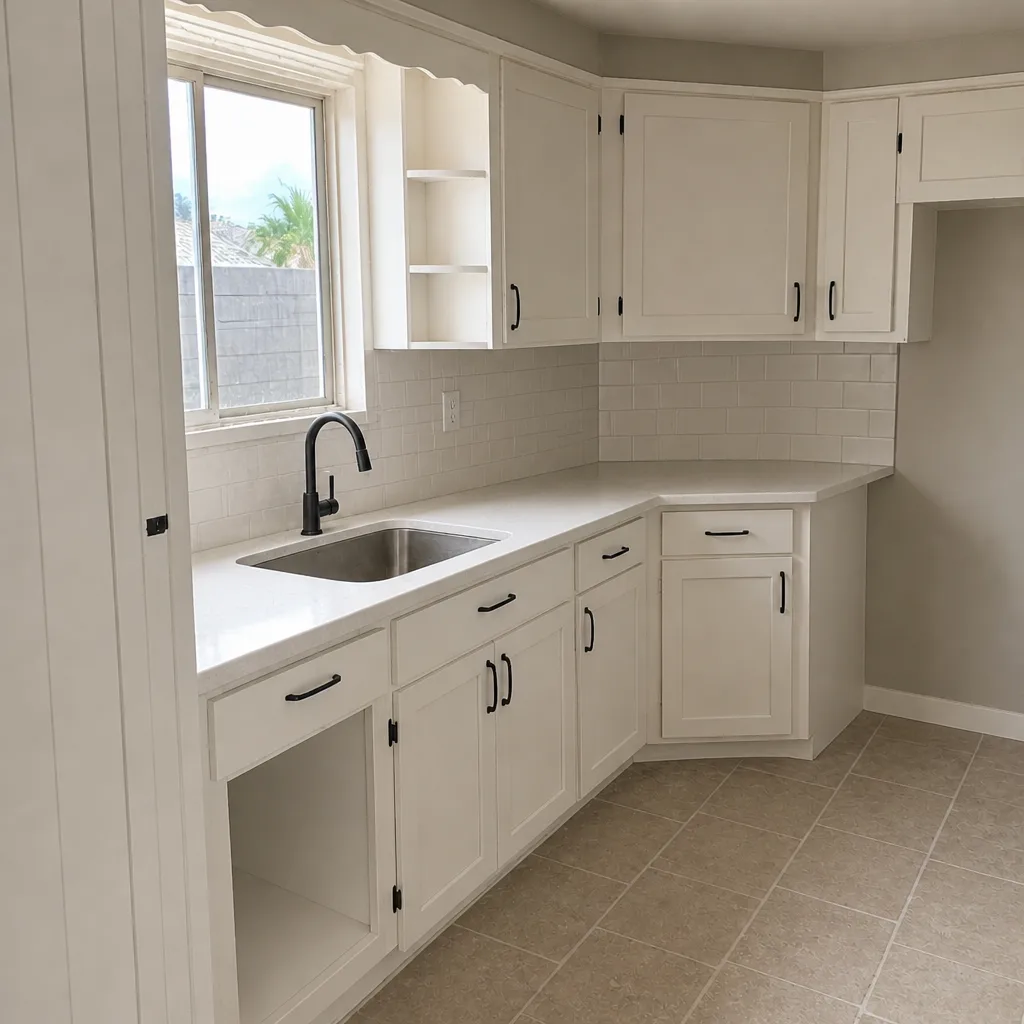 After
When to Call a Professional
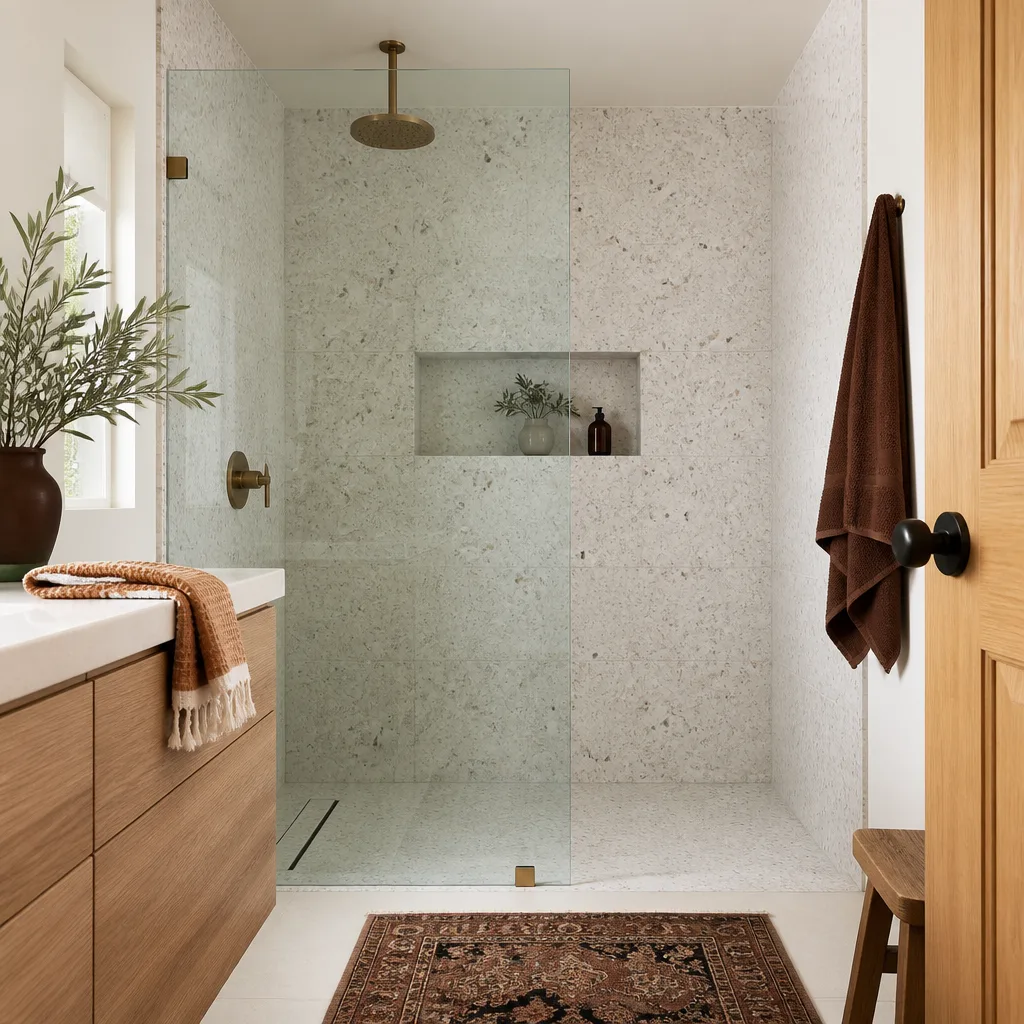
Some of this work is genuinely safe to do yourself: interior painting, minor tile work, hanging a door, swapping a vanity faucet. Some of it is not, and the distinction matters for cost more than it matters for anything else, because a mistake on the unsafe work costs a multiple of what a professional would have charged.
Call a licensed professional for anything involving your electrical panel or new branch circuits, gas lines and connections, structural framing changes, roof access and work (especially on steep or multi-level roofs), foundation and slab work, and any plumbing modification inside a wall. These aren’t cautionary disclaimers. They’re the scopes where a mistake is a genuine injury or a code violation that costs real money to correct, and where the permit and inspection process exists for good reason. When a task involves a genuinely dangerous component, the right answer is a trained, licensed, and insured professional, not a YouTube tutorial and a ladder.
Groundwork Construction Co. of Mesquite offers free estimates in Mesquite – call (888) 413-6358. You’ll get a live person, a scheduled walkthrough, and a written line-item quote. The local pro who performs the work is licensed and insured as Nevada requires, and every project we complete is covered by the 730-Day Done Right Promise. Upfront pricing, no surprises.
Frequently Asked Questions
A mid-grade kitchen remodel in Mesquite in 2026 typically runs $28,000 to $65,000, and a high-end kitchen with quartz counters (Cambria or similar) and semi-custom cabinetry runs $65,000 to $135,000. The spread comes from layout changes, cabinetry grade, appliance package, and whether the existing walls hide anything unexpected. Call (888) 413-6358 for an exact quote on your kitchen – estimates are free.
Construction costs in Mesquite run roughly 5% to 15% above rural Nevada because nearly every material has to be trucked in from Las Vegas or St. George, adding a freight premium of 3% to 14% depending on the material. Windows and doors carry the largest premium because they ship on dedicated trucks, while concrete and lumber carry the smallest. Labor costs also run higher than rural areas because the subcontractor pool is smaller and trades often travel into the area. Call (888) 413-6358 to see how these factors land on your specific project.
Caliche removal in Mesquite typically costs $45 to $120 per cubic yard removed, and total removal costs on an affected lot usually land between $4,000 and $15,000. The range is wide because caliche deposits vary from a few inches to over a foot thick. Compaction testing then adds $400 to $1,100, and import fill to replace removed material runs $32 to $65 per cubic yard. Get a site walk before you sign any bid that doesn’t mention caliche. Call (888) 413-6358 to schedule a free estimate.
Timeline depends entirely on scope. A bathroom remodel typically takes 3 to 5 weeks; a kitchen 5 to 9 weeks; a roof replacement 1 to 3 days of active work; a fence installation 2 to 5 days; and an ADU 4 to 8 months including permitting and inspections. Mesquite’s inspections are scheduled through the local jurisdiction and can add weeks to any project with multiple inspection points. The realistic schedule for your project depends on material lead times and permit review, so it’s best to ask at the estimate stage. Call (888) 413-6358 to talk through your timeline.
Yes, permits are pulled by the contractor of record for the scope requiring one, and the permit cost should appear as a line item on your bid. Permits in Mesquite are required for structural changes, new electrical circuits, plumbing modifications inside walls, additions, and ADUs, among other scopes. If a bid doesn’t show permit costs or says “permits by owner,” ask what that means for inspection liability. Call (888) 413-6358 to get a bid with permits itemized.
The final cost should match the estimate if the bid was written with proper site conditions. The two things that legitimately change a price are documenting something unforeseen (caliche under a driveway slab, rotted sheathing under a roof, out-of-code wiring behind a kitchen wall) and any scope change requested after signing. Everything else is the contractor’s cost risk to carry. With upfront pricing, the number you see is the number you pay for the stated scope. Call (888) 413-6358 for a free estimate with a written line-item quote.
The Bottom Line
Mesquite’s construction cost structure is real, specific, and not captured by any national average. The freight premium from being 80 miles from the nearest major supply hub adds 3% to 14% to material costs depending on category. Labor rates run at Las Vegas-adjacent levels because of travel and a thinner subcontractor pool. Caliche in your soil can add $4,000 to $15,000 to site prep that generic budgets never show. And the projects that historically run over are almost always hardscape, additions, and remodels where hidden conditions appear after demolition. Read every bid line by line, demand freight and site prep be itemized, set a realistic contingency of 12% to 20% by scope, and you’ll be evaluating real numbers rather than guesses.
When you’re ready to price your project against a real bid instead of a national average, call (888) 413-6358 to schedule your free estimate. Groundwork Construction Co. of Mesquite answers the phone with a live person any hour of any day, sends background-checked and uniformed technicians to every job, and backs every project with the 730-Day Done Right Promise. Upfront pricing written down, no surprises. If it’s not done right, we make it right.
Written by the team at Groundwork Construction Co. of Mesquite.