Last updated November 18, 2026



Free written scope consultation - allowances, timeline, and change-order rules on paper before a single trade is scheduled
How Long Does Driveway & Pavers Take? Timelines and What to Expect
A paver driveway that gets driven on before the base has properly set is structurally compromised before it’s ever been used. And “it’ll be fine in a few days” is what a contractor says when they’re on to the next job, not when they’re standing behind their work. The timeline a contractor quotes tells you almost as much about their quality as their price does. Rushed installs skip cure time and compaction steps that can’t be undone later. In this guide, we break down exactly where the days go on a Mesquite paver driveway, phase by phase, and what it costs you when each one gets squeezed.
Quick Answer
A standard residential paver driveway in Mesquite takes 4 to 8 working days from demolition to final seal, with most single-car driveways landing around 5 to 6 days. Larger or more complex driveways with curves, borders, drainage work, or tight site access can run 8 to 12 days. Any contractor quoting 2 to 3 days for a full driveway installation is either leaving out the base prep or leaving out the compaction, and both of those are the parts you can’t see once the pavers are laid.
Styles & brands we work with
- Kitchen remodeling
- Bathroom remodeling
- Home additions & ADU
- Roofing
- Windows & doors
- Driveway & pavers
- Fence
Table of Contents
- The Phase-by-Phase Timeline
- Why Base Compaction Needs 24-48 Hours Between Lifts
- How Job Size, Site Access, and Crew Size Change the Day Count
- The Mesquite Weather Windows That Affect Sealer and Schedule
- Red Flags in a Contractor’s Timeline
- What Legitimately Slows a Job Down
- Material Choice and How It Shifts the Schedule
- Frequently Asked Questions
The Phase-by-Phase Timeline
Every paver driveway moves through the same sequence of phases, and each one has a real time floor. You can’t speed up compaction by adding workers. You can’t pour bedding sand over a wet, uncompacted base and expect it to hold. Here’s the sequence we work through on every driveway in Mesquite, with realistic day counts for a standard two-car residential driveway in the 400 to 600 square foot range.
- Demolition and removal (0.5 to 1 day). Breaking out the existing concrete, asphalt, or gravel and hauling it away. Mesquite driveways on clay-heavy lots often have thicker old slabs than expected, which can stretch this to a full day.
- Excavation and grading (0.5 to 1 day). Digging down to base depth, typically 8 to 12 inches below finished grade, and establishing slope for drainage away from the garage and foundation.
- Base installation and compaction (1.5 to 2.5 days). Crushed aggregate laid in lifts of 3 to 4 inches, each compacted separately with a plate compactor. This is where the 24 to 48 hour window matters. More on that below.
- Bedding sand layer (0.25 to 0.5 day). A 1-inch layer of coarse sand screeded to final grade. It must be uniform or the pavers will settle unevenly within a season.
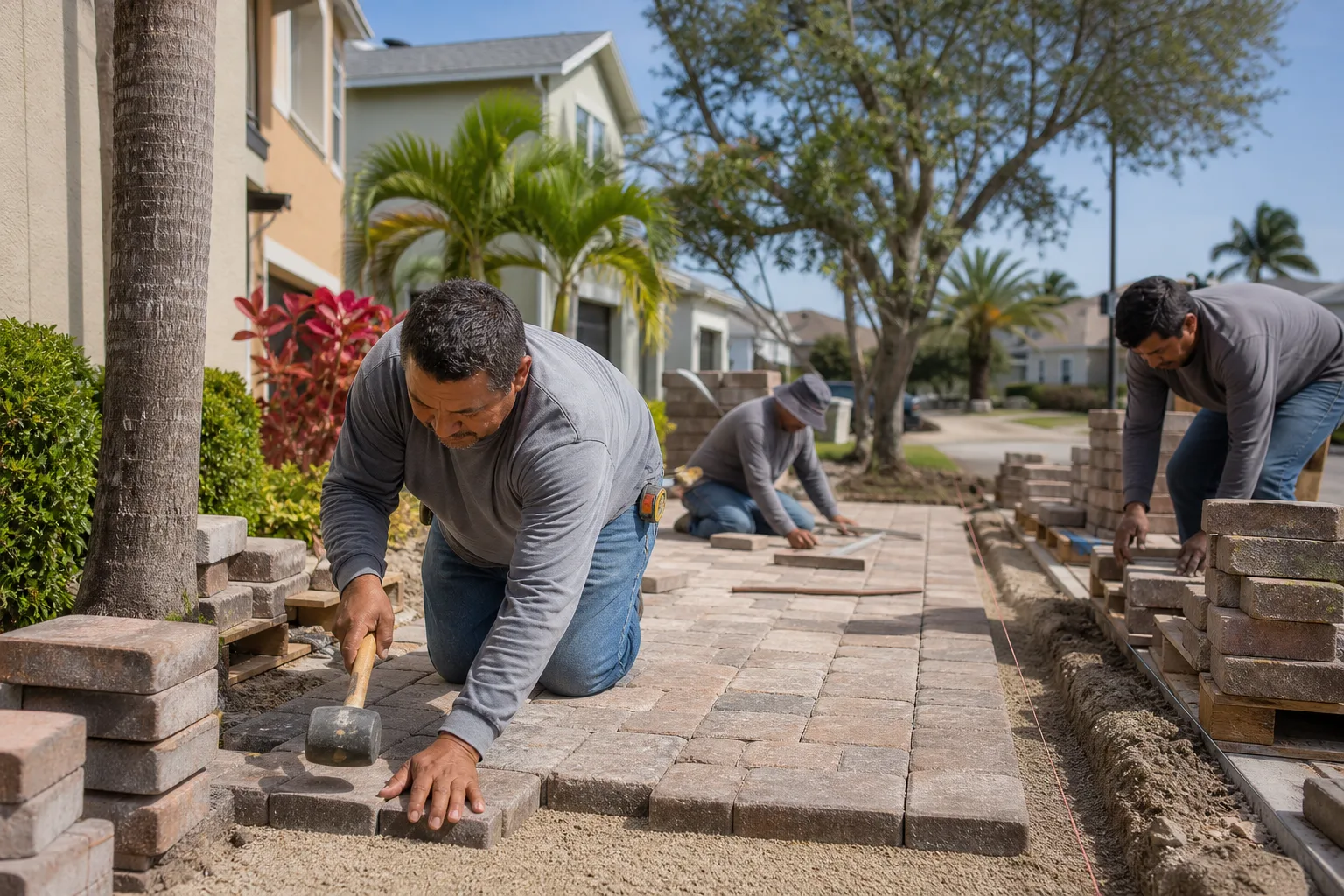
- Paver installation (1 to 3 days). Laying pavers in the specified pattern, cutting edges and borders, and setting restraint edging along the perimeter. A two-person crew lays roughly 250 to 400 square feet per day.
- Joint sand and compaction (0.25 to 0.5 day). Sweeping polymeric joint sand into the gaps and running a final compactor pass to lock everything together.
- Curing before sealing (48 to 72 hours minimum). The pavers and joint sand must fully cure and dry before sealer goes down. Skip this and the sealer traps moisture, which causes hazing and eventual spalling.
- Sealing (0.5 to 1 day, plus 24 hours of no traffic). Two coats of penetrating sealer applied in the cooler part of the morning, then a full 24 hours before vehicles are on it.
Add it up and a clean, straightforward driveway in Mesquite comes to 5 to 8 working days from start to drive-on. Everything beyond that comes from site conditions, weather delays, or additional scope like drainage tie-ins or curved borders.
Why Base Compaction Needs 24-48 Hours Between Lifts
Base compaction is the most skipped, most rushed, and most important step in the entire driveway. Here’s the reason. A residential paver driveway needs a base layer of crushed aggregate that’s properly compacted in lifts, usually 3 to 4 inches of material per lift, each one compacted separately before the next layer goes on top.
That 24 to 48 hour window is not a suggestion. It’s not a liability cushion. It’s the time it takes for the moisture in the aggregate to redistribute and for the compacted structure to actually settle into place. When a crew dumps 10 inches of base in a single pass and runs the compactor over it once, the bottom of the base stays loose. That loose base doesn’t show up during the walkthrough. It shows up the first summer when the weight of two cars on the surface starts driving the pavers down into the soft spots, creating the dip and ruts that no amount of re-sanding fixes.
We’ve seen this on older driveways all over Mesquite, especially in neighborhoods where the original installation happened during a fast-moving subdivision build. The pavers themselves are usually fine. It’s the base underneath that failed. Replacing pavers is a weekend project. Rebuilding the base underneath them is a full reinstall.
What proper compaction looks like in practice:
- The excavation depth accounts for base, bedding sand, and paver thickness all at once, usually 10 to 13 inches total.
- Base goes down in 3 to 4 inch lifts, no exceptions.
- Each lift gets compacted with a plate compactor or vibratory roller, usually 3 to 4 passes.
- Moisture is checked between lifts so the aggregate is neither bone-dry nor saturated.
- A final laser-level check confirms the base is flat and correctly sloped before any sand goes down.
If a contractor’s stated schedule doesn’t leave room for this, they’ve cut it. And it’s the part you’ll never see again once the pavers are in place.
How Job Size, Site Access, and Crew Size Change the Day Count
Square footage is the simplest driver of time, but it isn’t the only one. On a standard Mesquite lot, here’s how the day count typically shakes out. A single-car driveway of about 200 to 250 square feet usually runs 4 to 5 working days. A standard two-car driveway of 400 to 600 square feet lands at 5 to 7 working days. A wider driveway with a turnaround apron or side extension into the 800 to 1,000 square foot range runs 7 to 10 days. Estate lots or long driveways over 1,200 square feet can push past 12 days, especially when the base prep has to work around existing drainage or utility lines.
Site access matters as much as size. If the crew can’t get a skid steer or mini-excavator to the excavation area, the work has to be done with hand tools, which roughly doubles demo and grading time. Narrow gates, low-hanging roof lines, and mature desert landscaping that has to be protected are all factors that add half a day or more to the front of the job. On some lots in Mesquite, a driveway that looks simple from the street takes a full extra day just because of how the equipment has to be staged.
Crew size changes the parallel phases more than the sequential ones. Two crews working can lay pavers in half the time, but they can’t compress base healing time. Adding people to compaction doesn’t reduce the 24 to 48 hour window between lifts. That’s why a bigger crew doesn’t just cut the quoted timeline in half, and a contractor who says it does is telling you they don’t understand the work.
When you’re budgeting across the whole property, it helps to look at it as a complete picture. The cost and timeline of a driveway in Mesquite interact directly with how the yard drains, how vehicles turn, and where the landscaping is anchored. That’s one reason we walk every property before quoting. If you’re mapping out multiple projects, our Driveway & Pavers in Mesquite page covers the material and pricing side that goes alongside this timeline.
The Mesquite Weather Windows That Affect Sealer and Schedule
Mesquite’s climate creates specific scheduling constraints that a contractor from out of the area won’t know to plan around. Summer daytime highs regularly hit 100 to 110 degrees, and sealer applied in that kind of heat skins over before it can soak into the paver surface. You get a cloudy, uneven finish that has to be stripped and redone, which means adding 2 to 3 days to the schedule. The fix is to seal either early in the morning before temperatures climb past the mid-80s, or to schedule installation and sealing outside the peak summer window entirely.
Wind is the other one. Mesquite has more wind events than most of southern Nevada, and sealing on a windy day catches grit and dust in the wet sealer. The finish looks fine from a distance but feels coarse underfoot and holds dirt long term. A good install schedule in Mesquite actively plans around 48 hour forecast windows rather than treating sealer as a same-day afterthought.
Monsoon season, typically July through September, brings the other major constraint. Two reasons. First, the base material cannot be compacted properly when saturated, so a rain day mid-excavation can push the whole job back by a full day or more. Second, wet pavers can’t be sealed until they’ve fully dried, which on thick concrete pavers in humid post-storm weather can mean 72 hours of wait time, not 48. A crew working a Mesquite driveway in late summer needs to be looking two weeks out on the calendar, not just tomorrow.
Winter, by contrast, is the easiest time to install. Daytime temps in the 60s and 70s are ideal for compaction, sand screeding, and sealing. If your schedule allows it, a fall or winter installation in Mesquite tends to run smoother and finish closer to the quoted day count than a mid-summer one.
Red Flags in a Contractor’s Timeline
When a contractor quotes you a timeline, they’re telling you what phases they perform. If they quote you something faster than the physics of the work allows, they skipped something. Here are the specific signals to watch for.
- “We can have it done in 2 to 3 days.” For a full driveway install with demo and base, that’s not possible unless the base is going in as a single lift or being skipped entirely. This is the biggest red flag in the industry.
- “We seal the same day we finish laying.” Polymeric sand needs 48 to 72 hours to cure and the pavers need to dry fully before sealing. Same-day sealing traps moisture and causes hazing within the first year.
- No mention of base depth or lifts. If a contractor can’t tell you how deep their base is going and how many lifts they’re putting it in, they don’t have a real base plan.
- No weather contingency in the quote. In Mesquite, anyone who doesn’t mention sealer windows or rain days is either inexperienced locally or is planning to skip the seal coat.
- A timeline that starts “as soon as we get the deposit.” If they can fit you in this week with no lead time at all, that usually means they’re not in high demand, which for a paver installer is a warning sign. There’s a difference between efficient scheduling and having nothing booked.
- No written phase breakdown. A real quote will list demo, base, bedding, laying, sanding, curing, and sealing as separate line items. If it’s one lump sum with a two-day timeline, they aren’t planning the job.
- No mention of compaction equipment. Plate compactors and edging restraints are non-negotiable on a driveway. If a crew shows up without them, the base is going to fail.
The contractors who rush are almost always the ones who disappear after the check clears. And on the other side, a contractor willing to quote you 6 to 8 days and explain exactly where those days are going is a contractor who has done this enough times to know what it actually takes.
What Legitimately Slows a Job Down
Not every longer timeline is a red flag. Some things genuinely stretch the schedule, and knowing the difference keeps you from rejecting a fair quote. Here’s what we watch for on Mesquite properties.
Utility and irrigation conflicts
If there’s a sprinkler main, a gas line, or a septic field in the excavation footprint, the crew has to locate and either protect or reroute it before digging the base to depth. On a typical Mesquite lot with an older irrigation system, this can add a day. On lots with a buried gas service running through the driveway footprint, it can add 2 to 3 days if the utility needs to send someone out to mark or reroute the line. This is protective, not padding. Discovering a severed gas line mid-excavation is a much worse outcome for everyone.
Drainage corrections
Driveways that puddle against the garage door or send water toward the foundation often need a drainage correction built into the base. That’s a French drain, channel drain, or a regraded base with a swale, and it adds a half to a full day of work. Skipping it means your new driveway directs water straight into your garage slab or your neighbor’s property line. Mesquite neighborhoods with clay-heavy soils especially benefit from getting the drainage sorted before pavers go down, because the soil holds water longer than sandy lots.
Permit and HOA review
Some Mesquite driveways trigger approval requirements from a local HOA, and wider driveway aprons or changes to the curb cut may require a permit through the city. Those review windows can take anywhere from a few days to a couple weeks, and they start before a shovel hits the ground. A good contractor will flag this during the estimate, not after demo has started.
Material lead time
Not every paver style is available off the shelf. Specialty shapes, custom colors, and specific brand lines like the Belgard collection can carry lead times of 1 to 3 weeks depending on the season. On a straightforward install with standard pavers, this is usually not an issue. On a custom design, it’s often the single biggest factor in the calendar. When we quote a job, we lock the material order in before the excavation date so the pavers land on site before the base is finished. If you want to see how those brand choices play into the design side, the home page for Groundwork Construction Co. of Mesquite walks through our brand partnerships across every trade.
Discovery of an old slab, footer, or buried debris
Older Mesquite properties occasionally have a previous driveway poured over an older one, or a footer from a removed structure buried beneath. Hitting that during excavation can add a day of demo work and a dumpster or two. No contractor can predict this before the shovel goes in, but a good one will tell you the possibility exists and how they’ll handle it if they find it.
Material Choice and How It Shifts the Schedule
The paver material you choose changes both the install time and the cure time. Concrete pavers, the most common choice for Mesquite driveways, are typically installed at 250 to 400 square feet per day for a two-person crew, with a 48 to 72 hour cure before sealing. Clay brick pavers are heavier and slower to lay, usually 200 to 300 square feet per day, but they dry faster and can sometimes be sealed on a tighter schedule. Natural stone, including travertine and flagstone, adds significant time because each piece is hand-fit, and installation can run 100 to 200 square feet per day.
Permeable pavers, which have grown in popularity in Mesquite as drainage codes tighten, usually add a half day to full day to the base phase because they require a deeper open-graded aggregate layer and often a separate drainage outlet. The tradeoff is real: a permeable driveway moves stormwater on-site rather than directing it at your garage or your neighbor’s fence line, and it can save you a drainage correction later.
For homeowners thinking about a coordinated exterior look, paver driveways pair naturally with hardscaping choices that carry through the whole yard, and the same physical principles apply to retaining walls and step installations. Our Fence Installation in Mesquite page covers the perimeter side of the same site-planning conversation, since fence footings, driveway edges, and drainage all intersect. If your driveway project is part of a larger addition, the timeline for those structures is covered on our Home Additions & ADU in Mesquite page. Some homeowners are also exploring modular structures from brands like Boxabl or Mighty Buildings for detached units, and those installations have their own site-planning requirements that interact with driveway access and utility routing.
Common Mistakes to Avoid
- Picking the contractor with the shortest timeline. The fastest quote is almost always the one that skipped base compaction or sealer cure time. On a paver driveway, speed and quality have an inverse relationship until you get to the legitimately efficient crews, who still quote realistic day counts.
- Driving on the driveway too soon. Even after the crew is done, the sealer needs 24 hours of no traffic and the joint sand needs that same window to fully lock. A homeowner who pulls the car in the same evening can leave tire marks in the finish that never come out.
- Skipping the seal coat entirely to save money. In Mesquite’s UV-intensive climate, unsealed pavers fade significantly faster, and the joint sand washes out with the first monsoon season. Sealing is not optional in this climate.
- Scheduling a summer installation with no sealer plan. If the installer isn’t talking about early-morning sealing or a fall/winter window, they’re planning to apply sealer in 105 degree heat. That’s the recipe for a hazy finish.
- Ignoring drainage because the old driveway worked fine. Old driveways that worked fine often worked fine because they had years of settlement that directed water somewhere. New pavers sit higher and flatter, and a new driveway without a drainage plan can be worse than the old one for water management.
- Not asking about compaction equipment. A legitimate paver installer will have a plate compactor on site. If a crew arrives with hand tampers only, that’s a warning sign the base won’t be properly compacted and the driveway will settle within a season or two.
- Assuming the HOA doesn’t care. Many Mesquite neighborhoods have design review for driveway materials, colors, and width. Confirming this before the deposit goes down avoids a stop-work order mid-install.
See the difference
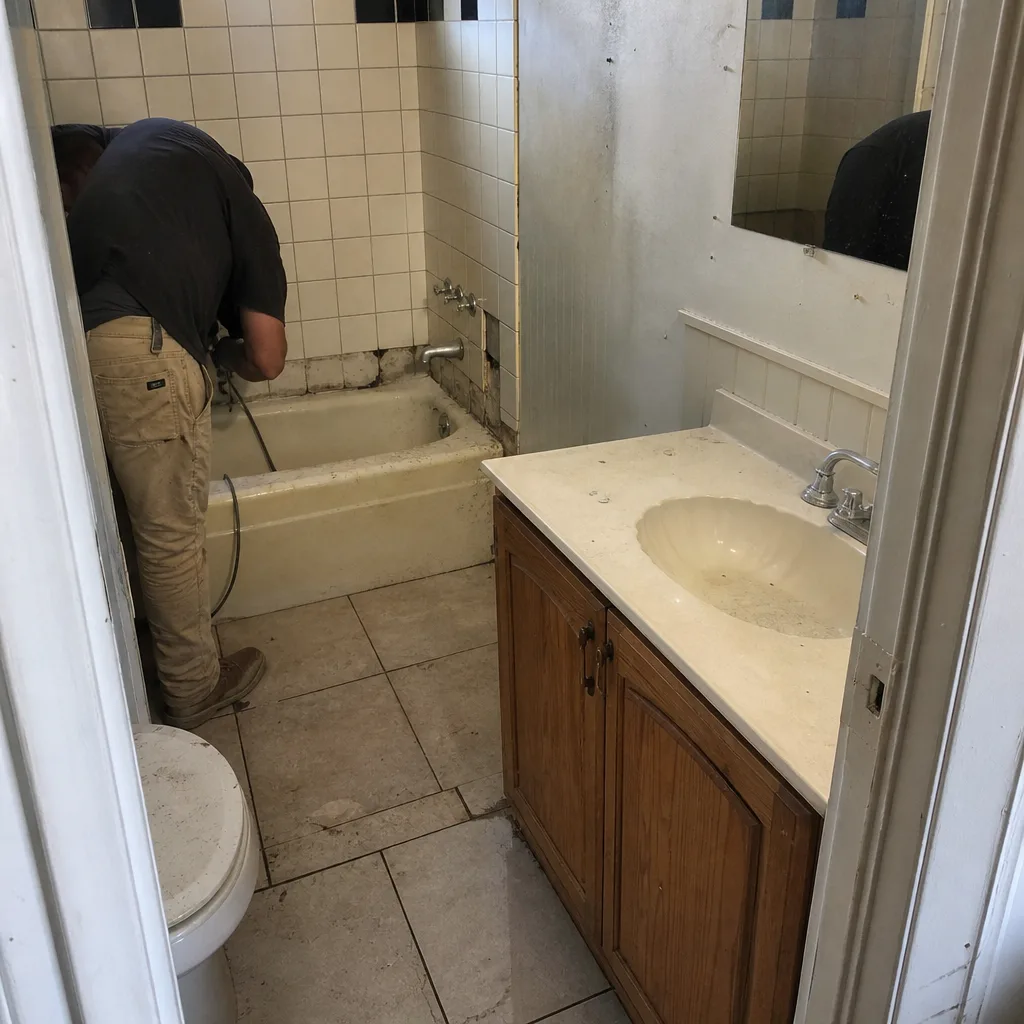 Before
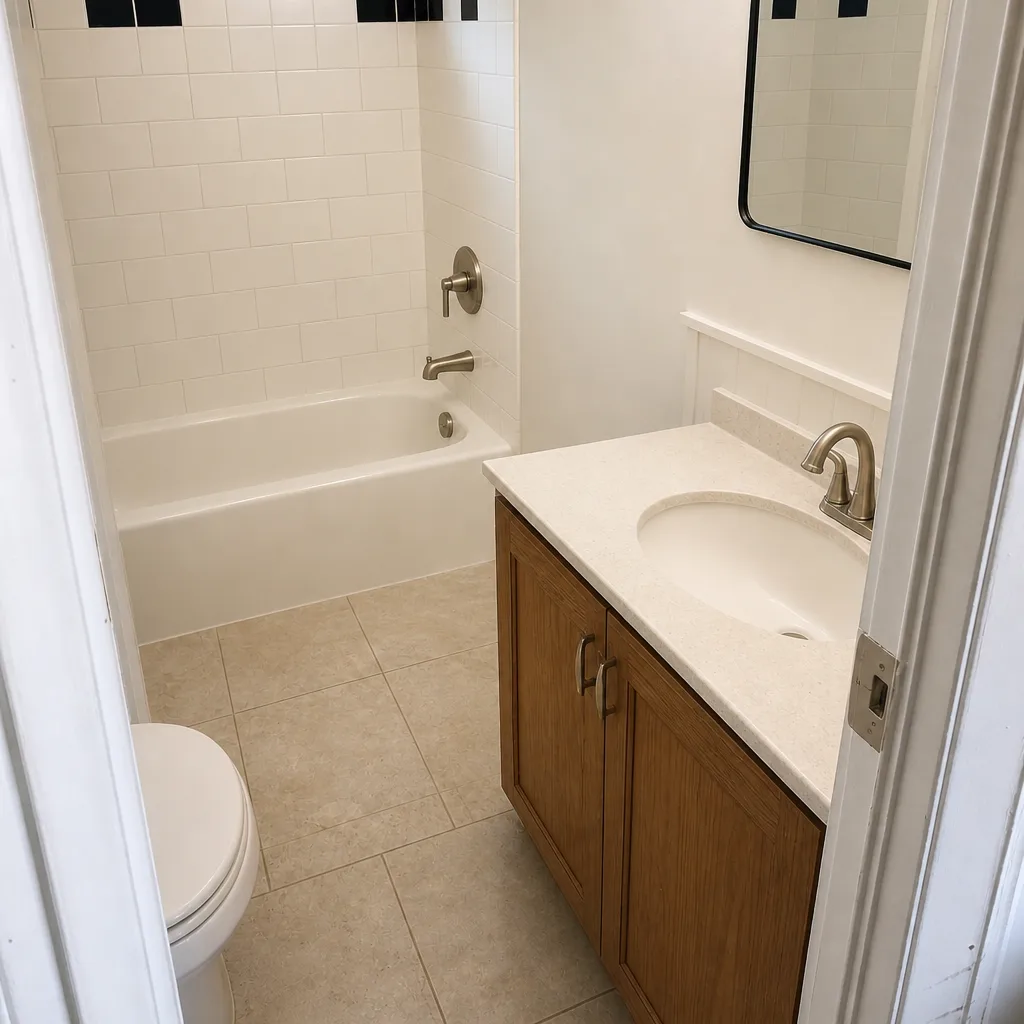 After
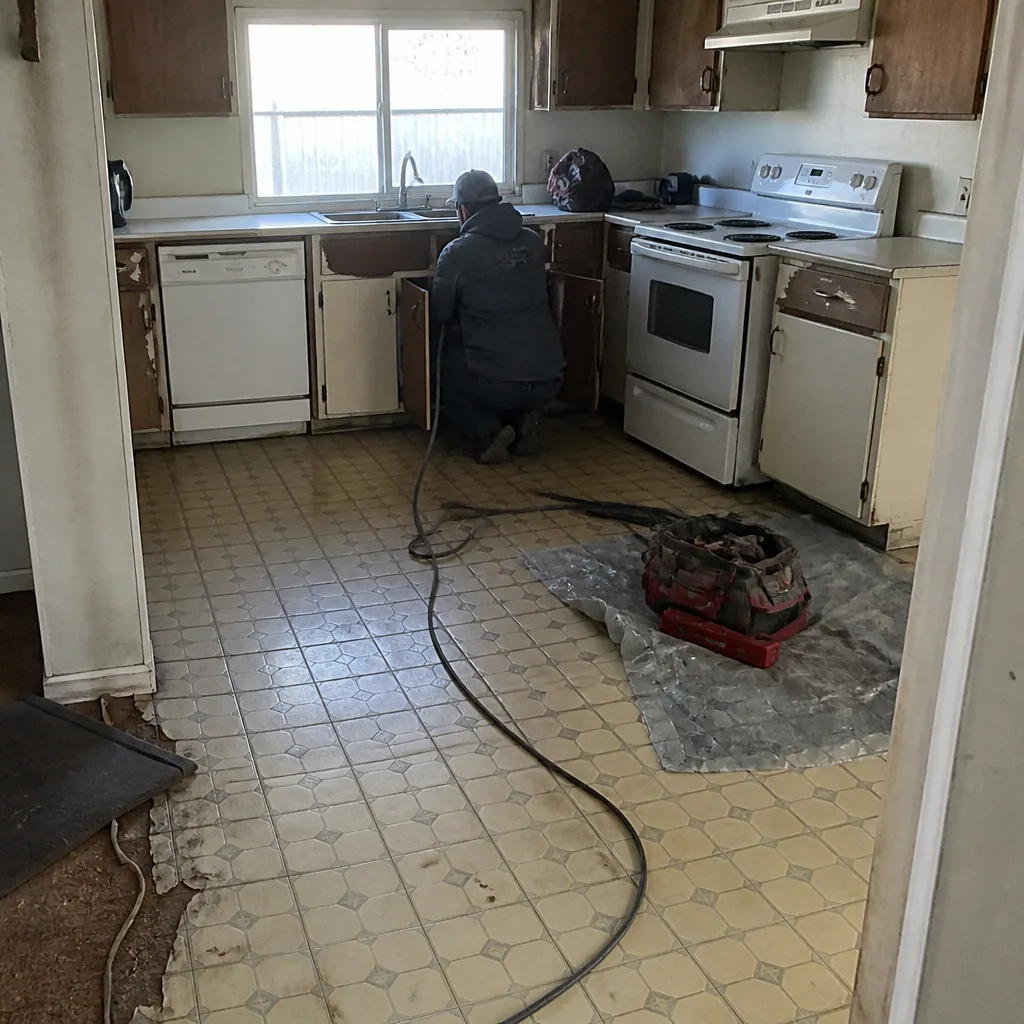 Before
 After
 Before
 After
When to Call a Professional
Paver driveway installation is not a homeowner DIY project. Full excavation, base compaction with proper lifts, laser-level grading, and sealer application all require equipment and experience that most homeowners don’t have, and any one of those steps done wrong costs more to fix than the entire install. If you’ve got a driveway that’s failing, that puddles against the garage, or that you’re planning to replace this season, the right move is to get a real estimate with a written phase-by-phase timeline. Groundwork Construction Co. of Mesquite offers free estimates in Mesquite – call (888) 413-6358. Every quote includes the phase breakdown, material selection, expected day count, and the compaction and cure windows we build in, so you know exactly where the time is going.
Frequently Asked Questions
A standard residential paver driveway in Mesquite takes 4 to 8 working days from demolition to final seal, with most two-car driveways landing around 5 to 7 days. Larger driveways with custom borders, drainage work, or significant excavation can run 8 to 12 days. The bulk of that time is base prep and cure, not paver laying, which is why any quote under 4 days for a full install should prompt questions about what’s being skipped. Call (888) 413-6358 for a walkthrough and an exact timeline for your property.
No. A paver driveway cannot be installed in a single day. Even a small single-car driveway requires demolition, excavation, multiple base lifts with compaction, bedding sand, paver laying, joint sand, curing, and sealing, and the compaction and cure windows alone add 3 to 4 days to the schedule. Any contractor promising a one-day or two-day paver driveway is almost certainly skipping base compaction or sealer cure, both of which cause failures within the first year or two.
Base compaction requires 24 to 48 hours between lifts because the crushed aggregate needs time to settle and stabilize before the next layer goes on top. Compaction is done in 3 to 4 inch lifts with a plate compactor, and rushing the schedule means the bottom of the base stays loose. That loose base can’t be seen once the pavers are down, but it causes settling, dips, and ruts within a season or two of normal use. Proper base prep is what separates a 20-year driveway from a 5-year one.
Fall and winter are the best windows for a paver driveway in Mesquite. Daytime temperatures in the 60s and 70s are ideal for compaction, sand screeding, and sealer application, and the lower risk of rain means fewer schedule interruptions. Summer installations are possible but require early-morning sealing to avoid sealer skinning over in high heat, and monsoon season from July through September can add rain delays and push the curing window longer. Call (888) 413-6358 to talk through seasonal scheduling for your property.
A properly written paver driveway quote should not change once work starts unless the scope changes, and any legitimate change should come as a written change order with a fixed price before the work is done. At Groundwork Construction Co. of Mesquite, our upfront pricing means the number you see is the number you pay. If we discover a buried old slab or a utility line we couldn’t see during the estimate, we document it and quote the correction in writing before proceeding. The only way a quote should change is with your sign-off.
Whether a permit is required depends on the scope of the work. Straightforward paver replacement in the existing footprint typically doesn’t need a permit, but widening the driveway, changing the curb cut, or altering drainage into the street often does. We check the requirements for your specific address before starting, and we pull the permits that apply so the work is inspected and signed off. Call (888) 413-6358 to talk through the scope and the permit picture for your property.
The Bottom Line
The timeline a paver contractor quotes is a window into their process. A realistic 5 to 8 day install in Mesquite tells you they’re building the base in proper lifts, letting compaction set, and curing the joint sand before sealing. A rushed 2 to 3 day quote tells you they’re cutting the exact steps that determine whether your driveway lasts 5 years or 20. If you take one thing from this guide, remember the compaction and cure windows can’t be compressed. They’re physical. What you want in a contractor isn’t the fastest schedule on the street, it’s the crew willing to explain why the schedule is what it is and stand behind it in writing.
Ready to see what your driveway project actually takes? Call (888) 413-6358 for a free estimate and a written phase-by-phase timeline from Groundwork Construction Co. of Mesquite. We answer live, 24 hours a day, and every paver driveway carries our 730-Day Done Right Promise, backed in writing.
Written by the team at Groundwork Construction Co. of Mesquite.