






Free written scope consultation - allowances, timeline, and change-order rules on paper before a single trade is scheduled
Styles & brands we work with
- Kitchen remodeling
- Bathroom remodeling
- Home additions & ADU
- Roofing
- Windows & doors
- Driveway & pavers
- Fence
See the difference
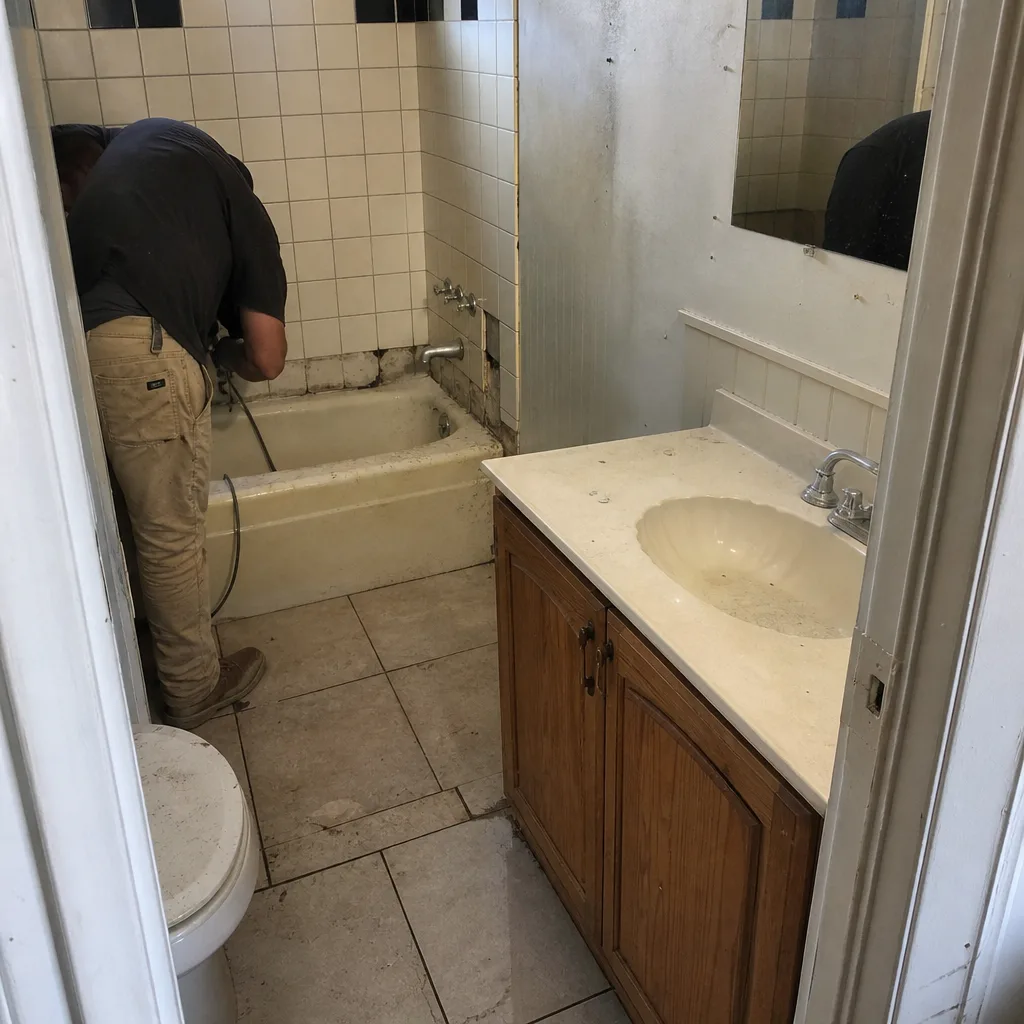 Before
 After
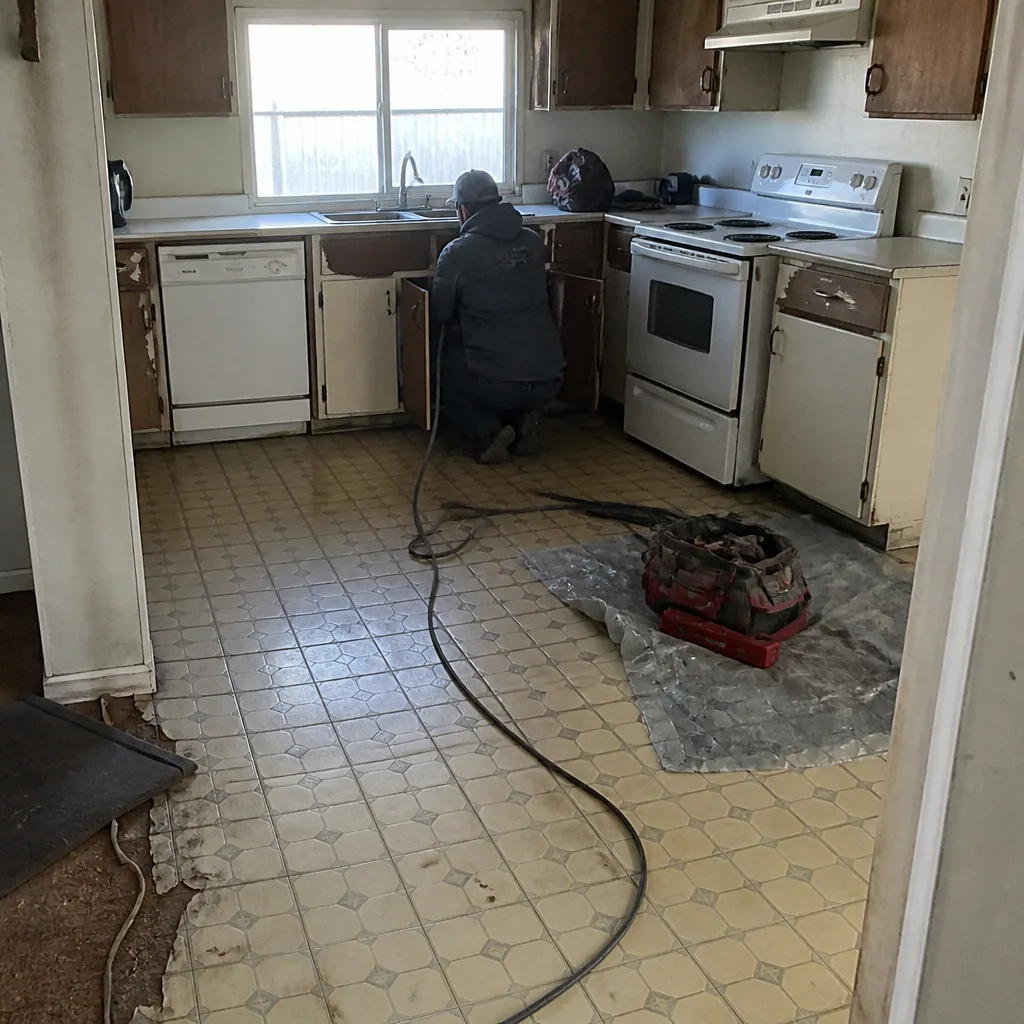 Before
 After
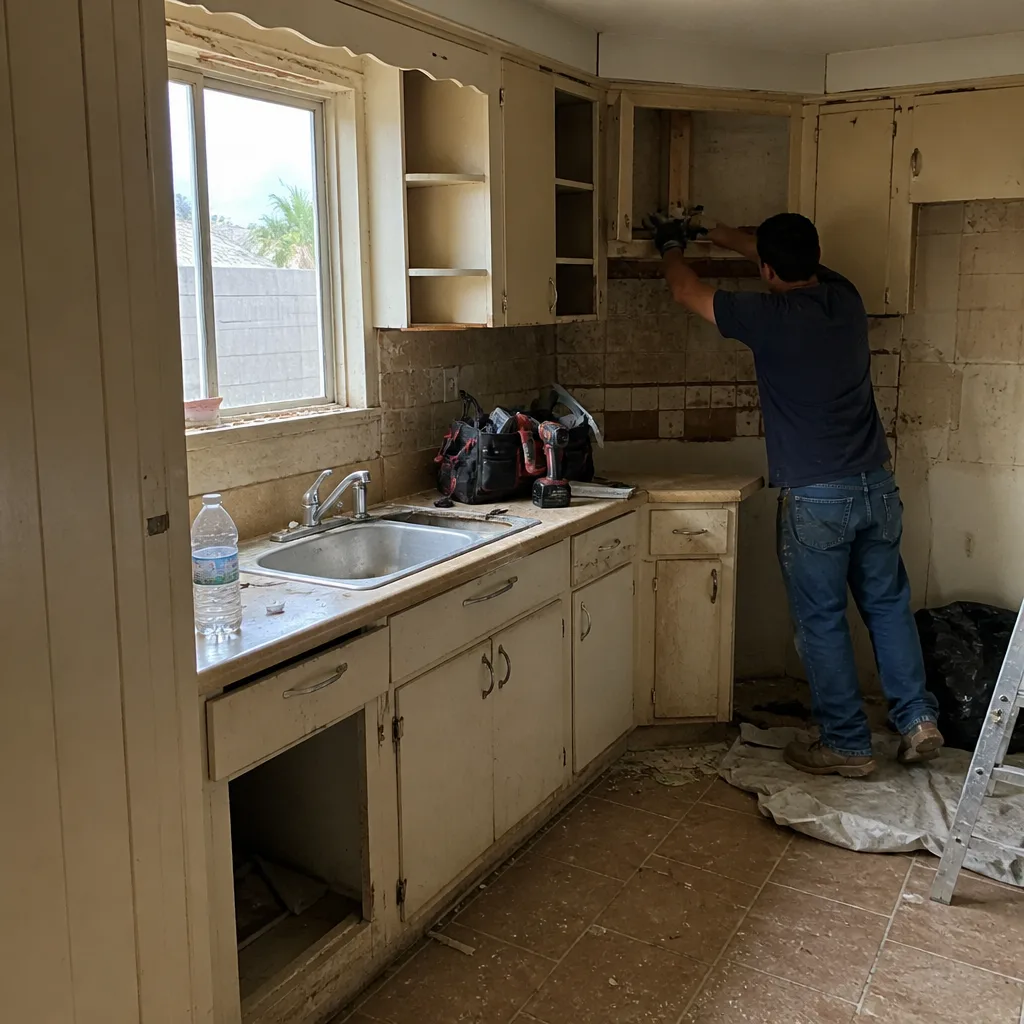 Before
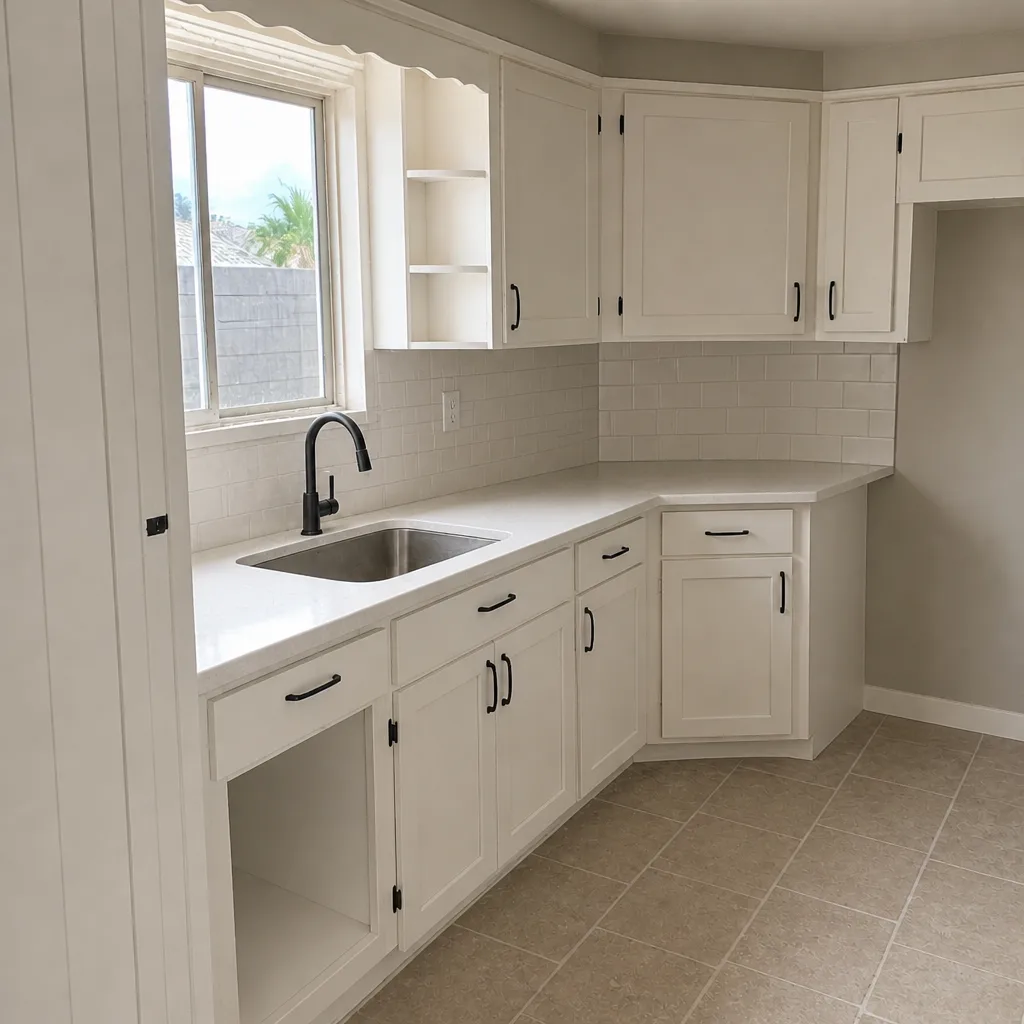 After
How to Clean Gutters in Mesquite, NV (and Why Desert Debris Is a Different Job)
The short answer: clean gutters in Mesquite by removing the compacted debris load dry, before you introduce water, then flushing the system from the high end toward the downspout. Desert debris is a plug of fine sand, dried palm fiber, and stucco dust that a leaf blower skims over and a wet hose sets harder. A two-pass approach – scoop and break the plug, then pressure flush the residual grit – is what actually clears a Mesquite gutter. Call (888) 413-6358 if your system is holding water or your brackets look loose, and we’ll take a look.

Why Mesquite Gutters Clog Differently Than the Rest of the Country
Most gutter advice you’ll find online assumes wet leaves layered over screens near a maple tree. That’s not what happens here. The debris in a Mesquite gutter is largely mineral and fiber grit that settles into a dense, low-porosity mass at the bottom of the trough. Fine sand from the wind, dried fan-palm fronds shredded by gusts, and stucco dust from nearby remediation and remodel work all migrate into the gutter channel and pack together.
The result is a plug that looks shallow from the roofline but has the consistency of weak concrete at the surface. Water hits it, pools, and runs over the front lip onto the fascia instead of down the downspout. If you’ve ever watched rain sheet off a gutter lip in Sun City or Highland Hills during a storm, you’ve seen a mineral plug at work.
Housing stock matters too. The 1980s to 2000s stucco-on-frame homes in Mesquite’s golf-course communities sit under installed gutters that have weathered a lot of UV and wind. The 2010s and 2020s custom builds and townhomes mostly use slab-on-grade construction with tile roofs, and the gutter brackets on those homes have their own stress story. Both types clog the same way: not with leaves, but with grit.
The Two-Pass Technique That Actually Clears a Mesquite Gutter
The single biggest mistake we see is flushing first. If you run a hose into a gutter full of dry desert plug, the grit absorbs water and firms up. You’ve made the job harder and the plug heavier. Start dry, every time.
- Pass one: dry scoop and break. Use a gutter scoop or trowel to lift the compacted sand-and-fiber layer out of the channel. Work from a ladder set on stable footing, and use a bucket rather than dropping debris to the ground where wind scatters it back into the gutter.
- Pass two: pressure flush, high end to downspout. Once the plug is gone, flush from the highest point of the run toward each downspout. This is where you find the residual fine grit that pass one couldn’t lift, and it’s the step most imprecise DIY jobs skip entirely.
- Confirm flow, then check the joints. Watch water move cleanly to the downspout. Standing water in the trough means residual grit is blocking the fall, which accelerates corrosion on aluminum gutters and shortens the life of the system.
Residual grit is the quiet problem. When water sits in a gutter, that film of sand holds moisture against the aluminum long after the surface dries. Over seasons it eats the protective finish and shows up as pitting and pinhole leaks.

Timing Is the Real Safety Decision: Pre-Monsoon, Late May or Early June
Cleaning your gutters in Mesquite is a risk management decision, not a cosmetic one. Schedule the job in late May or early June. That window sits after the spring wind season has deposited its full debris load through the gorge and before the first monsoon event.
Why the timing matters: monsoon rain here can fall at 1.5 inches per hour in a short burst. A clogged gutter during that event doesn’t trickle. It overflows at the fascia, saturates the stucco and framing behind the gutter line, and sends water where it shouldn’t go. One overlooked June, one August storm, and the repair bill lands on siding and structure instead of a cleaning.
Wind-driven events also funnel sand and palm debris through the Virgin River gorge with more force than a calm-day cleaning anticipates, so post-storm spot checks between June and September are worth adding to your calendar.
What We Check While We’re on the Roof Line
Cleaning day is also inspection day. The best time to catch a bracket problem is the moment someone is already on a ladder with the gutter in hand. On older Sun City homes specifically, the combination of foam-trim fascia and constant thermal expansion cycles can pull gutter hangers loose. A bracket that costs roughly $15 to re-seat on cleaning day becomes a $400 section replacement after the full gutter run pulls away and drops.
The other check we never skip: downspout outlets. Homes near the Virgin River wash drainage network need each outlet confirmed to move water away from the foundation and toward an approved drainage path. An outlet that dumps water against the stucco base triggers efflorescence and spalling over time, and that damage isn’t fixed with a cleaning. If the water is pooling where it shouldn’t, the outlet needs to be extended or rerouted, not just cleared.
The same drainage thinking belongs under a new roof. When we handle Roofing work, gutter pitch and outlet routing get addressed alongside the underlayment and flashing so the roof and drainage system are designed to shed water together.
| Job | Typical Range |
|---|---|
| Roof repair (flashing, fascia, or leak trace) | $400-$1,800 |
| Tile roof repair | $600-$2,500 |
| Roof replacement | $8,000-$20,000 |
| Metal roof installation | $15,000-$40,000 |
Pricing is upfront and itemized before any work starts. Projects over $10,000 get $1,000 off, and 0% financing for 18 months is available if drainage or roof work is coming up and you’d rather spread it out. Every job carries the 730-Day Done Right Promise, and that applies to the gutters we clean and inspect as much as the roofs we build.
Common Mesquite Scenarios (and When DIY Stops Being Safe)
A careful homeowner on a single-story home on a flat Mesquite lot can handle the two-pass technique. It’s a weekend job with a ladder, a scoop, and a hose, and it’s a reasonable project for someone comfortable on a roof edge.
Where it stops being a good idea:
- Multi-level custom builds with steep tile roofs.
- Narrow, rocky lots where ladder placement is a compromise, not a safe choice.
- Any 12/12 pitch tile roof, where a slip is a serious injury and a leak repair.
That’s a job for a crew with the right equipment, insurance, and no incentive to take shortcuts. Our uniformed technicians are background-checked, arrive with the tools the job needs, and have up to 12 years of experience with desert roofing and drainage systems. Safety on a steep tile roof is not a weekend project, and we’ll say so plainly.
If you’re weighing a cleaning against a broader look at how the system is holding up, our Mesquite service area covers what’s available for homes in this gorge.
FAQs About Cleaning Gutters in Mesquite
Gutter cleaning in Mesquite typically runs based on linear footage, roof height, and how compacted the debris load is, and a two-pass clean on a heavily silted system costs more than a spot check. If cleaning reveals a fascia repair or a pulled gutter section, that addition sits in the $15 to $400 range depending on whether it’s a re-seat or a section replacement. Call (888) 413-6358 for an exact quote – estimates are free and upfront.
No, a leaf blower alone won’t clear a Mesquite gutter because the plug is a compacted sand-and-fiber mass, not loose leaves. A blower skims the surface, lifts the light dust, and leaves the dense plug intact. You need a dry scoop pass to break the plug and a pressure flush to clear the residual grit. Once the heavy material is out, a blower is useful for pushing out the last of the fine dust.
Schedule gutter cleaning in late May or early June, after the spring wind season has finished depositing debris and before the first monsoon event.
That window protects you from the 1.5-inch-per-hour flash events common along the Virgin River and washes, when a clogged gutter sends water straight down the fascia and into stucco. A spot check after any major wind or monsoon storm between June and September is a smart addition. Call (888) 413-6358 and we’ll get you on the schedule before the summer storms.
It’s worth hiring a pro when your home is multi-level, has a steep tile roof, or sits on a narrow rocky lot where ladder placement is unsafe, and it’s also worth it if you want the drainage and bracket inspection done correctly at the same time.
Cleaning day is when bracket pull-away on older Sun City fascia gets caught before it turns into a section that falls, and when downspout outlets near the Virgin River wash get confirmed to move water away from the foundation. That inspection is where most of the value sits. Call (888) 413-6358 for a free assessment and upfront pricing.
Let’s Get Ahead of the Monsoon
If you’d rather have it looked at, Groundwork Construction Co. of Mesquite offers a no-pressure assessment in Mesquite – call (888) 413-6358. We’ll clean, inspect the brackets and outlets, and tell you straight whether anything needs repair before the first storm.
Written by the team at Groundwork Construction Co. of Mesquite, serving Mesquite, NV.