Last updated November 18, 2026
Free written scope consultation - allowances, timeline, and change-order rules on paper before a single trade is scheduled
Fence Installation Troubleshooting: Common Problems and How to Fix Them
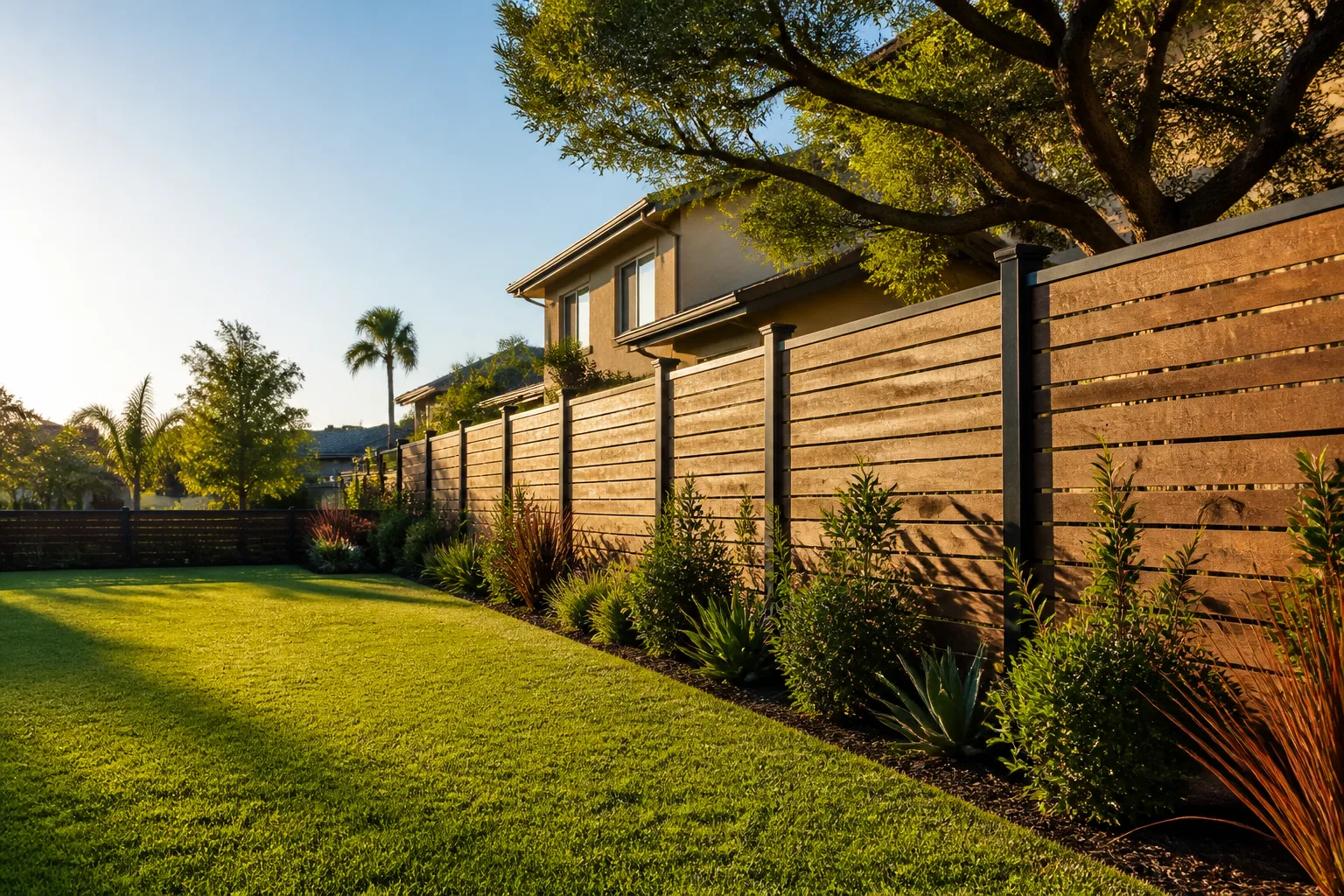
A fence post that starts leaning two years after installation isn’t a wind problem. In the desert, it’s almost always a concrete cure problem or a post-depth problem that the wind simply revealed. Straighten that post without fixing the root cause and you’ll be back out there next summer, or the summer after, watching it lean again. This guide maps the visible symptoms you’re seeing on your fence in Mesquite to the actual causes behind them, so you can tell the difference between a repair you can patch and a systematic failure that needs pulling and resetting. We’ll cover post lean, wood degradation from UV, gate sag, panel damage, and the fix paths for each.
Fence problems in Mesquite rarely trace to a single obvious cause. Most of them fall into three buckets: inadequate post depth, wrong concrete mix or cure for our soil, and no UV protection on the material. If you can name which bucket you’re in, you’ll know whether a section repair will hold or whether the whole run needs attention.
Quick Answer
Most Mesquite fence failures come down to three root causes: posts set too shallow for our soil and wind load, concrete that wasn’t mixed or cured correctly for desert conditions, and wood or composite that’s been eroded by intense UV exposure. Diagnosis matters more than repair. A leaning post, a sagging gate, or a bowed panel can each signal either a localized problem or a broader structural failure, and the right fix depends on which one you’re looking at.
Styles & brands we work with
- Kitchen remodeling
- Bathroom remodeling
- Home additions & ADU
- Roofing
- Windows & doors
- Driveway & pavers
- Fence
Table of Contents
- How to Diagnose a Leaning Fence Post
- Why Desert UV Damages Fences Differently
- Gate Sag: Hinge, Post, or Frame Failure?
- Cracked and Bowed Panels: Cosmetic or Structural?
- Pulling and Resetting Posts: When the Whole Run Needs Help
- Material-Specific Troubleshooting: Wood, Composite, Vinyl, Metal
- Repair vs. Replace: A Decision Framework
- How to Avoid Repeating the Same Failure
Before we get into the specifics, it helps to see the landscape of fence work as a whole. Our team handles fence installation in Mesquite across every material type, and we’ve walked hundreds of homeowners through this exact diagnostic process. If you’re also planning other hardscape or structural work, our driveway and pavers service shares the same underlying principles about soil preparation and desert-ready installation.
How to Diagnose a Leaning Fence Post
Post lean is the most common fence complaint we hear in Mesquite, and it’s also the most misdiagnosed. Homeowners tend to blame wind because that’s what they can see and feel. But wind is almost never the beginning of the story. It’s the stress test that exposes a weakness that was set during installation. There are four distinct causes of post lean, and each one needs a different repair approach.
Cause 1: Insufficient post depth. A fence post needs to be set below the frost line, and in our soil conditions the depth needs to account for how much of the post is above grade and how much lateral force the fence panel transfers during a gust. In the Mesquite area, we regularly see posts set to two feet or even shallower in older or DIY installations. That’s not enough for a six-foot privacy run. The first good wind season exposes it.
Cause 2: Soil heave. Desert soil can expand and contract with seasonal moisture changes in ways that surprise homeowners coming from moist climates. When a post is set in a shallow hole with no drainage consideration, water pools at the base, the soil loosens, and the post begins to work its way free over time.
Cause 3: Concrete failure. This is the sneaky one. If the concrete was mixed too wet, mixed poorly, or allowed to dry too fast in the summer heat, it can fail to grip the post properly. What looks like solid concrete in year one can crumble at the base by year three.
Cause 4: Post rot at or below grade. Wood posts that aren’t rated for ground contact can rot from the bottom up. The rot weakens the post from below, so the top starts leaning. You often won’t see the rot until you dig down.
Here’s a simple diagnostic sequence:
- Grab the post at the top and push it in four directions. Note how much of the deflection is happening at the base versus the top.
- Dig six inches down around the base. Is the concrete intact, crumbled, or non-existent?
- Check the wood below grade. Is it solid, spongy, or visibly compromised?
- Look at how the neighboring posts are behaving. Is this post alone, or is a whole section moving together?
If the concrete is crumbled or missing, you have a concrete problem. If the wood below grade is soft, you have a rot problem. If the neighborhood of posts moves together in one direction after wind, you probably have a shallowing issue. Only one of those scenarios lets you fix it by re-compacting around the post and calling it done. The other three require pulling and resetting, and resetting correctly with the right depth and the right concrete is what makes a repair last.
Why Desert UV Damages Fences Differently
If you’ve ever owned a fence in a region with harsh winters, you know the moisture-and-freeze damage model. Rot, mold, ice expansion, snow load. Move that same mental model to Mesquite and you’ll misread the failure signs. Our fence damage pattern is dominated by a totally different force: UV intensity.
A wood fence here takes more UV in a single year than a same-fence would in the Pacific Northwest over five years. That matters because UV doesn’t just fade the finish. It breaks down lignin, the polymer that holds wood fibers together. When lignin goes, the wood surface goes from solid fiber to a brittle, gray, chalky layer. You can scrape it away with a fingernail. Boards look weathered and pale before they look broken, so the damage gets missed or underestimated.
The signs of UV-driven degradation we look for:
- Gray, silvery, or chalky surface instead of the wood’s natural color
- Boards that splinter internally when flexed, even if the outer surface looks okay
- Visible grain lifting or “fuzz” on the board face
- Finish that has flaked off in patches, exposing bare wood
- Board ends and edges (which absorb the most sun) showing cracks or checks
The repair approach changes dramatically. UV damage is a material integrity issue, not a structural settling issue. If boards are past the point where they can be stained back into health, you replace boards, not posts. But you also need to prevent the next run from suffering the same fate. That means choosing a finish or material with actual UV stability, not just a product that’s marketed as “fade resistant.” Quality partners like Bufftech composite products hold up differently under desert UV than low-grade wood, and we recommend UV-stable materials to homeowners in Mesquite specifically for that reason.
One more important note: UV damage and moisture damage can happen at the same time, but they don’t happen in the same place. The sun attacks the sunny side of your fence. Moisture attacks the bottom edges, the shaded side, and the soil line. If you’re inspecting a fence, walk both sides and look at both ends of the height range.
Gate Sag: Hinge, Post, or Frame Failure?
A sagging gate is one of the most common repair calls we get in Mesquite, and it’s also one of the most commonly misdiagnosed. Homeowners see the gate sagging and immediately assume “the hinges wore out” or “the gate warped,” and they buy new hardware, and the sag returns within two months. That’s because gate sag has three distinct causes, and they look almost identical to the untrained eye.
Cause 1: Hinge failure
Hinges wear out. Screws strip, brackets bend, and pintle hinges get side-loaded by a gate frame that’s moving more than it should. Hinge failure is characterized by the gate sagging while still being plumb at the hinge line. Open the gate to ninety degrees and look at the hinge side. If the gap between gate and post is wider at the top than the bottom, and the post itself is straight, you’re probably looking at a hinge problem.
Cause 2: Post failure
The gate post is under higher lateral load than any other post in the fence. A standard gate swings on a pivot and transfers significant stress to the anchor post, especially if the post wasn’t set deep enough or in solid concrete. A gate post that’s failing will start to move the whole fence line, and often it’s the post doing the visible leaning, not the gate frame. Check the gate post with the same push test we described above. If it deflects more than half an inch at the top while you push near the gate sill, that’s your culprit.
Cause 3: Gate frame failure
The gate frame is a wood or metal rectangle holding the pickets. Over time, especially under UV damage, the frame can lose its square. A gate frame out of square will sit skewed on its hinges no matter how new the hinges are. Open the gate and hold a tape measure diagonally across the frame from corner to corner. A square frame matches on both diagonals. An out-of-square frame has one measurement an inch or more longer than the other.
Here’s the fix path by cause:
- Hinge failure: Replace hinges, re-drill pilot holes, tighten. Do not patch stripped screw holes with putty – use wood dowel and wood glue plugs, then re-drill.
- Post failure: Pull and reset the gate post. This is not a job to shortcut. A failing gate post will damage the gate frame and hardware, and the fix cost goes up the longer you wait.
- Frame failure: Repair or replace the gate frame. If a wood gate frame has gone out of square due to moisture and UV damage, replacing the frame is often cheaper than trying to square it.
If you’re seeing gate sag on a fence gate in Mesquite that’s under five years old, the odds are higher it’s a post failure. Post depth issues and concrete cure issues tend to show up in gate posts first because they carry the heaviest load in the run.
Cracked and Bowed Panels: Cosmetic or Structural?
A cracked or bowed fence panel can be a cosmetic blemish or a structural warning flare. The two look similar in passing, but the repair cost and urgency are far apart. Here’s how to tell them apart.
What cosmetic damage looks like
- Hairline cracks along the grain of a single board, with no gap in the board face
- Mild cupping (a slight curve in the board) that isn’t transferring force to the rail or post
- Finish cracking, where the defect is in the stain or paint and not the wood itself
- Warping in a single board that is still firmly attached at the top and bottom rails
Cosmetic damage can be addressed by refinishing, replacing a single board, or (in some cases) simply monitoring it. Sun bleaching on the sunny face of the fence is cosmetic even if it looks dramatic.
What structural damage looks like
- Cracks that penetrate through the board thickness and open up more than 1/8 inch
- Boards that are bowing, but the bow line is pulling against rails or posts
- Visible flex at the rail when you push on a board face
- Boards that have shrunk away from nails or screws, leaving gaps around hardware
- Cracks that start from the post-fastening point and run along the board
- Any cracking that’s accompanied by noise, movement, or deflection when you push
The structural issue here is load transfer. When a board bows and pushes against a rail or post, it’s transferring lateral force into the post. That force adds to the wind load the post carries, and it accelerates the post lean we mentioned earlier. A single bowed board that’s not transferring force can usually wait. A whole run of bowed boards pushing against the post is a different problem: the post is being asked to do more than it was engineered to do, and it’s probably the next thing to fail.
In our experience walking Mesquite neighborhoods, we see structural bowing most often on wood fences that were installed with too few rail-to-post connections, or where the posts have started to move and the boards have followed. If the bow of the boards matches the lean of the posts, the fence system is failing together, not as separate issues. That’s a case for pulling and resetting posts, not for replacing boards on their own.
Pulling and Resetting Posts: When the Whole Run Needs Help
Pulling and resetting a fence run is more work than replacing bad boards, but it’s often the only repair that will actually last. The question is how to know when you’re looking at a patchable problem versus a systematic failure that needs the whole run addressed.
The threshold test we use in Mesquite comes down to three questions. How many posts are affected? Where is the movement happening? And what’s under the base of the posts?
You can probably patch if:
- One or two posts are moving, and the rest of the run is solid
- The post movement is small (under one inch at the top) and hasn’t progressed over a full season
- The soil around the base is intact, the concrete is solid, and there’s no rot
- The movement can be corrected by re-compacting soil or re-anchoring without pulling
You need to pull and reset if:
- Three or more posts in a clear section are moving together
- The movement is progressing each season
- The concrete is crumbled, missing, or showing signs of failure at the base
- The posts are showing rot at or below grade
- Posts were set too shallow (under two feet in our soil conditions) and the fence is six feet or more in height
Pulling and resetting in Mesquite requires two things: setting posts to proper depth for the panel load and wind exposure, and using the right concrete mix and cure for our soil and heat. The most common reason a reset fence fails is that the installer repeated the original installation mistakes. If you’re resetting a post that failed due to shallow depth and you set the new post at the same depth, you’ve done nothing except restart the clock.
We recommend anyone with a systematic failure get a second opinion before accepting a “fix it by re-nudging” solution. Our team at Groundwork Construction Co. of Mesquite can walk a fence line and tell you which scenario you’re looking at, and we’ll break down whether a section repair or a full reset makes more sense for your property. If your home is also due for other exterior work, know that the same prep-and-inspect mindset applies to home additions and ADU projects in Mesquite, where structural diagnostics are the first step of every build.
Material-Specific Troubleshooting: Wood, Composite, Vinyl, Metal
The failure modes we’ve discussed so far describe wood fences in depth, and wood is still the most common fence material in Mesquite. But the troubleshooting approach changes based on material. Here’s how the four main fence types fail differently in our climate.
Wood fence troubleshooting
Wood is the classic desert-brittle material. The failure paths are all present: post rot below grade, UV degradation of the board face, structural lean from insufficient post depth, and gate issues from post movement. Wood also needs periodic finishing to hold up under UV, which many homeowners defer until the wood is already past recovery. A wood fence in Mesquite needs finishing attention every two to three years at minimum.
Composite fence troubleshooting
Composite fences are more UV-stable than wood but not immune. The failure modes we see in composite fences in Mesquite are: fading from low-grade product, board expansion from heat, and post issues that are identical to wood post issues. Composite doesn’t rot, but composite posts can still lean and composite fences can still fail if the posts were set wrong. If you’re looking at composite, quality matters more than with wood because the failure is invisible in the finish and shows up in the movement. Products like Bufftech and ActiveYards are the lines we trust for desert installations. Ameristar and Jerith aluminum options also work well for homeowners who want to avoid wood post-maintenance entirely.
Vinyl fence troubleshooting
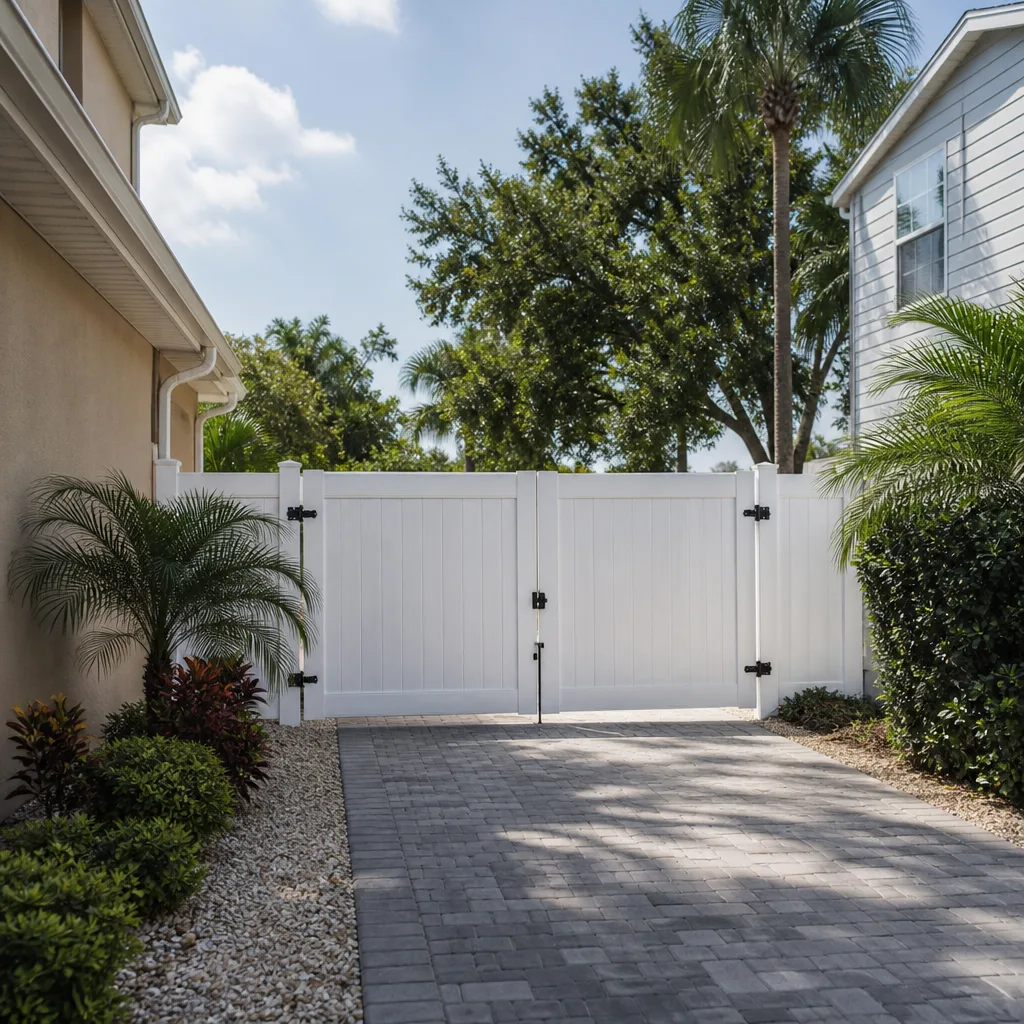
Vinyl fences in Mesquite face two challenges: heat expansion and UV-driven embrittlement. Vinyl can develop cracks at the rail connections as it expands and contracts through hot summers and cool shoulder seasons. Vinyl posts that were set too shallow will lean just like wood posts. The repair approach is often a rail-and-post replacement rather than a full section. Low-quality vinyl will crack at the corners faster than premium lines, so if you’re seeing frequent cracking, it’s usually the product grade.
Metal and aluminum fence troubleshooting
Aluminum and steel fences fail differently. They don’t rot or UV-degrade in the same way, but they can fail at the footings and posts when posts were set shallow or in poor concrete. Metal fence paint can chalk or fade under UV, and the finish on lower-grade metal products can pit. Gate sag on a metal fence is typically a hinge or frame issue, not a post issue, unless the metal post has moved. Anodized aluminum and powder-coated steel hold up best in our environment.
Repair vs. Replace: A Decision Framework
The repair-or-replace decision isn’t a gut feeling. It’s a framework, and it’s the same framework we use when we’re helping a homeowner decide what to do with a failing fence in Mesquite. Here’s how we work through it.
Step 1: Diagnose the root cause
Use the diagnostic sequence we laid out at the start. Post lean, gate sag, and panel damage each have specific root causes, and the fix needs to address the root cause, not the symptom. If you can’t identify a root cause, you’re not ready to decide repair or replace.
Step 2: Determine whether the failure is local or systematic
One bad board or one leaning post is usually a repair. A whole run moving together is usually a replacement or a reset. The cutoff in most cases is one-third of the run affected. If a third or more of the fence line is showing the same failure, plan for a full section reset or a replacement.
Step 3: Check the age of the failure versus the age of the fence
A fence that fails in the first two years has an installation problem. A fence that fails at year ten has probably reached end of life, or a maintenance failure. Both matter, but the fix path is different. A young fence with a systematic failure is a warranty conversation. An older fence with a systematic failure is a replacement decision.
Step 4: Estimate the repair cost versus the replacement cost
Repairing a handful of boards or resetting a couple of posts usually comes in well below replacement. But once you’re resetting more than a third of the posts on a run, or repairing the same failure a second time, the repair path loses its value. A full replacement with the correct depth and concrete on every post is the smarter long-term spend.
Step 5: Consider material upgrade at replacement
If you’re replacing anyway, this is the moment to think about whether a wood fence with the same vulnerabilities is really the right call. A composite or metal fence installed correctly will have a longer service life in Mesquite’s climate and typically less maintenance. It also ties into the broader upgrades we handle at Groundwork Construction Co. of Mesquite, where our approach to any exterior project is built around materials that hold up over time. You can see how we think about full-scope work on the Groundwork Construction Co. of Mesquite home page.
How to Avoid Repeating the Same Failure
Fixing a fence failure without addressing the root cause is a guarantee that the same failure comes back. If the original problem was shallow post depth, the fix has to be post depth, even if a temporary straightening of the post would look okay for a season. Here’s what actually breaks the cycle.
Get the post depth right. In our soil and wind conditions, the majority of privacy fences in Mesquite need posts set to a depth that accounts for the full panel height plus a proper safety margin. Two feet is not enough for a six-foot privacy fence in our area. We set based on panel height, wind exposure, and soil type, and we don’t shortcut that calculation, even when the property owner isn’t asking.
Get the concrete right. The concrete has to grip the post, and that means the mix is correct, the consistency is correct, and the cure is protected from fast evaporation in summer heat. When we set posts in Mesquite in July or August, we manage the cure, because flash drying means weak concrete and weak concrete means a leaning post in two years.
Match material to climate. Wood is fine if it’s finished properly and refinished on a schedule. Composite is better for UV stability. Metal is best for dry, hot climates if you don’t want to think about maintenance. Choose based on how much maintenance you’re willing to do, not on a recommendation that was written for a climate with mild summers.
Install for drainage from day one. Water pooling at the base of a post is the start of most long-term failures, even more than UV. Grade the soil at installation so water runs away from the post bases, and don’t put drip irrigation lines right at the fence line.
Inspect on a schedule. A five-minute walk of your fence line each spring will catch a leaning post or a bowed panel before it turns into a section repair. The visual indicators we’ve described in this guide are all things a homeowner can spot. Catching them in year two is much cheaper than catching them in year four.
Common Mistakes to Avoid
- Straightening a leaning post without checking the concrete. If the concrete at the base is crumbled, re-compacting the soil and pushing the post straight is a temporary fix that fails within a season. If the base isn’t solid, pulling and resetting is the only durable option.
- Replacing boards on a fence where the posts are moving. If the bow in the boards matches the lean in the posts, you can put new boards on and they’ll bow within a year. Fix the posts first. In Mesquite, this is the most common repair mistake we remediate or diagnose for homeowners.
- Replacing gate hinges when the gate post is the actual problem. New hinges on a failing gate post just move the wear onto the new hardware. Check the post before spending on hardware.
- Assuming wind caused a post failure. In our experience, the wind reveals the failure. It doesn’t cause it. If the concrete is bad or the depth is short, the wind is a stress test that most fences should pass. If yours didn’t, the fix has to address the base, not just the post.
- Choosing a low-grade composite or vinyl for a Mesquite install. The desert environment is hard on low-grade material. You’ll pay more in repairs over the life of the fence than you’ll save on the initial material cost.
- Skipping UV protection on wood. An unfinished wood fence in Mesquite can degrade faster than most homeowners expect. Finishing isn’t optional for the material’s integrity, not just its appearance.
- Putting off a diagnostic check until the failure is severe. Small post movement, mild bowing, or minor gate sag is much cheaper to fix than a full section replacement. The visual indicators in this guide are things you can catch in a five-minute walk.
See the difference
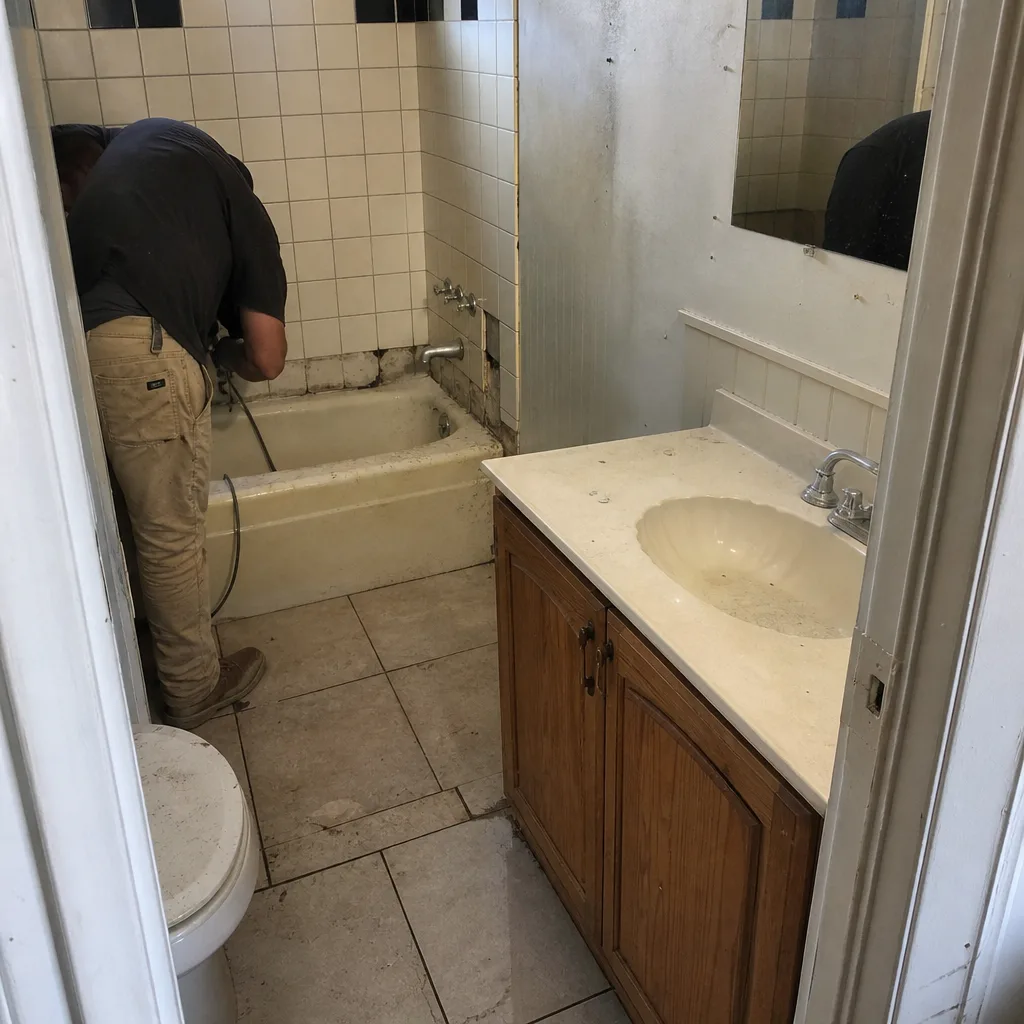 Before
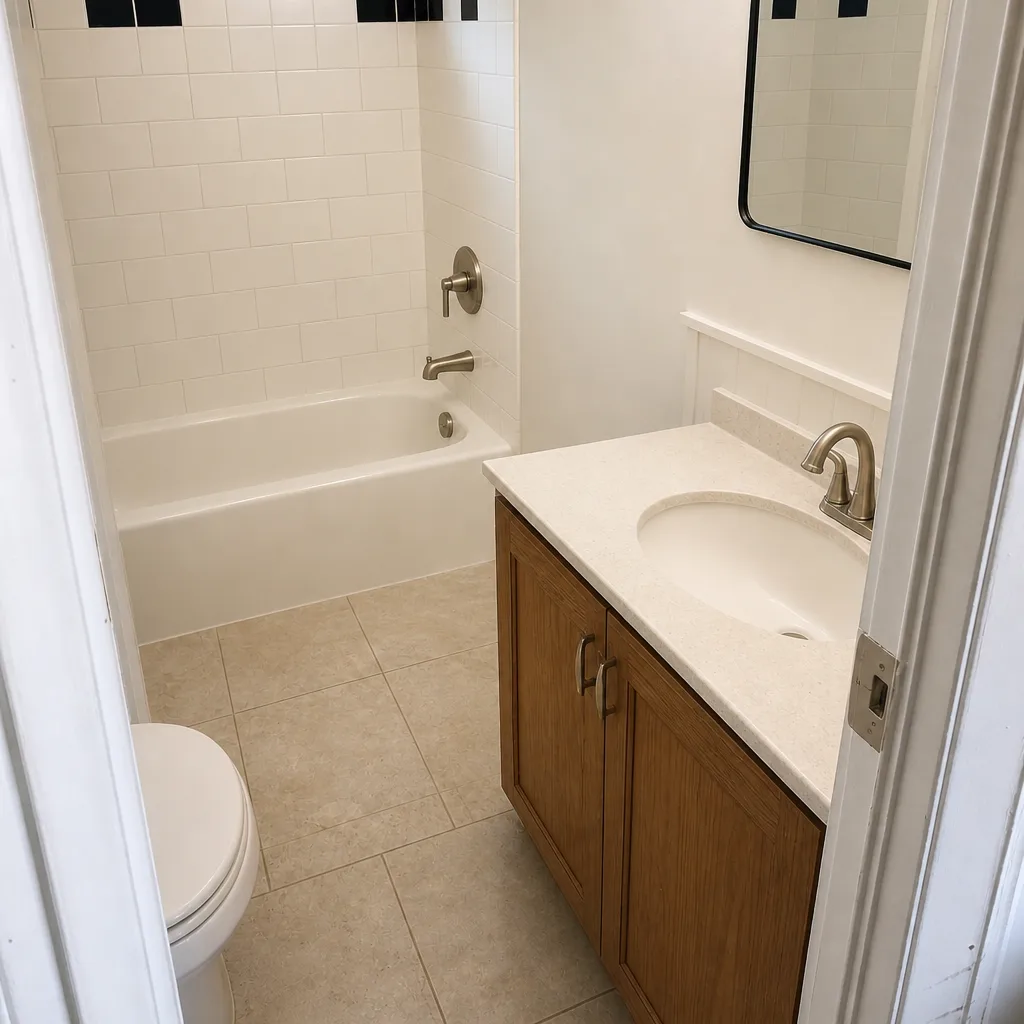 After
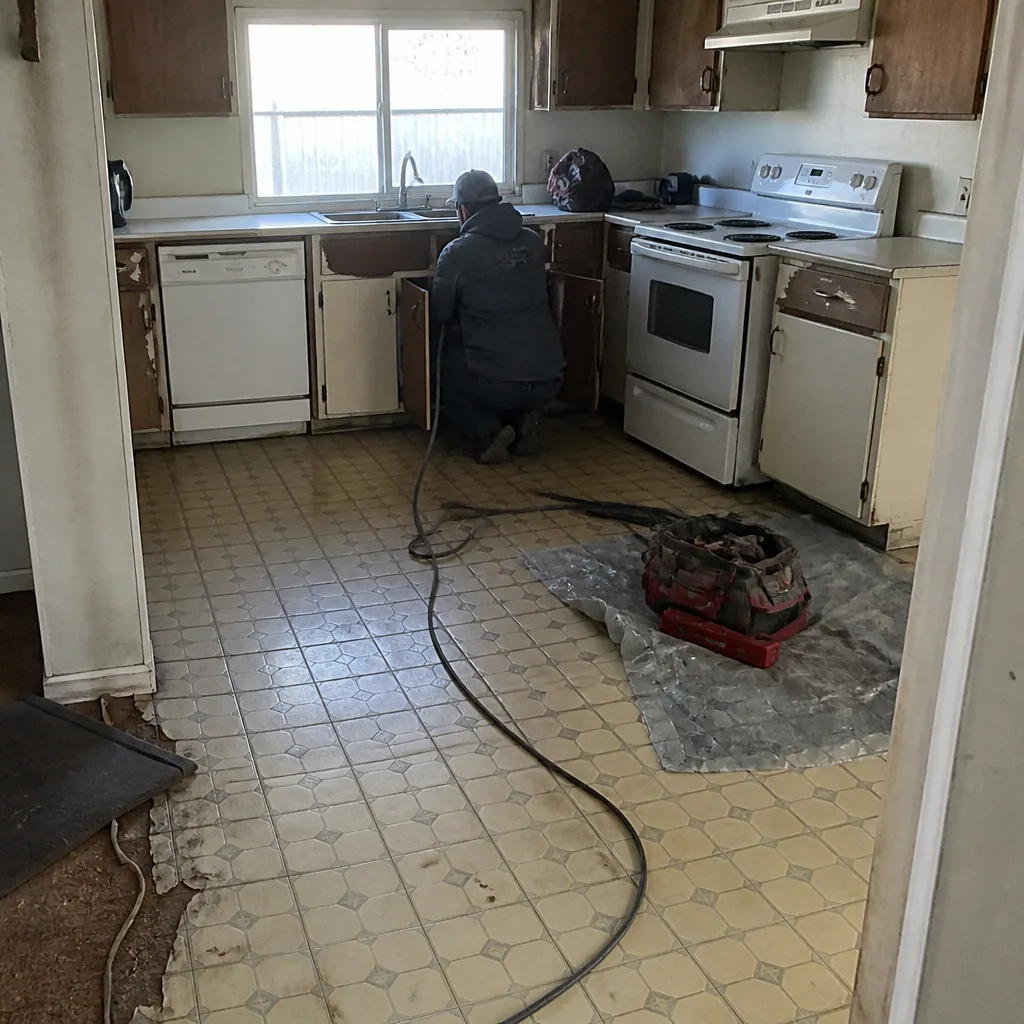 Before
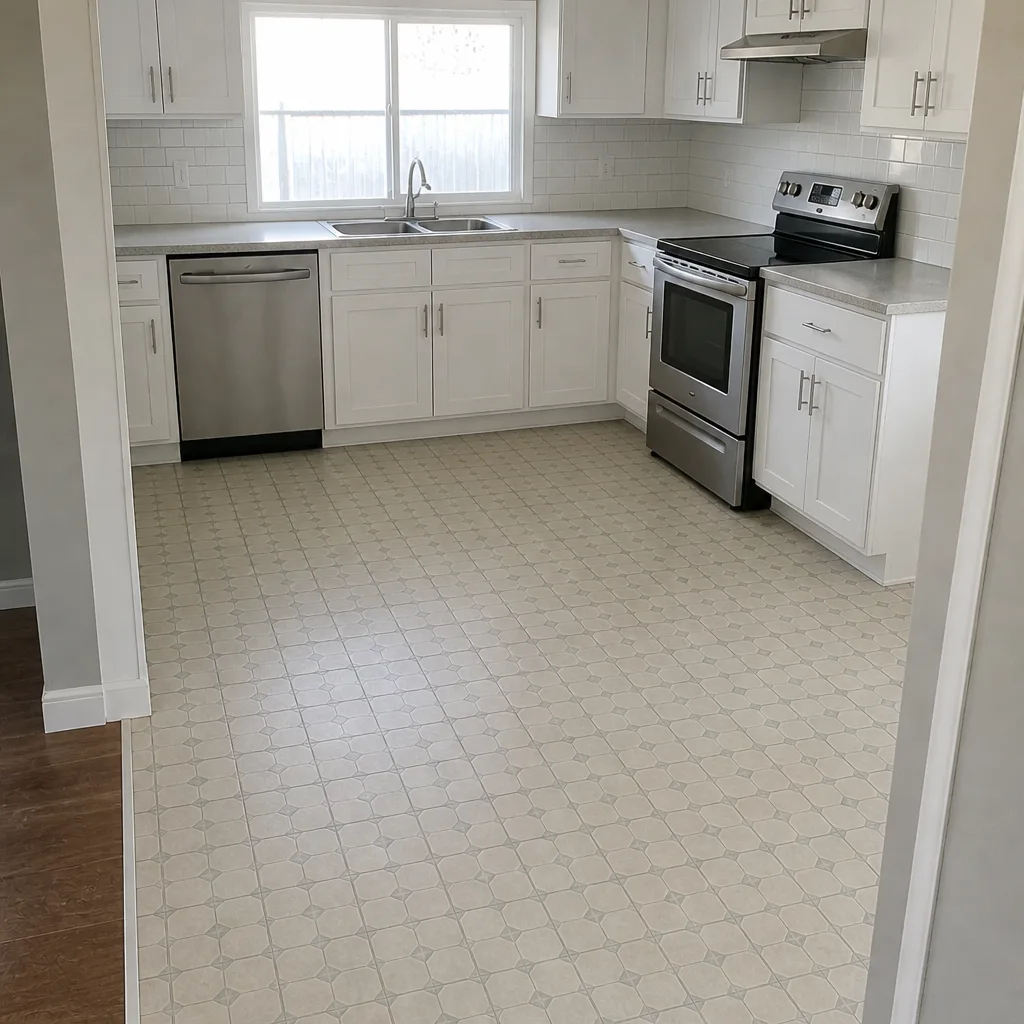 After
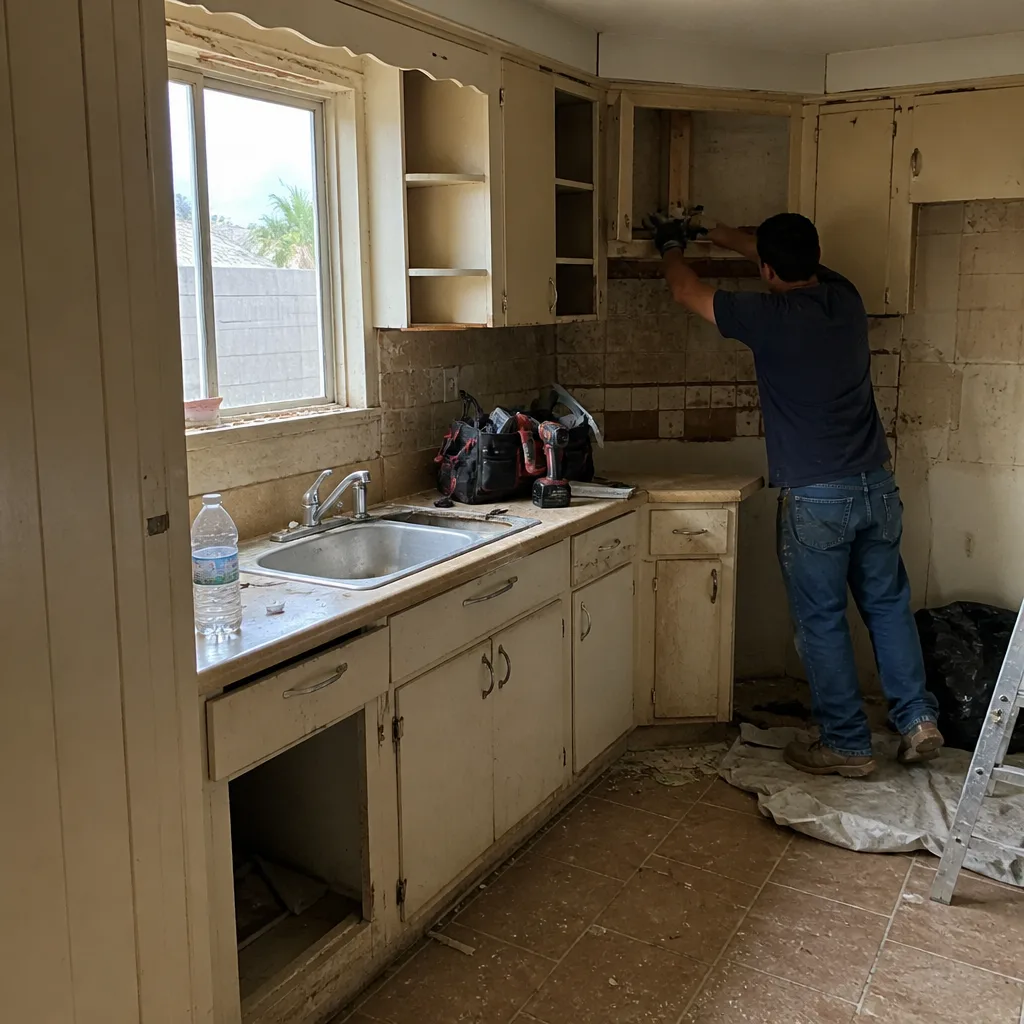 Before
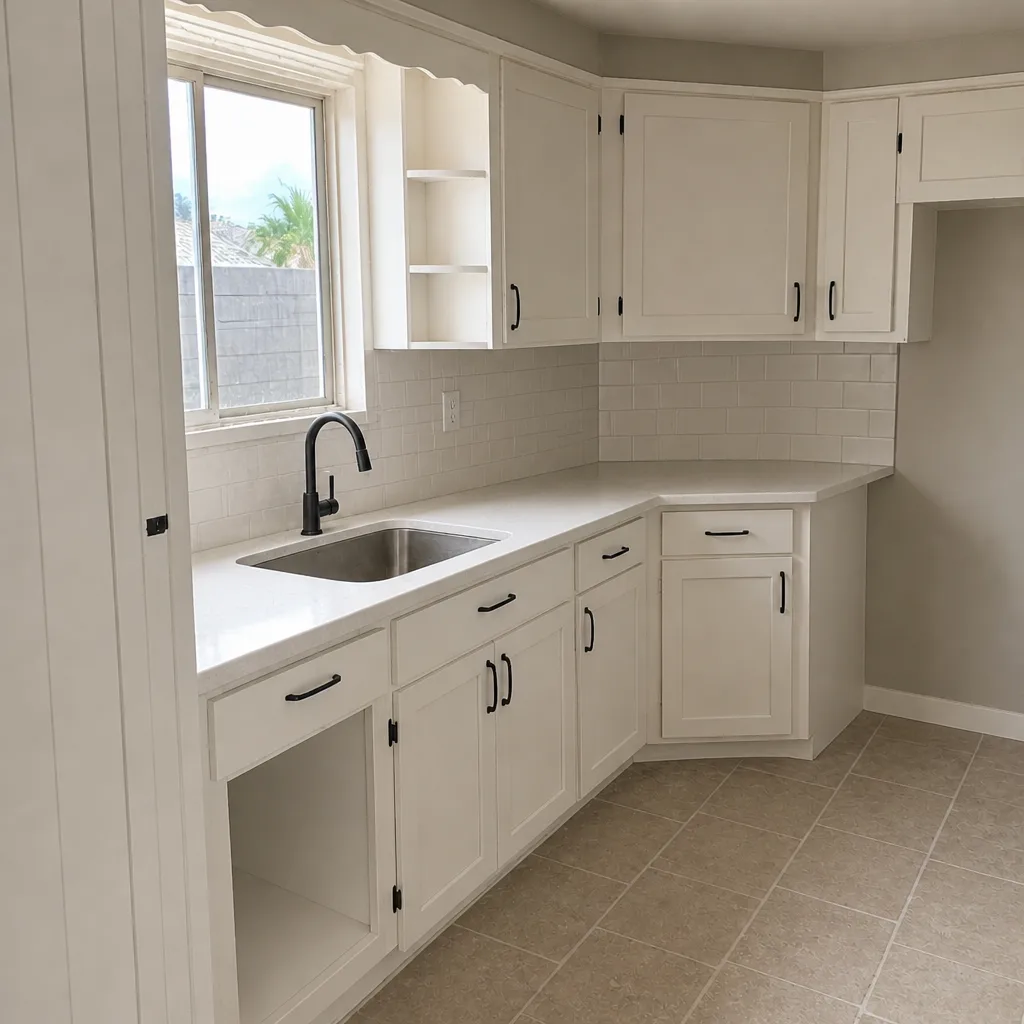 After
When to Call a Professional
Some fence problems are safe and reasonable to address yourself. Replacing a single cracked board, refinishing an intact fence, or replacing worn gate hinges are all within reach for a confident DIY homeowner. Other problems aren’t. Pulling and resetting posts, diagnosing whether gate sag is a hinge or post failure, and diagnosing structural panel damage that’s transferring load to the posts are all better handled with professional eyes. The reason isn’t that the repair is too technically complex – it’s that the diagnosis matters, and it’s easy to fix a symptom and watch it come back.
Groundwork Construction Co. of Mesquite offers free estimates in Mesquite, and we’ll walk your fence line with you to tell you what you’re actually dealing with. Call (888) 413-6358 to schedule your free estimate. We answer calls with a live person around the clock, and we’ll give you a written line-item quote with fixed pricing and no change orders so you know exactly what the spend looks like before any work starts. Our technicians have up to 12 years of experience and arrive uniformed and background-checked. Every fence project we deliver is covered by our 730-Day Done Right Promise – if it’s not done right, we make it right.
Frequently Asked Questions
A fence post that leans within the first two years is almost always a post depth or concrete issue that the wind revealed, not a wind issue caused by the wind. If the post was set too shallow for our soil and wind load, or the concrete didn’t cure correctly, the first windy season exposes it. Straightening the post without checking the base means the failure will return. Call (888) 413-6358 for a diagnostic walk-through – estimates are free.
Post repair pricing in Mesquite depends on how many posts are affected and whether they need pulling and resetting. A single post reset with proper depth and concrete typically runs less than a full section reset, and a full section reset costs more than a single-post repair but less than a full replacement. Call (888) 413-6358 for an exact written line-item quote for your property – estimates are free, and we don’t change the price after the work starts.
Usually no. If the boards are bowing in the same direction the posts are leaning, the posts are transferring structural stress into the boards, and new boards will bow again within a season. Fix the posts first, then replace boards. If boards are failing independently of the posts – for example, UV-damaged boards on solid posts – a board replacement can work. Call (888) 413-6358 to get a proper diagnosis before you spend on materials.
If a gate still sags after new hinges, the problem is almost always the gate post or the gate frame, not the hardware. A gate post that’s failing will pull the gate out of alignment no matter how new the hinges are. A gate frame that’s gone out of square due to UV and moisture exposure will sit skewed even with perfect hardware. Call (888) 413-6358 for a gate diagnostic that identifies which one you’re dealing with before you buy more hardware.
In Mesquite, UV is the dominant failure force, not moisture. Wood fences here lose structural integrity from the sun before they rot from water, so signs of damage show up first as gray, chalky, or splintering board faces rather than mold or water swelling. The exception is post rot below grade, which still happens when the soil around a post doesn’t drain. A finish or material with real UV stability is the biggest prevention step in our climate. Call (888) 413-6358 to talk through which materials hold up best for your fence.
Yes, we pull the required permits and pass the inspections applicable to the fence work we perform. Permit requirements vary by height, material, and property line changes, so the right answer depends on your specific project. Our free estimate includes walking through the permit situation before any work starts. Call (888) 413-6358 to schedule your estimate and confirm what’s required for your property.
The Bottom Line
Fence failures in Mesquite almost always trace back to inadequate post depth, wrong concrete for the soil and climate, or UV exposure on the material. Diagnosing the root cause – not the symptom – is what makes a repair last. A leaning post that’s straight but still moving will lean again next season. A gate with new hinges on a failing post will sag again in two months. A bowed panel that’s transferring stress to the posts will pull the posts out of line if you replace the boards without addressing the run. Once you know which failure mode you’re looking at, the repair path becomes clear, and the repair actually holds. For a diagnostic walk of your fence line before you commit to a repair or replacement, call us for a free estimate.
Call (888) 413-6358 to schedule your free estimate. We’ll walk your fence line, identify the root cause, and give you a written line-item quote that shows exactly what the fix involves and exactly what it costs. Every project we deliver is backed by our 730-Day Done Right Promise, and we’re proud to bring full-scope construction experience to homeowners in Mesquite – from fence installations that hold up under desert wind and UV to driveways and paver work to home additions and ADU construction. Built to last, backed in writing. From foundation to finish line.
Written by the team at Groundwork Construction Co. of Mesquite.