Last updated November 18, 2026








Free written scope consultation - allowances, timeline, and change-order rules on paper before a single trade is scheduled
Bathroom Remodeling Maintenance Schedule: What to Do and When
Most bathroom remodel warranties void themselves not because of contractor error, but because homeowners unknowingly skip the 90-day caulk and grout check that every manufacturer quietly requires. We’ve watched this happen in Mesquite more than once: a beautiful new shower starts weeping at a corner because nobody looked at the sealant during the first season of use. This guide lays out a structured handoff protocol for the two years after your last tile is set – the 30-day, 90-day, and 365-day checkpoints, how to test your vent fan, why grout and caulk are not interchangeable, and where our 730-Day Done Right Promise begins and ends. What you do after the crew leaves is what makes the investment hold.
Quick Answer
A bathroom remodel needs a scheduled inspection at 30 days, 90 days, and one year after completion, followed by seasonal checks twice a year and a full sealant refresh every 3 to 5 years depending on material. At each checkpoint you’re looking for caulk separation, grout cracking, water staining, and a vent fan that’s lost airflow. Porcelain, natural stone, and engineered quartz each follow different cleaning and resealing timelines, so the schedule has to match your actual materials.
Styles & brands we work with
- Kitchen remodeling
- Bathroom remodeling
- Home additions & ADU
- Roofing
- Windows & doors
- Driveway & pavers
- Fence
Table of Contents
- Why a Post-Remodel Maintenance Schedule Matters More Than the Remodel Itself
- The 30/90/365-Day Inspection Checkpoints: What to Look For
- Grout vs. Caulk: The Joint That Decides Whether Water Gets In
- Ventilation Fan Performance Decay: The Annual CFM Test
- Material-Specific Maintenance Timelines: Porcelain, Stone, and Quartz
- Mesquite Climate and Your Bathroom: Heat, Hard Water, and Dust
- How the 730-Day Done Right Promise Intersects With Owner Maintenance
- Your Annual Bathroom Maintenance Calendar
Why a Post-Remodel Maintenance Schedule Matters More Than the Remodel Itself
A remodel is a construction event. Maintenance is what determines whether that event turns into a durable asset or a slow, expensive decline. Water is patient. It doesn’t need a big opening – a hairline crack in a grout line behind a shower valve, a caulk bead that pulled away a millimeter at the tub deck, a vent fan running at 60% of its rated airflow. Any one of those, ignored for a year in a bathroom that sees daily showers, is enough to soften drywall, feed mold, and turn a $18,000 renovation into a repair project.
The math gets ugly fast. Replacing a shower pan that’s been quietly leaking for 18 months costs far more than the caulk and inspection time that would have prevented it. In our experience across Mesquite, the homeowners who get the longest life out of a bathroom are the ones who treat the first two years as an active warranty period – not a passive one where you assume the contractor handled everything and you handle nothing.
Here’s the shift in thinking: after the final walkthrough, you’re not closing out a project. You’re taking delivery of a system. Showers, tub surrounds, tile, grout, caulk, plumbing fixtures, and ventilation are all interacting parts, and they all move. Tile expands and contracts. Caulk flexes. Wood framing shifts with temperature. That’s not a defect – it’s normal – but it means the seals that keep water out need periodic attention regardless of how well the job was done.
This is the part of the conversation most contractors skip. They hand over keys, wish you well, and disappear. We built our process around the opposite: a written schedule, a documented handoff, and a real warranty backing the workmanship. Not because we expect something to fail, but because the maintenance window is where good work either stays good or quietly doesn’t.
The 30/90/365-Day Inspection Checkpoints: What to Look For
Treat the first year after your remodel like a settling period and inspect on a schedule. These three checkpoints catch the issues that matter while they’re still cheap to fix.
The 30-Day Check
Thirty days after completion is when you look for movement. New caulk has fully cured, tile has gone through one full cycle of heat and cool, and any early adhesion problems show up now.
- Run every fixture: shower, tub, sinks, and any handheld sprayer. Watch for drips at the base of the faucet and around the shower arm.
- Inspect caulk beads at the tub deck, shower pan perimeter, and backsplash. Look for any gap, ripple, or shadow where the bead has pulled away from tile or tub.
- Check grout lines in the shower floor and walls. Hairline cracks in corners are common this early – note them, don’t panic.
- Look at the base of the toilet. Any wobble or moisture at the floor seal is a problem.
- Test the vent fan by holding a tissue to the grille. It should pull tight against the grille within a few seconds.
The 90-Day Check
The 90-day mark is the single most important – and most skipped – checkpoint. By now your bathroom has been through a full season of showers, temperature swings, and humidity cycles. Manufacturer warranties on caulk and sealant assume this inspection happens, which is why skipping it can void them.
- Re-inspect every caulk bead. If any section has started to crack or pull away, clean and reseal it now – not at 6 months.
- Look for water staining on the ceiling below the bathroom or on walls of the room below yours. Any discoloration means moisture is escaping somewhere.
- Check for efflorescence – the white, powdery mineral deposit that appears on grout or stone. It’s a moisture signal, not just a cosmetic issue.
- Test the vent fan again against the 30-day baseline. Airflow shouldn’t have dropped – if it has, the duct or grille may be clogged.
- Inspect shower door seals and sweeps. If your glass door has a bottom sweep, it should sit firmly against the curb.
The 365-Day Check
One year in, you’re doing the same checks plus a full assessment of material condition. Grout sealant applied at install is approaching the end of its first cycle. Caulk is at roughly 20-30% of its service life depending on the formulation. By the end of year one you should be able to make a first real decision: reseal, recaulk, or wait another cycle?
We recommend a written one-page log at each checkpoint. Date it. Note what you found. That log is your evidence if you ever do need to use a warranty.
Grout vs. Caulk: The Joint That Decides Whether Water Gets In
Grout and caulk are not interchangeable, and using the wrong one in the wrong joint is the single most common source of water intrusion after a remodel. This is the mistake we see most often, and it’s the one that quietly destroys shower pans and tub surrounds.
Grout is a cementitious or epoxy material designed for joints between tiles on the same plane. It’s rigid. It’s meant to fill the field – the flat faces of the shower wall or floor – where tiles meet tile. Grout should never be used at a change of plane.
Caulk – specifically, a flexible 100% silicone sealant or a high-quality hybrid – is what goes in every joint where two surfaces meet at an angle or move relative to each other. That means:
- Where tile meets the tub deck or shower pan
- Inside corners where two walls meet
- Where tile meets a shower valve trim or a niche frame
- Along the bottom of a backsplash at the vanity counter
- Around the base of the toilet where it meets the floor
- Where a glass shower door frame meets tile
Grouting these joints is like putting a concrete patch across a door hinge. It might look fine for a few weeks. Then thermal movement and daily shower cycles flex the two surfaces just enough to crack the grout, and now you have an open channel for water to travel behind the tile. That’s how shower pans get soft, how framing rots, and how what should have been a $150 maintenance call becomes a $3,000-plus repair.
If you’re resealing yourself, use 100% silicone in wet areas – silicone stays flexible, resists mold, and holds up to Mesquite’s hard water better than acrylic-latex caulk. Acrylic-latex is fine for dry joints like along a painted wall. Don’t mix them up. And when you reseal, remove the old caulk completely first – don’t just top-coat it. New caulk over old caulk fails from the day it’s applied.
If a joint has already cracked and pulled away from the substrate, that’s a professional call unless you’re comfortable doing the prep work properly. Grout-crack and caulk-joint repair done right means cleaning out the old material, drying the joint, and applying the right product with correct tooling. Done wrong, it just delays the problem.
Ventilation Fan Performance Decay: The Annual CFM Test
Your bathroom vent fan doesn’t announce when it stops working. It keeps spinning, keeps making noise, and keeps giving you the impression it’s moving air – while quietly moving less and less each year. We’ve seen fans three years old running at half their rated CFM because the grille was never cleaned and the exterior damper had jammed partway open.
CFM – cubic feet per minute – is the number that matters. A bathroom fan should move enough air to fully exchange the bathroom volume roughly 8 times per hour. For a typical Mesquite bathroom, that means a fan rated at 80-110 CFM. A fan rated at 110 CFM that’s actually moving 50 CFM isn’t doing the job, and your moisture control depends on real airflow, not rated airflow.
Here’s how to test yours annually:
- Clean the grille with a vacuum brush attachment. Dust buildup alone can cut airflow by a third.
- Do the tissue test: hold a single square of toilet paper to the grille while the fan runs. It should stick firmly. If it falls or flutters loosely, airflow is weak.
- Check the flapper at the exterior vent (often called a damper or backdraft flap). It should open fully when running and close when off. In Mesquite’s dusty climate, these flap hinges gum up more than people expect.
- Listen for rattle or grinding. A worn bearing is a fan on its way out.
- Verify duct run. Short, straight runs to the exterior are best. If yours runs through the attic and terminates in a soffit vent, that’s normal – but it must exit outside, not into the attic.
Run the fan during every shower and for 20-30 minutes after. That’s how long it takes to pull the residual humidity out. In our experience, the single best improvement a Mesquite homeowner can make to an aging bathroom is replacing a 20-year-old builder-grade fan with a modern unit rated for their actual bathroom size. It’s a small project with an outsized effect on moisture control and mold prevention.
Material-Specific Maintenance Timelines: Porcelain, Stone, and Quartz
Not all bathroom surfaces age on the same schedule. Porcelain, natural stone, and engineered quartz are three different materials with three different maintenance calendars. Treating them identically is how people damage expensive surfaces with the wrong cleaner or skip a reseal that should have happened a year ago.
Porcelain Tile
- Grout sealant: reseal every 1-2 years depending on traffic and shower use.
- Cleaning: pH-neutral tile cleaner weekly; avoid acidic cleaners, which etch grout lines.
- Watch for: dark staining in floor grout lines, which signals either sealer failure or trapped moisture.
Natural Stone (Marble, Travertine, Slate)
- Impregnating sealer: reseal every 6-12 months. Natural stone is porous and Mesquite’s hard water leaves mineral deposits on unsealed surfaces fast.
- Cleaning: stone-specific pH-neutral cleaner; never vinegar, bleach, or generic bathroom spray on marble.
- Watch for: etching – dull, whitish spots from acidic contact. Etching is permanent and requires professional polishing to correct.
Engineered Quartz (for vanity tops)
- Sealing: not required – quartz is non-porous.
- Cleaning: mild soap and water or quartz-safe cleaner; avoid abrasive pads, which dull the finish.
- Watch for: heat damage. Quartz can discolor near high-heat sources, so keep curling irons and hot tools off the surface.
If you’re picking materials for an upcoming remodel and want to align them with the maintenance lifestyle you’re willing to commit to, this is the conversation to have before installation. For a broader look at how our team scopes bathroom projects, visit our Groundwork Construction Co. of Mesquite home.
Mesquite Climate and Your Bathroom: Heat, Hard Water, and Dust
Mesquite sits in the Mojave Desert, and that shapes bathroom maintenance in ways that a generic national guide won’t tell you about. The high summer heat and low humidity dry out caulk and sealants faster here than in coastal climates, and the water we run through our fixtures is genuinely hard – which accelerates mineral staining on glass, grout, and stone.
What does that mean for your schedule?
- Caulk cycles run shorter. Where a mild climate might let a bead of silicone go 5 years, in Mesquite we see the first signs of degradation around year 3. Plan on a full reseal around year 3-4 rather than the standard 5.
- Glass shower doors need squeegee discipline. Water spotting is a mineral deposit issue, not just cosmetic. Squeegee after every shower and use a proper glass cleaner weekly.
- Exterior vent runs get dust-loaded. Dust in the air here means exterior dampers and duct grilles need cleaning more often. If you’re near the Virgin River corridor or out toward the east side of town, dust buildup inside vent ducts is worth checking every 6 months.
- Winter temperature swings are a real factor. Mesquite cools down significantly in winter, and the interior/exterior differential across walls can create condensation patterns that show up as grout discoloration on exterior-facing bathroom walls.
For homeowners planning an exterior upgrade while they’re thinking through the maintenance calendar for a home, our team also handles Fence Installation in Mesquite and Driveway & Pavers in Mesquite – both of which involve their own seasonal maintenance calendars worth setting up alongside your bathroom schedule.
How the 730-Day Done Right Promise Intersects With Owner Maintenance
Here’s the part nobody explains clearly enough: a workmanship warranty and owner maintenance responsibilities are two different things, and both matter. Our 730-Day Done Right Promise is one of the longest workmanship guarantees in the residential construction space – two full years covering what we build. But that promise covers what we did, not what happens when a joint goes uninspected for two years.
What we cover:
- Installation failures – tile lifting, grout or caulk prematurely failing due to installation error, improper waterproofing
- Fixture leaks caused by installation
- Vent fan installation issues
- Any workmanship defect discovered during the 730-day window
What typically goes outside the warranty – and this is where most coverage disputes come from:
- Water damage from skipped inspections at the 30, 90, or 365-day checkpoints
- Damage from cleaning products, abrasive pads, or acidic cleaners on stone
- Caulk or grout degradation past the maintenance window that went unrepaired
- Fixture failures unrelated to install (worn cartridges, aged seals)
- Any modification or repair done by someone other than our team during the warranty period
The clean answer: do the checkpoints, keep a written log, and if you find something, call us. If it’s our work, we fix it. If it’s homeowner maintenance, we’ll tell you what to do and how much it should cost. Calls are answered by a live person 24/7, so nobody has to wait until Monday morning when a slow leak shows up on a Saturday afternoon. See our Home Additions & ADU in Mesquite service for the same promise applied to larger-scale construction.
Your Annual Bathroom Maintenance Calendar
Here’s the calendar we hand every Mesquite homeowner at the end of a remodel. Print it, stick it inside a vanity door, and mark it.
Monthly
- Squeegee shower glass after every use
- Clean vent fan grille with vacuum brush
- Wipe down tub and shower walls to prevent mineral buildup
Every 3 Months
- Inspect caulk beads at tub, shower pan, and backsplash for any pull-away
- Clean exterior vent damper and duct grille
- Test the vent fan with the tissue test
Every 6 Months
- Inspect grout for cracking or darkening
- Deep-clean shower surround and check for water staining on ceiling below
- Check toilet base seal and flooring for wobble
Annually
- Full bathroom-wide inspection (revisit your 30-day checklist – it’s the same process)
- Reseal stone surfaces; evaluate grout sealer status
- Vent fan deep clean – remove grille, check flapper operation
- Inspect shower door sweeps and hinges
Every 2-4 Years
- Reseal grout lines in shower and floor
- Full recaulk of wet joints
- Evaluate vent fan replacement if it’s aging or moving less air than needed
That’s the whole system. Six categories, cascading on a schedule. If you want help setting up the first cycle – or want a professional walkthrough during the 30-day or 90-day checkpoint – call (888) 413-6358 and schedule a free estimate or maintenance consult. For homeowners thinking about a broader property improvement, see our Driveway & Pavers in Mesquite page – those materials have their own maintenance cadence worth knowing about.
Common Mistakes to Avoid
- Using sanded grout in a change-of-plane joint. It looks fine for a few weeks and then cracks from thermal movement, opening a channel for water into the shower pan. Caulk belongs there, not grout.
- Skipping the 90-day inspection because “it’s still working.” The 90-day check is the exact checkpoint most caulk manufacturers require for their warranty – skip it and you’ve quietly voided coverage in Mesquite’s dry heat.
- Topping new caulk over old caulk. It fails from day one. Remove the old bead entirely before applying new.
- Assuming a running vent fan is a working vent fan. It’s not the motor you’re testing, it’s the airflow. Clean the grille, check the exterior damper, and do the tissue test.
- Using all-purpose bathroom cleaner on marble or stone. Acidic cleaners etch natural stone permanently. In a bathroom near the Virgin River corridor with hard water, etching is the most common damage we see.
- Ignoring a water stain on the ceiling below. That’s water escaping somewhere – usually a shower pan or drain seal. Two months of ignoring it in Mesquite’s climate turns a $200 fix into a $4,000 tear-out.
- Resealing grout without cleaning and drying first. Sealer on a damp or dirty grout line doesn’t bond and usually looks fine for a few months before failing.
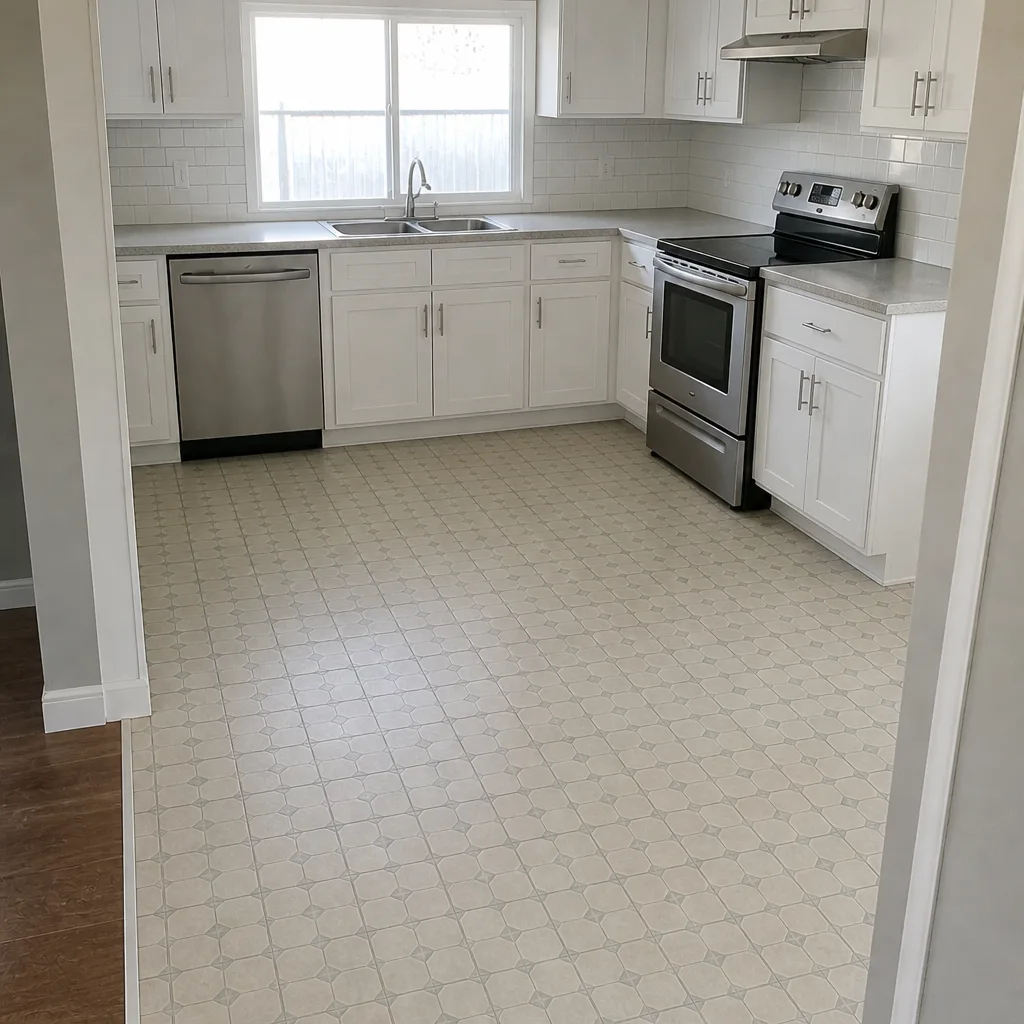
See the difference
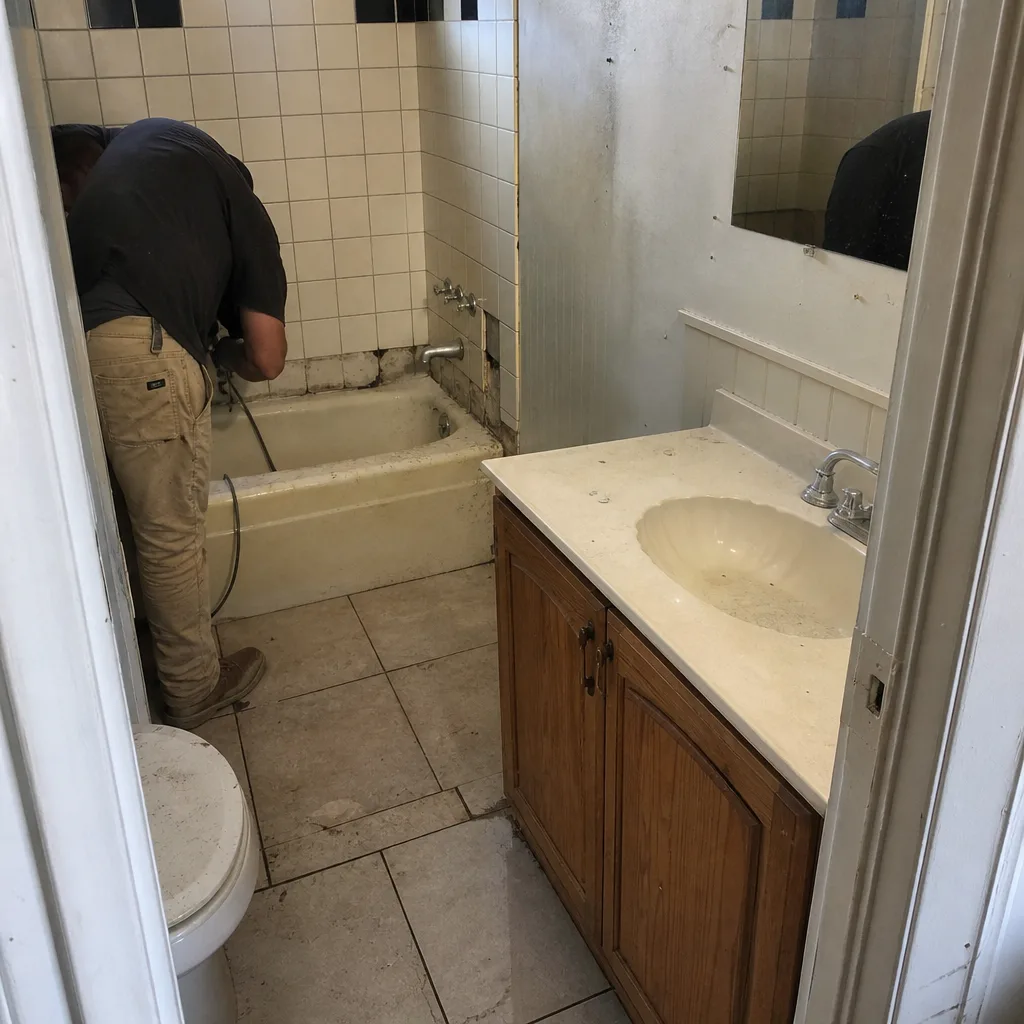 Before
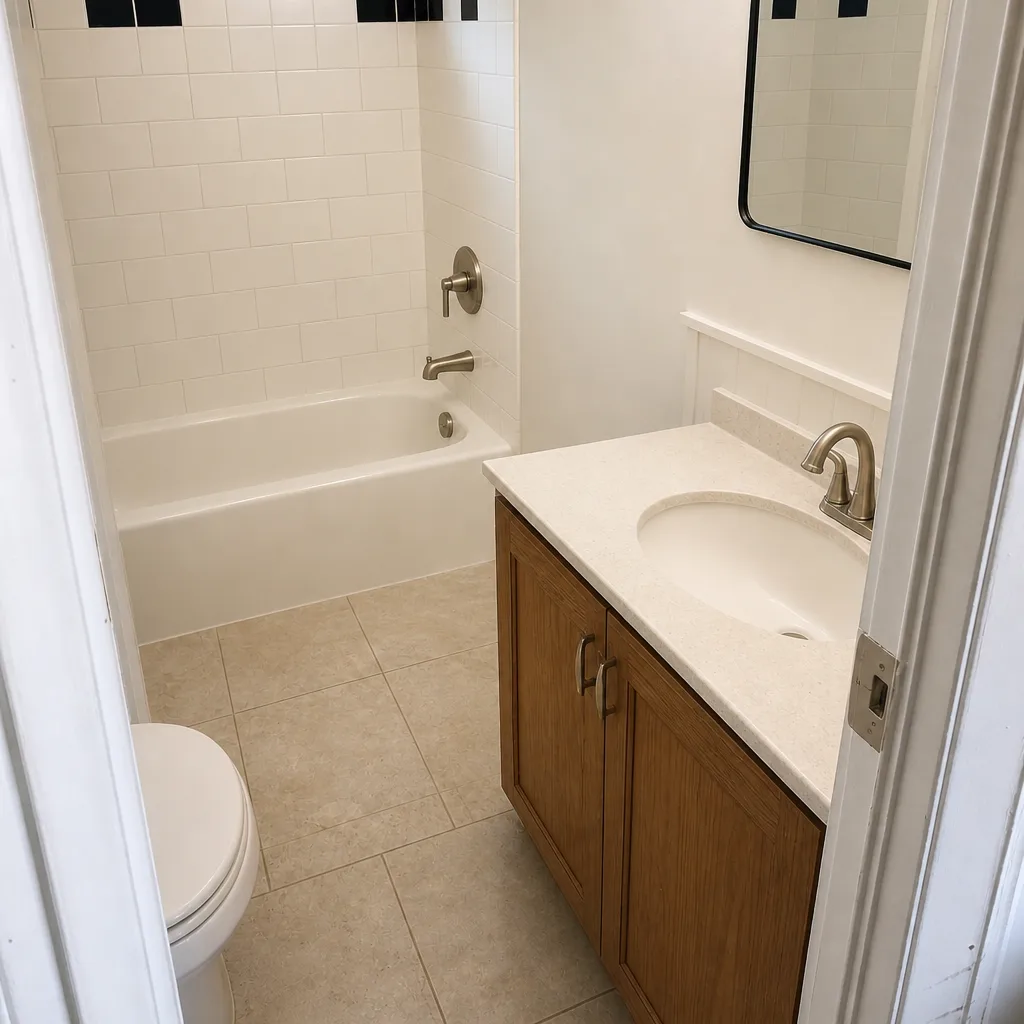 After
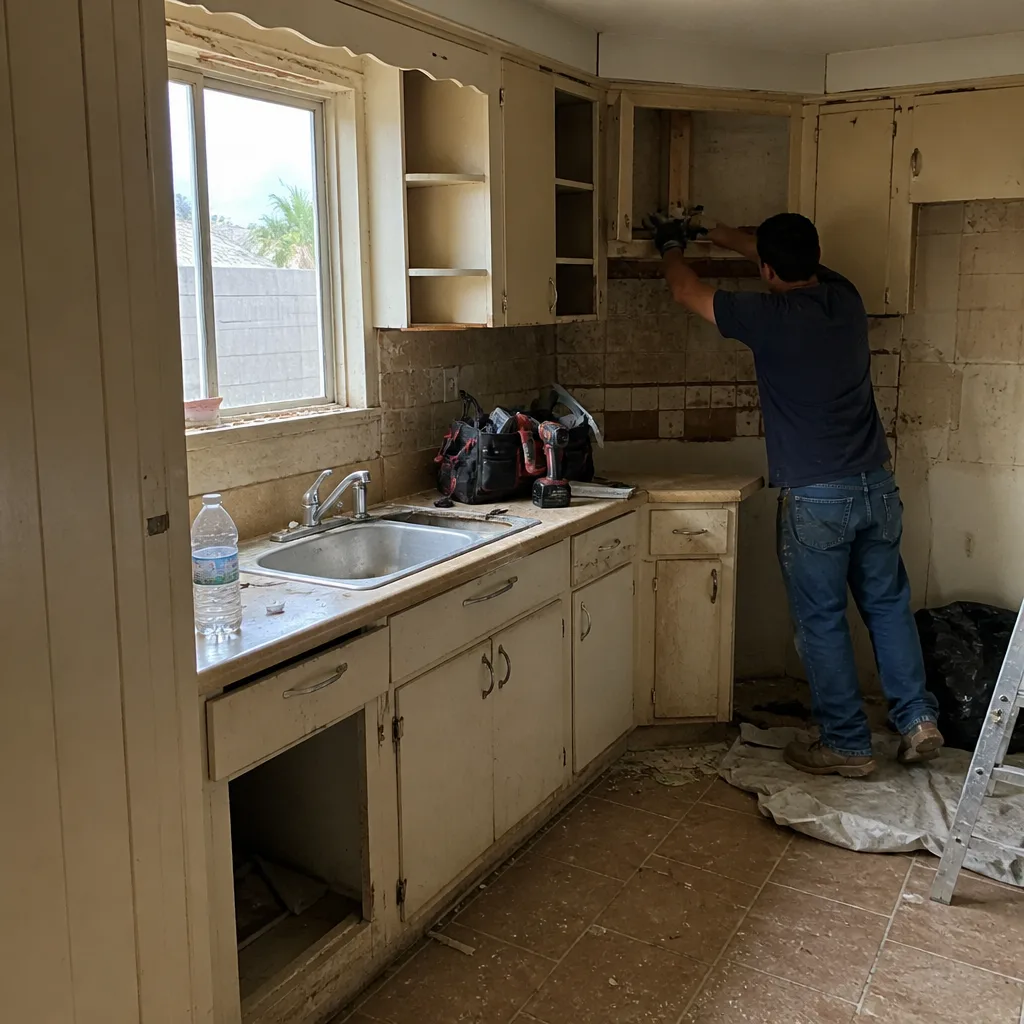
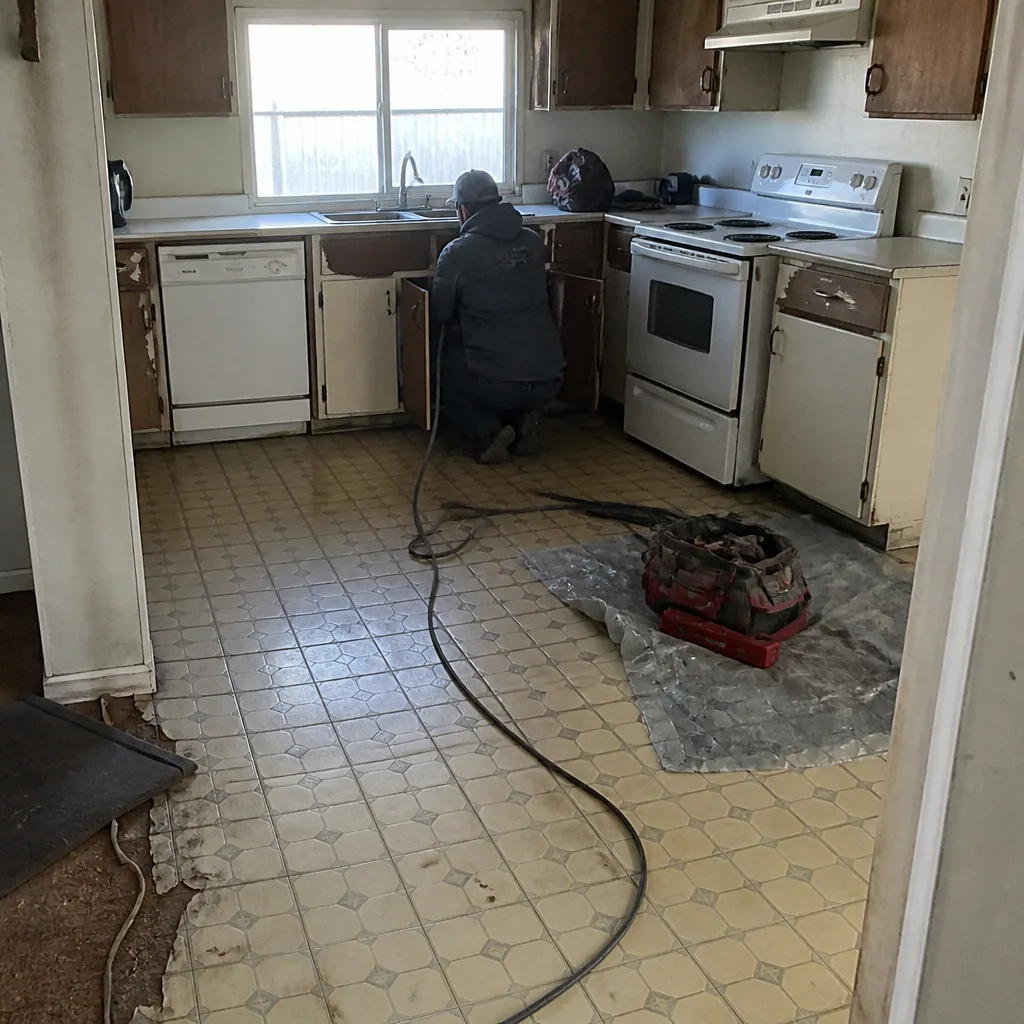 Before
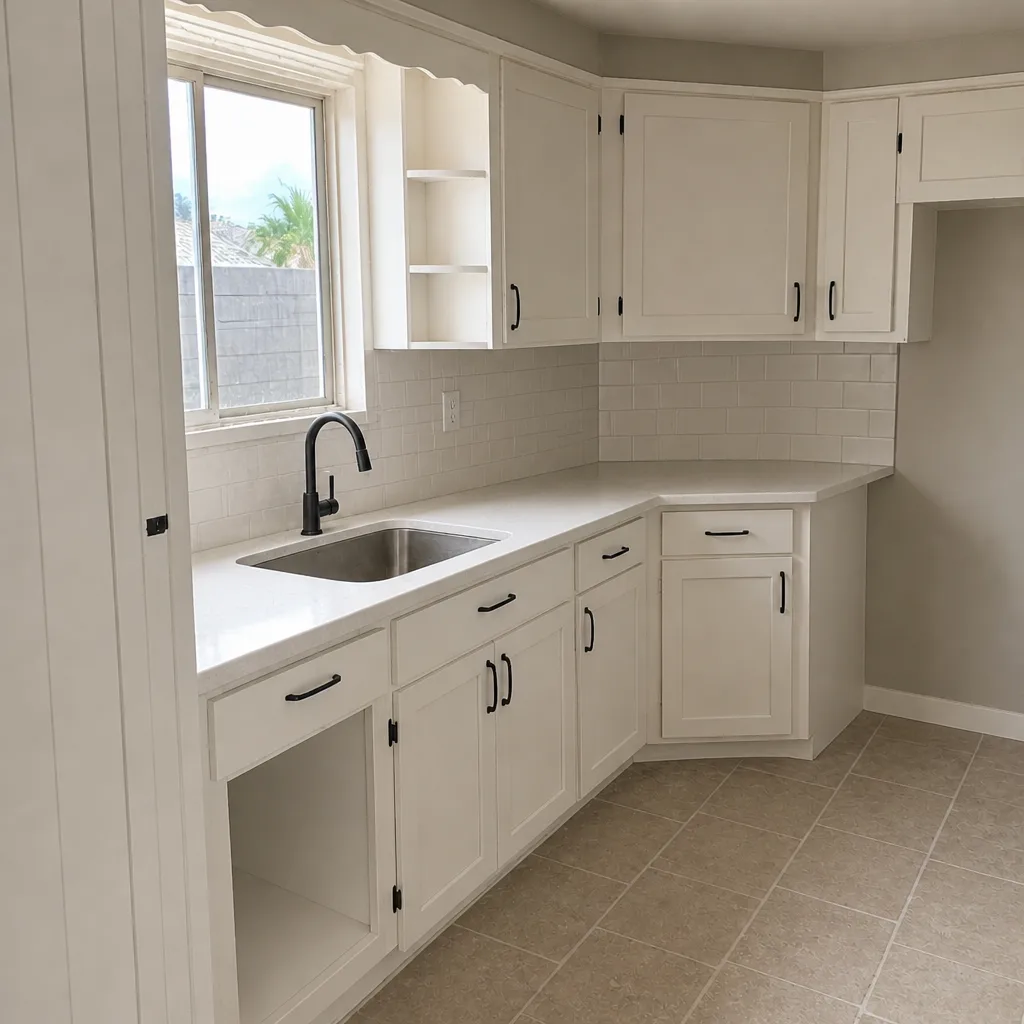
 After
 Before
 After
When to Call a Professional
Call a professional when you see active water – staining, dripping, efflorescence, or softness in a shower pan. Call when caulk has separated at a change-of-plane joint and you can’t get it clean and dry enough to properly reseal. Call when your vent fan fails the tissue test and cleaning the grille doesn’t restore airflow. Call when a fixture wobbles or drips, or when you see cracking extending beyond a hairline.
For Mesquite homeowners, Groundwork Construction Co. of Mesquite offers free estimates on all bathroom work – from a 30-day post-remodel walkthrough to a full renovation refresh. We pull permits and handle inspections. Technicians are background-checked, arrive in uniform, and our technicians have up to 12 years of experience across every trade. Call (888) 413-6358 – we answer live, 24 hours a day, 7 days a week.
Frequently Asked Questions
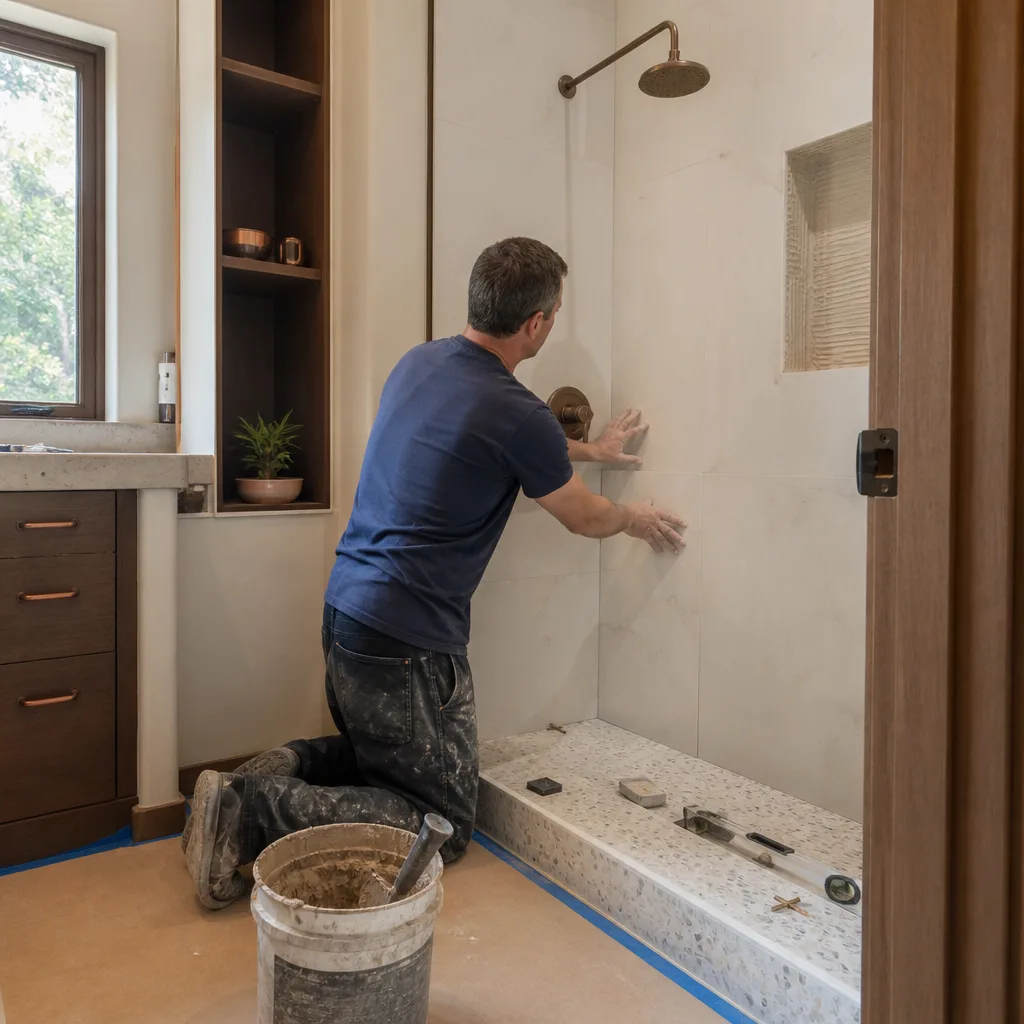
Reseal grout every 2-4 years in a shower and re-caulk change-of-plane joints every 3-5 years in a mild climate – but in Mesquite’s dry heat, plan on the shorter end: caulk around year 3, reseal grout around year 2-3. Stone surfaces need resealing every 6-12 months. Call (888) 413-6358 for a free maintenance schedule review.
Usually one of three reasons: the joint had moisture in it when it was sealed, the wrong kind of caulk was used in a wet joint (acrylic-latex instead of 100% silicone), or the joint is moving more than the caulk can flex. A 90-day inspection would catch all three before the crack becomes a water intrusion issue. Call for an exact diagnosis – estimates are free.
No. The 90-day checkpoint is the inspection most caulk and sealant manufacturers quietly require for their own warranty, and skipping it can void your coverage even if nothing appears wrong. It’s also when the first real thermal-movement evidence shows up in Mesquite. Book it. Call (888) 413-6358 for a walkthrough.
Test it with a single square of toilet paper held to the grille while running. If the paper sticks firmly, airflow is fine. If it flutters or falls, the fan is either dirty or failing. Clean the grille and exterior damper first, then retest. If it still fails, the fan likely needs replacement. Call us for a fan efficiency check – estimates are free.
Yes, if the crack comes from an installation defect – such as tile set without proper waterproofing, or the wrong caulk applied in a wet joint. It does not cover the normal wear-and-tear of unmaintained joints where the owner missed the 30/90/365-day inspections. Our team will tell you which it is at the walkthrough. Call (888) 413-6358 for clarity.
Yes. Mesquite’s hard water leaves mineral deposits on glass, grout, and stone faster than soft water would, and the deposits bond tighter if they aren’t wiped away quickly. Squeegee shower glass after every use and use a pH-neutral cleaner weekly. Never use acidic cleaners on stone – they cause permanent etching. Call for a bathroom maintenance consult – free estimates.
The Bottom Line
The bathroom remodel is the easy part. What happens in the two years after it determines whether your investment holds. Hit the 30, 90, and 365-day checkpoints. Use 100% silicone in wet joints, not grout. Test your vent fan at least annually – a running fan is not the same as a working fan. Follow the material-specific schedule for porcelain, stone, and quartz. Keep a written log so your warranty is clean and enforceable. And if something looks off, call us: live person, 24/7, background-checked technicians, free estimates, and the 730-Day Done Right Promise standing behind the work. That’s the full handoff. Use it.
Ready to schedule your free estimate? Call (888) 413-6358 and mention this guide – we’ll set up a post-remodel inspection, maintenance consult, or a full remodel scoping session. Upfront pricing, no surprises – the number you see is the number you pay.
Written by the team at Groundwork Construction Co. of Mesquite.