
Last updated November 18, 2026





Free written scope consultation - allowances, timeline, and change-order rules on paper before a single trade is scheduled
Windows & Doors Warning Signs Every Homeowner Should Know
A single window that fogs between the panes is an annoyance. Three fogged windows in the same house within two years of installation isn’t bad luck – it’s a pattern that points to a specific installation or product defect that every other window in that project likely shares. We’ve watched the same sequence play out on Mesquite homes again and again: one small sign gets ignored, then water finds the framing, and what would have been a $300 fix turns into a wall opening. This guide walks you through the progression, from early indicators that contractors wave off to the structural failure that shows up years later, so you can read the story your windows and doors are telling you and act before the damage compounds.
Quick Answer
The warning signs that windows and doors are failing fall into a predictable sequence: first cosmetic (chalking, weatherstripping wear), then performance (drafts, fogging, sticking sashes), then structural (frame gaps, wall paint bubbling, drywall tape separation). Only the third stage is an emergency. If you’re seeing fogging across multiple units, head jamb gaps, or moisture showing up at interior walls near openings, the problem is likely installation-related and already affecting the building envelope – not just the window itself.
Styles & brands we work with
- Kitchen remodeling
- Bathroom remodeling
- Home additions & ADU
- Roofing
- Windows & doors
- Driveway & pavers
- Fence
Table of Contents
- Cosmetic Deterioration vs. Performance Failure: Which One Is an Emergency?
- Early-Stage Warning Signs Contractors Often Dismiss
- Improper Installation vs. Product Wear: How to Tell the Difference
- Interior Warning Signs That Start at Windows and Doors
- The Escalation Timeline: What Happens If You Wait
- Door-Specific Warning Signs That Don’t Apply to Windows
- Why Mesquite’s Climate Accelerates These Failures
- Repair or Replace? A Decision Framework
Cosmetic Deterioration vs. Performance Failure: Which One Is an Emergency?
Most homeowners lump every flaw together as “needs to be done eventually.” That’s a mistake, and it leads to two opposite errors: panicking over sun-faded weatherstripping and ignoring a head jamb gap that’s been letting wind-driven rain into the wall cavity for two seasons. The two categories are fundamentally different problems with different timelines.
Cosmetic deterioration (schedule it, don’t panic)
Cosmetic wear is the surface-level aging that affects appearance but not the building envelope. It’s what most windows and doors in Mesquite will show after 10 to 15 years of exposure to 100-plus-degree summers.
- Chalking or fading on vinyl frames and painted wood surfaces
- Weatherstripping that has flattened or cracked but still seals when the sash is closed
- Minor sealant discoloration along the exterior joint, without cracking or separation
- Slightly stiff operation that responds to a light cleaning and lubrication
None of these put your home at risk. Handle them on a rolling schedule, usually rolled into other exterior maintenance, and don’t let anyone talk you into a full replacement over faded vinyl.
Performance failure (act now)
Performance failure means the window or door is no longer doing its job: keeping water out, keeping air in, and holding the structural opening rigid. These are the signs that trigger action, and on a Mesquite home they should trigger it fast.
- Visible light or daylight coming through a closed joint
- Fogging between the glass panes (seal failure on insulated glass)
- Water staining on interior drywall or sill surfaces after rain
- Drafts you can feel at a closed, locked window
- A gap opening or widening at a head jamb, side jamb, or frame corner
If you’re seeing one or more of these and aren’t sure which category it fits, that itself is a signal to get it looked at. The Groundwork Construction Co. of Mesquite home team handles these assessments as part of a free estimate, and they’ll tell you plainly if a full replacement isn’t warranted yet.
Early-Stage Warning Signs Contractors Often Dismiss
The most expensive window and door problems are the ones that started small and got dismissed. In our experience, three specific early indicators are the ones most often waved off – and each one points to a different root cause worth investigating.
1. Hairline cracks in exterior caulk joints
Caulk at the perimeter of the frame is the first line of defense against water intrusion. When it develops hairline cracks – typically within 3 to 5 years in Mesquite’s UV load – the seal is compromised even though it looks fine from a few feet away. What the crack is telling you: either the caulk is cheap or the underlying frame is moving slightly. On a well-installed window, quality sealant should hold longer than that. If your caulk is cracking early, the frame may be shifting due to improper shimming or an undersized rough opening.
2. Inconsistent sash operation resistance
A window that slides easily one day and sticks the next, then eases up again, isn’t “just a tight window.” That inconsistency points to a frame that’s slightly out of square and moving. Run a simple test: open and close the same window five times in a row. If the resistance varies noticeably between the five cycles, the frame is flexing. On doors, the equivalent is a door that latches easily in winter and needs a shoulder in summer.
3. Frame corner gap formation
The corners of a window frame are mitered or welded joints. On a sound window, those joints don’t open. On a failing one, a hairline gap appears first at the bottom corners and slowly migrates upward. This is a serious sign because it means the frame is being pushed or pulled out of tolerance by the surrounding wall – often from improper shimming, settlement of the rough opening, or insufficient insulation. Corner gaps are usually the earliest visual confirmation that something is wrong with the installation, not just the product.
These three signs share a trait: they’re easy to see if you know to look, and easy to miss because they don’t look like a “problem” yet. Walk your windows and doors once a season and specifically look for them. If you find one, don’t wait for the second.
Improper Installation vs. Product Wear: How to Tell the Difference
The single most useful question to ask about any window or door problem is: is this the product wearing out, or was it installed wrong from day one? The answer determines who should pay, how much the fix costs, and whether replacement will just repeat the problem.
Signs of improper original installation
- Head jamb gaps that run the full width of the frame. A well-set window has a tight, continuous fit at the head. A gap there (visible on the interior side, often just under the top trim) indicates the shimming was wrong or the rough opening was oversized and never properly packed.
- Flashing integration failures. Flashing is the metal or membrane layer that sheds water away from the opening. On a poorly installed unit, flashing is missing, backlapped wrong, or simply absent under the sill. Tell-tale sign: water staining along the exterior wall below the window after heavy rain.
- Settlement patterns that are uneven across the unit. If one corner of the frame is 3/16″ out of square and the others are true, that’s not settlement – that’s installation error. Settlement usually shows up as a gradual tilt that affects the whole opening.
- Multiple units failing within the same 24-month window. This is the pattern that every other window in the project shares. It almost never points to individual product wear, because a single bad batch of glass is rare. A bad install crew is far more common.
- Visible shim material that isn’t structural. A properly shimmed window uses wood or composite shims at load points. A shortcut install uses foam or nothing.
Signs of genuine product wear
- Seal failure on insulated glass in one or two isolated units
- Weatherstripping that has compressed unevenly but the frame is true
- Hardware loss: a sill latch, screen, or handle that has failed while the rest of the unit is sound
- Glass breakage from impact or thermal stress (usually a spiderweb crack at the edge)
If you’re seeing any of the installation signs, replacing the window with the same crew is not the fix. The fix is a proper re-set or a full removal and reinstall done to spec, with flashing and shimming corrected. That’s part of why we only install windows from partners like PGT and CGI on Mesquite projects – the frames hold up when set correctly, and we can stand behind the work with a 730-Day Done Right Promise.
Interior Warning Signs That Start at Windows and Doors
Some of the most important window and door warning signs don’t appear at the window at all. They show up on interior surfaces near openings, and because they look like interior problems, homeowners call a painter or a drywall guy first. The painter patches the wall, the problem comes back eight months later, and only then does anyone look at the door or window.
Wall paint bubbling or peeling near a frame
Paint bubbling is a moisture symptom. When you see it on the wall adjacent to a window or door frame – especially below the sill or beside the jamb – water is getting behind the paint and pushing outward through the substrate. That water is almost always coming from the opening itself: failed flashing, a compromised caulk joint, or a frame gap letting wind-driven rain in.
Baseboard swelling
Baseboards are the first material in a room to swell when water pools at the floor level, because they sit right against the slab or subfloor. If your baseboards are swelling or separating from the wall directly below a window or alongside a door, water is tracking down inside the wall cavity and finding the lowest point. In Mesquite, where a monsoon downpour can drop an inch of rain in an hour, this symptom shows up fast on a failed unit.
Drywall tape separation in corners adjacent to openings
Drywall tape separating in a corner near a window or door is often misread as a foundation problem. Sometimes it is. But more often, it means the opening is moving independently of the surrounding wall – a strong sign that the frame isn’t rigid and the shim pack has failed, or that water has softened the drywall substrate at the corner. If the tape separation runs vertically along a door jamb line, that’s a structural movement confirmation worth having evaluated.
How to isolate the source
- Cut a small inspection hole in the drywall at the corner or base of the affected area (a 4×4″ square is enough).
- Look for dark staining, soft drywall, or visible moisture on the paper face.
- Trace upward or sideways toward the nearest window or door frame. Water follows the path of least resistance, and the frame is usually the entry.
- If the cavity is dry but the tape is separating, the issue is movement, not water.
- Any confirmed water path from an opening warrants a professional assessment, not a patch.
If the source traces back to the door or window, an inspection is worth the call. Driveway & Pavers in Mesquite work and window/door installs share the same drainage logic – water moves, and it moves toward the path you give it. The fix for both is a correct substrate and proper sealing.
The Escalation Timeline: What Happens If You Wait
We’re not going to tell you that a drafty window will collapse your house in a month. It won’t. But the cost of deferring a confirmed performance failure is not linear – it compounds, and the increments are worth knowing precisely.
If you defer 6 months from first performance sign
At this stage, the fix is usually limited to the window or door itself plus the immediate opening. On a unit with a failing seal or a compromised caulk joint, six months might mean a re-set or a single-unit replacement, plus minor drywall patching. Realistic cost range on a Mesquite home: $400 to $900 total, depending on whether the interior trim needs to be touched.
If you defer 12 months
At 12 months, water has had a full monsoon and cooling season to work on the framing. On a compromised opening, that means rot at the sill or lower jamb, loosening insulation around the frame, and drywall damage that now needs proper replacement (not a patch). The drywall repair alone runs $300 to $700 for a typical window area, before the window is even addressed. Cost range: $1,200 to $2,500 per affected unit.
If you defer 24+ months
At 24 months and beyond, the failure affects the building envelope. In our experience, that means the rough opening itself is compromised, sheathing may be soft, and the repair now requires removing the window, cutting back the opening, replacing affected framing, re-flashing, and re-setting. On a home with three or four units sharing the same defect, this becomes a wall-scope job, not a window job. Realistic cost range: $3,500 to $8,000+ per affected unit, and the longer you wait the more likely you’re also looking at interior wall and flooring repairs driven by moisture migration.
The one number that matters
Every stage above is a multiple of the previous one. The cheapest time to address a confirmed window or door failure is now, before the framing is involved. If you’re in Mesquite and seeing signs in the performance category, get a free estimate before monsoon season – a house addition or Home Additions & ADU in Mesquite project we’re running nearby often surfaces the same envelope issues on existing walls, and it’s cheaper to correct openings during a larger scope than as a standalone repair later.
Door-Specific Warning Signs That Don’t Apply to Windows
Doors fail differently than windows because they’re opened, closed, and leaned on. The signs are distinct, and three are worth memorizing.
The latch alignment shift
A door that latches cleanly in April and needs a hip-check by July is telling you the opening is moving. This is a classic sign of settlement or frame sag on exterior doors, and it’s frequently the first sign of a swelled threshold or a compromised jamb. If the shift is seasonal and reverses every year, it’s reparable. If it’s a one-way drift, it’s structural and needs inspection.
Door bottom daylight
Look under a closed exterior door on a sunny day. Daylight at the bottom means the threshold seal is gone. That’s more than a comfort issue: it’s a direct path for the wind-driven rain and dust that makes Mesquite summer storms such a headache. A door that lets daylight in at the bottom is letting moisture in behind the threshold, where the sill plate of the rough opening sits.
Top-corner separation from the wall
A door that separates at the top corners from the surrounding trim – a visible gap between the jamb and the drywall corner – means the door frame has moved independently of the wall. Two possible causes: the wall has settled (structural) or the door was never shimmed to the header (installation). Either way, this is a performance failure, not a cosmetic one.
We install doors from Andersen and Pella on Mesquite projects for a reason: the frame construction holds tolerances better than entry-level options, and that matters more than ever with the slab movement you get in desert climates. A door that arrives true and gets shimmed correctly stays true; a door that starts out of tolerance is a problem waiting to show up the first time the season changes.
Why Mesquite’s Climate Accelerates These Failures
Mesquite is a tough environment for windows and doors. Two factors speed up every failure on this list.
Thermal cycling. Mesquite regularly swings from overnight lows in the 40s to daytime highs near 100 in spring and fall, and that’s a 60-degree swing on the same window frame, every day, for months. Every material in the assembly (vinyl, glass, aluminum, sealant) expands and contracts at a slightly different rate. Over years, those mismatched rates stress the frame joints, the shim pack, and the perimeter sealant. Windows that hold up for 20 years in a mild climate will show corner gaps in Mesquite after 10 or 12.
UV load and monsoon wind-driven rain. Mesquite sun is brutal on sealant and weatherstripping – most caulks degrade noticeably faster here than the manufacturer label suggests. Then rain arrives in concentrated bursts during monsoon season, driven nearly horizontally by wind, so any gap in the envelope gets water under pressure instead of gravity-fed drips. Small signs that would stay small in a wetter, gentler climate can escalate to water intrusion in a single storm season.
We’ve seen this pattern in every corner of the city: homes near the Casablanca Golf Club showing seal degradation on the west-facing side after 8 to 10 years, and homes on the Mesquite Flat side seeing wind-driven rain intrusion through door thresholds every July. The signs aren’t random – they’re climate-driven, and knowing that helps you predict where to look.
Repair or Replace? A Decision Framework
Before you call anyone, run this simple decision framework to know what you’re actually facing.
Step 1: Is the frame still true?
Check for corner gaps, measure diagonals on a rectangle window (should be within 1/8″), and check that sashes operate with consistent resistance across five cycles. If the frame is out of true, the problem is installation or structure, and repair (re-set) is the correct move, not replacement.
Step 2: Is the issue confined to glass and seals?
If the frame is sound and only the insulated glass unit is fogged or the weatherstripping has failed, you’re looking at a component repair, not a full window replacement. On many PGT and CGI units, glazing can be swapped without touching the frame – significantly cheaper than replacing the unit.
Step 3: Is water already reaching the wall cavity?
If you’ve confirmed interior symptoms (bubbling paint, baseboard swelling, tape separation) tied to an opening, the answer is almost always replacement plus envelope repair. Patching alone is a short-term fix.
Step 4: How many units are failing?
One failing unit is a repair. Three or more within the same project timeline is a system failure – the correct path is full-scope assessment and likely replacement of the affected set, with proper flashing and shimming confirmed on install. This is exactly where we see most Mesquite homeowners get sold the wrong thing: a company replaces one window, collects a check, and leaves the two dozen others that are about to fail with the same defect. Ask about the whole set before you sign anything.
Common Mistakes to Avoid
- Patching interior paint bubbling without finding the source. The paint will bubble again – usually within one season – because the moisture path is at the frame, not the finish. Find the water source before touching the wall.
- Accepting “it’s just thermal movement” as an answer. Some movement is normal. A frame gap that widens over time and is visible on the inside is not normal movement – it’s a structural or installation issue, and it deserves a written diagnosis, not a verbal dismissal.
- Replacing the glass instead of fixing the frame. If the frame is out of true, a new glass unit will fail within 24 months the same way the first one did. Correct the frame first.
- Skipping the flashing inspection on a re-set. Flashing is the invisible layer that does most of the work on a window or door opening. If nobody mentions flashing during your estimate, ask specifically what they plan to do there.
- Using a general handyman for a water intrusion diagnosis. Water path tracing requires opening a small inspection hole, testing flashing integration, and understanding the rough opening – work that calls for professional scope, not a patch-and-caulk visit.
- Ignoring door threshold daylight because “it’s a door, it’s supposed to have a gap.” A small, even gap is normal at the bottom sweep. Daylight across the full width of the door is a failed seal, and on a Mesquite home that means every monsoon storm is driving water under the threshold.
- Letting a Mesquite contractor talk you out of a full-set inspection after one failure. If one unit in a project has failed from an installation defect, the other units from the same crew likely share it. Ask for the whole set to be inspected before any work begins.
See the difference
 Before
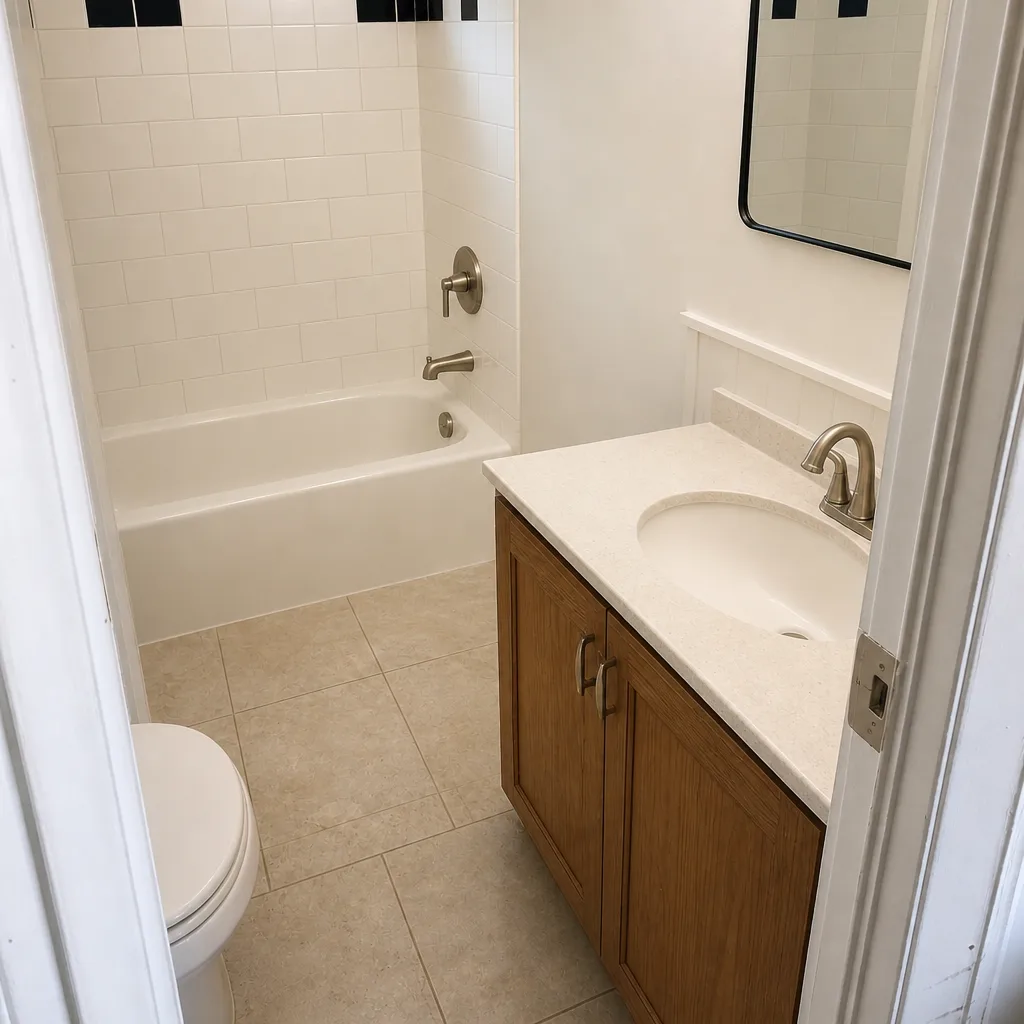 After
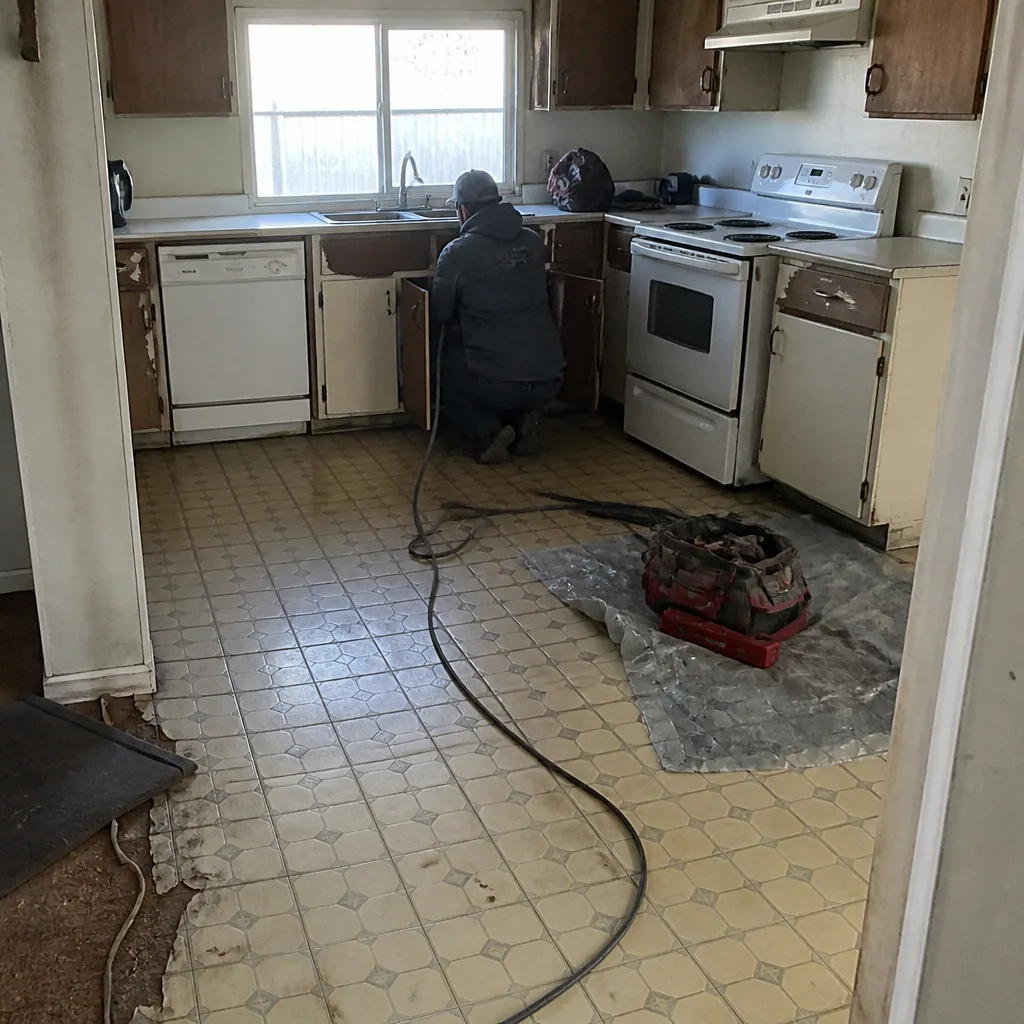 Before
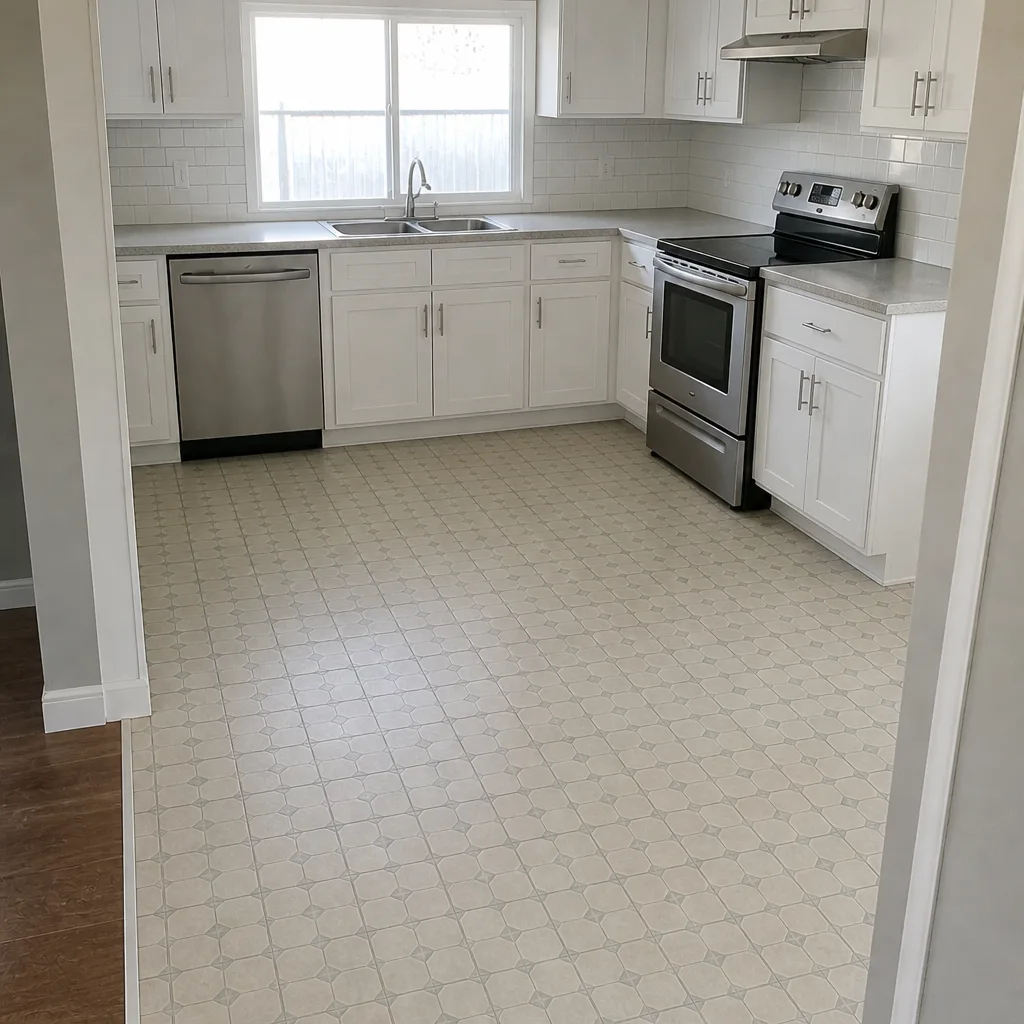 After
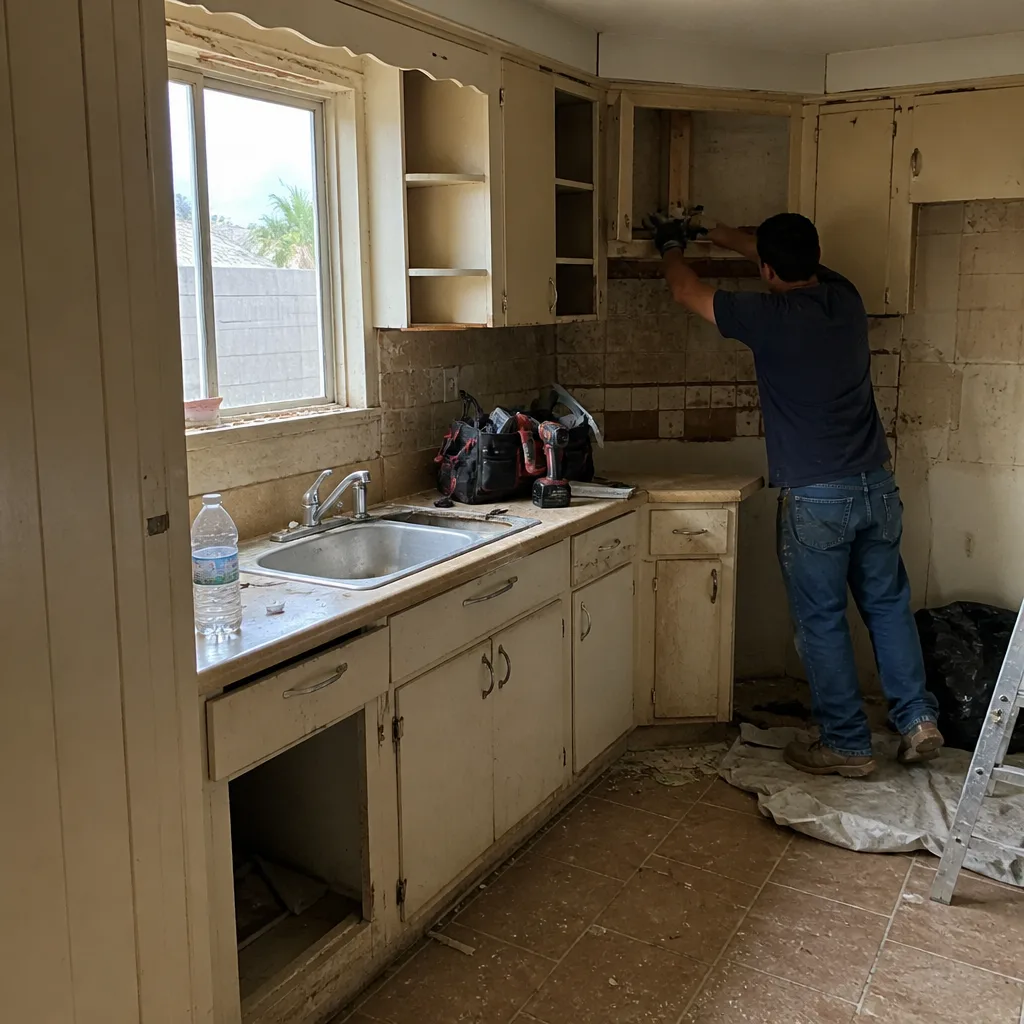 Before
 After
When to Call a Professional
Call a professional the moment you see any performance-category sign on a window or door that you can’t clearly attribute to a single weather event. Specifically: daylight through a closed joint, fogging between panes, water staining on interior surfaces near a frame, bubbling paint or swelling baseboards beneath a window, drywall tape separating in a corner adjacent to an opening, or a door that has shifted suddenly and stayed shifted. These are not weekend DIY problems – the fix involves opening the envelope, evaluating the rough opening, and reinstalling to spec, and doing it wrong can make the damage worse. Fence Installation in Mesquite projects often run into the same envelope questions at the property line, but window and door failures need a contractor who specializes in that scope.
Groundwork Construction Co. of Mesquite offers free estimates in Mesquite – call (888) 413-6358 to schedule a walkthrough and get a written diagnosis before anything is opened up.
Frequently Asked Questions

Replacing a single failed insulated glass unit in Mesquite typically runs $180 to $450, depending on the window size and whether the frame can be reused. If the frame is out of true and the whole unit needs re-setting, expect $600 to $1,200 per window. Call (888) 413-6358 for an exact quote – estimates are free.
It’s almost always a bad glass seal, not a bad install – but if you have three or more fogged units from the same project timeline, that points to a product batch problem or a glazing defect the installer should have caught. One fogged window is a glass repair. Three is a pattern worth investigating before you replace them all individually.
Settlement shows up as a gradual tilt that affects the entire opening – the whole window leans together. Installation error shows as an out-of-square frame where one corner is off and the others are true, or as a full-width head jamb gap. If the diagonals measure unevenly by more than 1/8″, it’s worth having a professional confirm whether the movement is settling the wall or the frame.
Not safely, if you can see daylight through the gap or if you’ve already had any water staining inside. One Mesquite monsoon season is enough to turn a $400 re-set into a $2,000 framing and drywall repair, because the water path affects the wall cavity, not just the window. If the gap is tiny and there’s no water sign yet, a free estimate now will tell you whether you can defer safely.
In most Mesquite residential cases, like-for-like window replacement doesn’t require a permit, but any change to the opening size, a new installation where none existed, or structural framing changes usually does. Confirm with the city before work starts. Any contractor who quotes you on a window replacement should be able to tell you plainly whether a permit is or isn’t required for your specific scope.
Stop the paint repair and find the source of the moisture first. Bubbling paint near a frame almost always means water is reaching the wall cavity from the opening. Call (888) 413-6358 for a free assessment before anyone patches the wall – patching without correcting the water path means the bubbling returns within a season, and the underlying damage quietly keeps growing.
The Bottom Line
Windows and doors fail in a sequence, and the sequence matters. Cosmetic wear can wait. Performance failure is the trigger to act, and the cost of deferring it compounds with every month you wait – what begins as a $400 re-set becomes a $2,500 wall-scope repair in two years. Watch for the three early signs (caulk cracks, inconsistent operation, corner gaps), know the three installation signals (head jamb gaps, flashing failures, multi-unit pattern failures), and treat interior symptoms as the opening’s problem, not the wall’s. Mesquite’s thermal swings and monsoon storms speed every one of these up, so a seasonal walkthrough is worth the 15 minutes twice a year. And when you find something you’re not sure about, get it looked at for free before it compounds.
If you’re in Mesquite and ready to price a fix – or just want a professional to tell you whether the sign you’re seeing is serious – call (888) 413-6358 for a free estimate. We’ll bring a written line-item quote, tell you what to do first, and back the work with our 730-Day Done Right Promise. From foundation to finish line, we handle window and door work as part of the full-scope construction partner most Mesquite homeowners never find.
Written by the team at Groundwork Construction Co. of Mesquite.